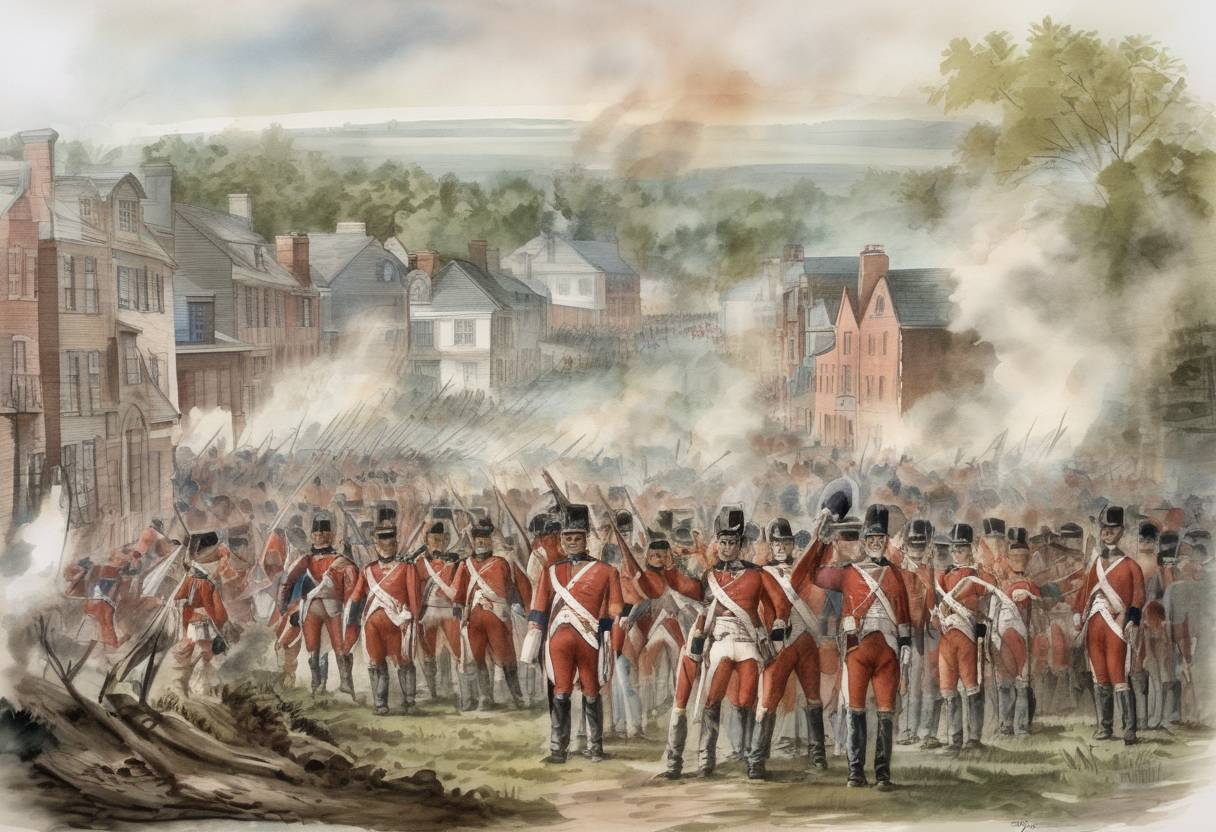
The Battle of York: April 27, 1813
The Battle of York, which took place on April 27, 1813, was a significant military engagement during the War of 1812. This conflict saw American forces capturing York, the capital of Upper Canada, which is present-day Toronto. The battle was part of a broader American strategy to gain control over the Great Lakes and weaken British influence in the region.
Context Leading to the Battle
- War of 1812 Background: The War of 1812 was primarily fought between the United States and the British Empire, with causes rooted in trade restrictions due to Britain’s ongoing war with France, impressment of American sailors into the British Navy, and American expansionist desires.
- Strategic Importance: York was a strategic target due to its role as the capital of Upper Canada and its location on Lake Ontario, making it a valuable asset for controlling naval operations in the region.
Key Events of the Battle
- American Forces: The American attack was led by General Zebulon Pike, with a force of approximately 1,700 troops supported by a naval squadron under Commodore Isaac Chauncey.
- British Defense: The British garrison at York was commanded by Major General Roger Hale Sheaffe, consisting of regulars, militia, and Indigenous allies, numbering around 750 defenders.
- Landing and Assault: On the morning of April 27, American forces landed west of York and advanced towards the town. Despite facing resistance, they managed to push back the British defenders.
- Explosion of the Grand Magazine: A significant and tragic event occurred when the British detonated their grand magazine (a large store of gunpowder) as they retreated, causing a massive explosion that killed or wounded over 250 American soldiers, including General Pike.
Aftermath and Consequences
- American Occupation: Following the battle, American forces occupied York for several days, during which they looted and set fire to several public buildings, including the Parliament Buildings of Upper Canada.
- Impact on the War: The capture of York was a morale boost for the United States and demonstrated the vulnerability of British positions in Upper Canada. However, it did not lead to a decisive strategic advantage.
- Retaliation: The burning of York would later be cited as a justification for the British burning of Washington, D.C., in 1814, including the White House and the Capitol.
Broader Historical Significance
The Battle of York highlighted the challenges of frontier warfare and the complexities of the War of 1812, where both sides experienced victories and setbacks. It underscored the importance of naval power on the Great Lakes and set the stage for further engagements in the region. The events at York also contributed to the enduring legacy of the war in Canadian and American historical memory.