1563 · Trent, Holy Roman Empire
The final session of the Council of Trent commenced, an important part of the Counter-Reformation efforts by the Catholic Church, addressing issues raised by the Protestant Reformation.
December 13, 1545
The Council of Trent, an ecumenical council of the Roman Catholic Church, began in Trento, Italy. It was one of the Church's most important councils, prompted by the Protestant Reformation, and it played a crucial role in the Counter-Reformation.
Trento, Italy | Roman Catholic Church
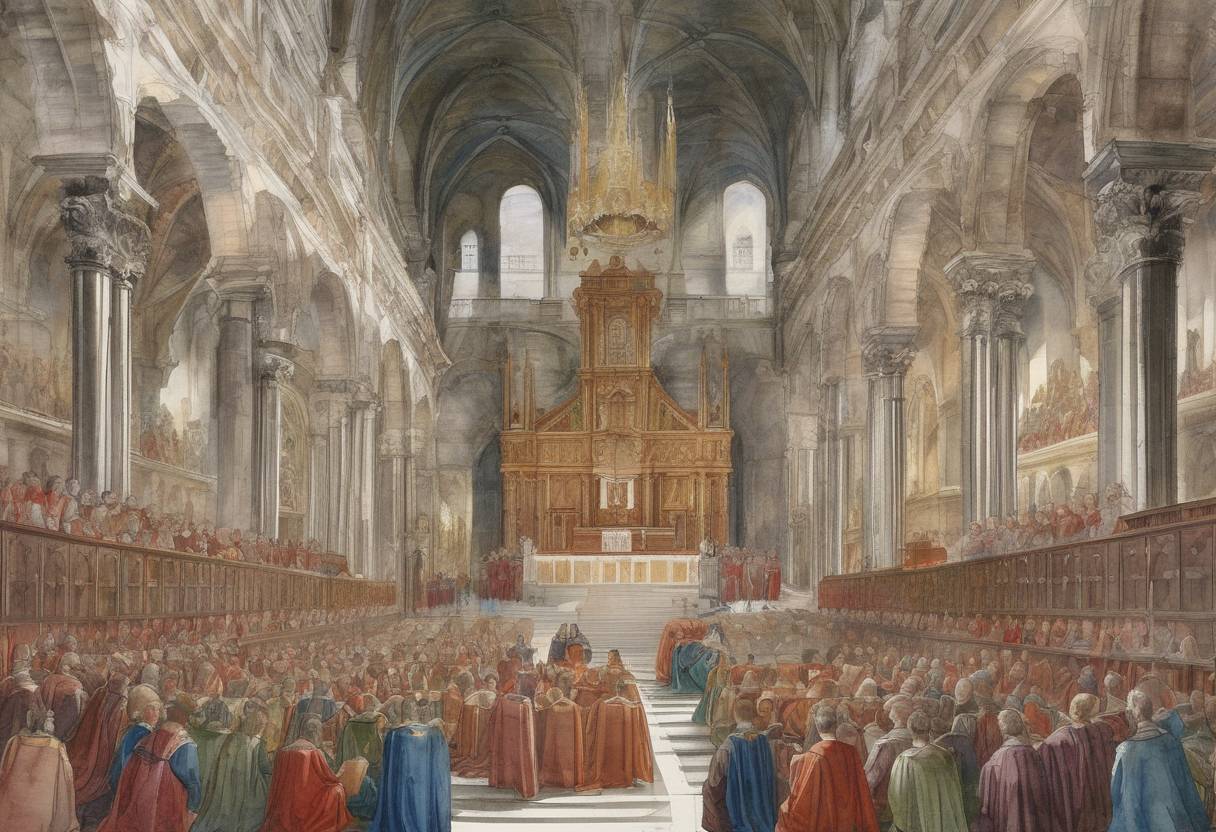
The Council of Trent was a pivotal ecumenical council of the Roman Catholic Church, convened in response to the Protestant Reformation. It began on December 13, 1545, in the city of Trento (Trent), located in northern Italy. This council was one of the Church’s most significant gatherings, playing a crucial role in the Counter-Reformation, a period of Catholic revival and reform.
The Protestant Reformation, initiated by figures such as Martin Luther and John Calvin in the early 16th century, posed a substantial challenge to the authority and doctrines of the Roman Catholic Church. The Reformation led to the establishment of various Protestant denominations and widespread religious, political, and social upheaval across Europe.
In response to these challenges, Pope Paul III called for a council to address the issues raised by the Reformers and to clarify Catholic doctrine. The council aimed to reform internal Church practices and reaffirm key theological tenets.
The Council of Trent was held in three major sessions over 18 years (1545-1563), under the reigns of several popes:
First Session (1545-1547): Focused on doctrinal issues, including the nature of original sin, justification, and the sacraments. The council reaffirmed traditional Catholic teachings and condemned Protestant doctrines.
Second Session (1551-1552): Addressed the Eucharist, penance, and the sacrament of extreme unction. This session was interrupted by political and military conflicts.
Third Session (1562-1563): Concentrated on Church reform, including the establishment of seminaries for priestly education, the requirement of bishops to reside in their dioceses, and the standardization of the Mass.
The Council of Trent had a profound impact on the Catholic Church and European society:
The Council of Trent was instrumental in shaping the modern Catholic Church, reinforcing its doctrines, and initiating reforms that would influence its structure and practices for centuries. Its decisions laid the groundwork for a revitalized Catholicism that could effectively respond to the challenges posed by the Reformation.
Source: en.wikipedia.org