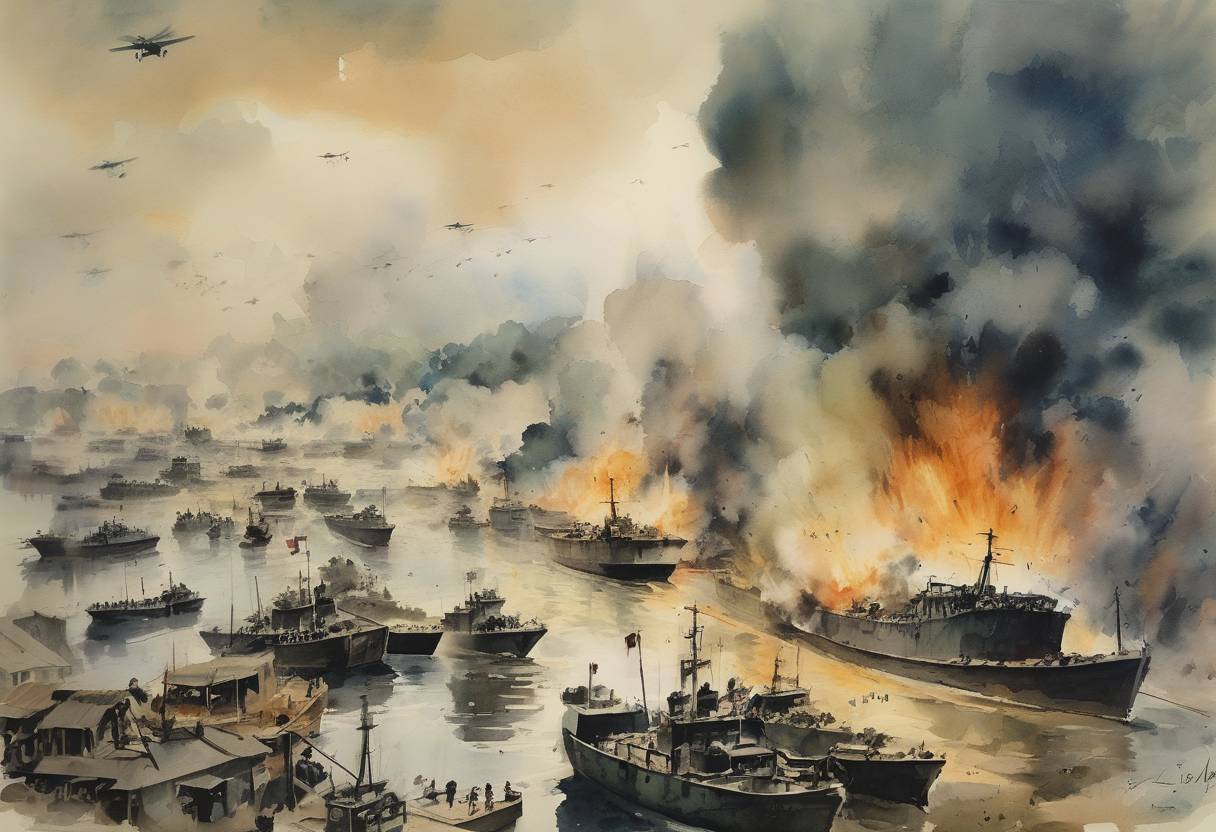
The French Naval Bombardment of Haiphong: November 23, 1946
On November 23, 1946, a significant and tragic event unfolded in the Vietnamese city of Haiphong, marking a pivotal escalation in the tensions between French colonial forces and Vietnamese nationalists. This event is widely recognized as a catalyst for the First Indochina War, which lasted from 1946 to 1954.
Background
Following World War II, Vietnam was a region of intense geopolitical interest. The country had been under French colonial rule since the late 19th century, but during the war, Japanese forces occupied Vietnam. After Japan’s defeat in 1945, the power vacuum led to the rise of the Viet Minh, a nationalist and communist-led movement under the leadership of Ho Chi Minh. The Viet Minh declared Vietnam’s independence in September 1945, but the French sought to reassert their colonial control over the region.
Tensions between the French and the Viet Minh were high, with both sides engaging in negotiations that frequently broke down. The situation in Haiphong, a strategically important port city in northern Vietnam, became particularly volatile.
The Bombardment
The immediate cause of the bombardment was a dispute over customs duties and control of the port. On November 20, 1946, a skirmish broke out between French and Vietnamese forces in Haiphong. In response, the French demanded that the Vietnamese withdraw from certain positions in the city.
On November 23, the French navy, under the command of Admiral Georges Thierry d’Argenlieu, launched a massive bombardment of Haiphong. The attack was devastating, with artillery and naval gunfire causing widespread destruction. Estimates of the death toll vary, but it is believed that thousands of Vietnamese civilians were killed in the bombardment.
Aftermath and Significance
The bombardment of Haiphong had profound consequences:
Escalation to War: The attack effectively ended any remaining hopes for a peaceful resolution between the French and the Viet Minh. It marked the beginning of open hostilities, leading to the First Indochina War.
International Reaction: The brutality of the bombardment drew international condemnation and highlighted the complexities of post-war decolonization efforts.
Strengthening of Vietnamese Resolve: The attack galvanized Vietnamese resistance against French colonial rule, strengthening the resolve of the Viet Minh and increasing support for their cause among the Vietnamese population.
Long-term Impact: The First Indochina War eventually led to the Geneva Accords of 1954, which temporarily divided Vietnam at the 17th parallel, setting the stage for further conflict in the region, including the Vietnam War.
The bombardment of Haiphong remains a significant event in the history of Vietnam and French colonialism, illustrating the tragic consequences of colonial conflicts and the struggle for national independence.