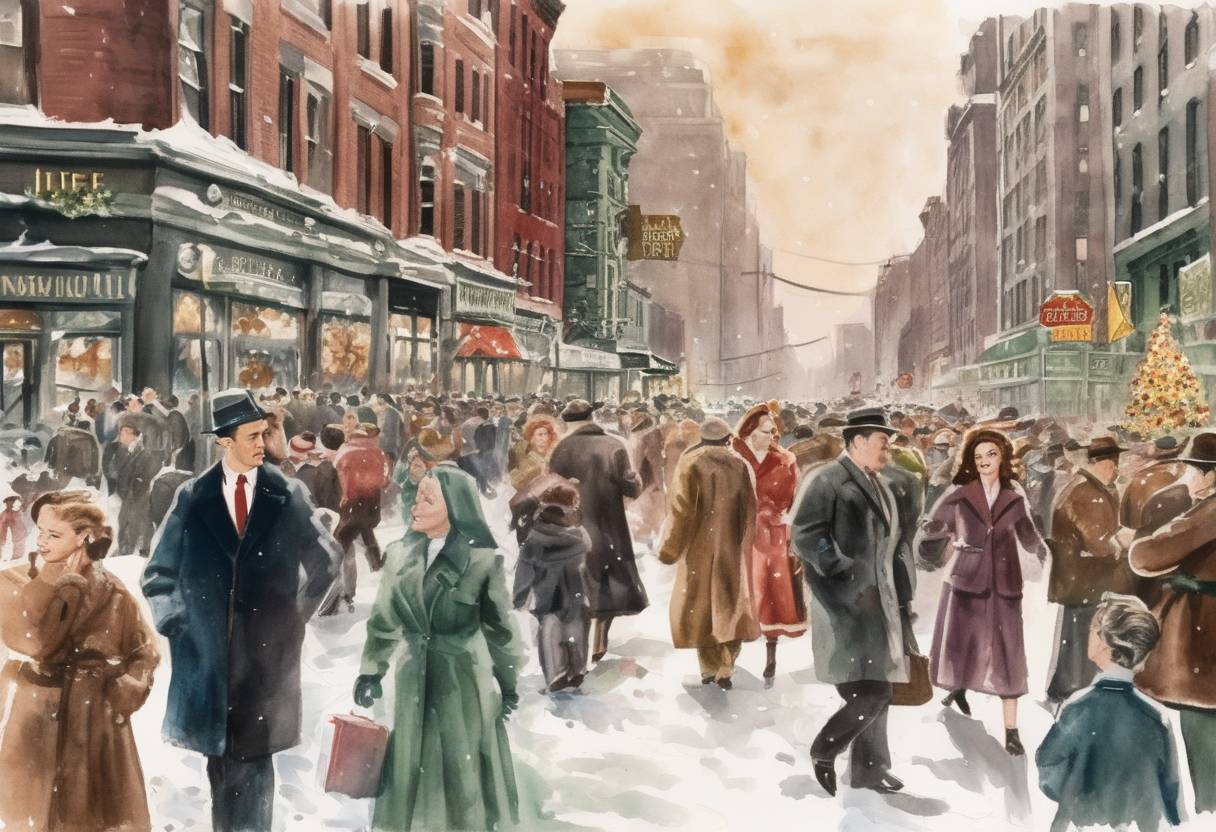
Premiere of “It’s a Wonderful Life” - December 20, 1946
On December 20, 1946, the now-classic Christmas film It’s a Wonderful Life premiered at the Globe Theatre in New York City. Directed by Frank Capra, the film starred James Stewart as George Bailey, a man who is shown the value of his life by a guardian angel, played by Henry Travers. The film is based on the short story “The Greatest Gift” by Philip Van Doren Stern.
Context and Production
- Director and Cast: Frank Capra, known for his optimistic and humanistic films, directed It’s a Wonderful Life. The film featured a strong cast, including James Stewart, Donna Reed, Lionel Barrymore, and Henry Travers.
- Story Origins: The film’s story was inspired by Philip Van Doren Stern’s short story, which he initially sent as a Christmas card to friends and family. RKO Pictures purchased the rights, and eventually, Capra acquired them to create the film.
- Production Challenges: The film was produced by Liberty Films, a company Capra co-founded. It faced several challenges, including budget constraints and the pressure of post-war America, which influenced its themes of despair and redemption.
Plot Summary
The film follows George Bailey, a man who has given up his dreams to help others in his community of Bedford Falls. On Christmas Eve, facing financial ruin and personal despair, George contemplates suicide. His guardian angel, Clarence, intervenes, showing him how different the world would be without him. Through this journey, George realizes the profound impact he has had on those around him.
Reception and Legacy
- Initial Reception: Upon its release, It’s a Wonderful Life received mixed reviews and was not a box office success. It was overshadowed by other films released during the same period.
- Rediscovery and Popularity: The film gained popularity in the 1970s when it entered the public domain and became a staple of holiday television programming. Its themes of hope and community resonated with audiences, solidifying its status as a beloved Christmas classic.
- Cultural Impact: Today, It’s a Wonderful Life is celebrated for its heartwarming message and is considered one of the greatest films of all time. It has been preserved in the United States National Film Registry for its cultural, historical, and aesthetic significance.
Broader Historical Significance
- Post-War America: The film reflects the anxieties and hopes of post-World War II America, addressing themes of economic hardship, personal sacrifice, and the importance of community.
- Enduring Message: Its message of the intrinsic value of each individual’s life continues to resonate, offering a timeless reminder of the impact one person can have on the world.
It’s a Wonderful Life remains a cherished part of holiday traditions, celebrated for its enduring message of hope and the power of community.