913 · Soissons, France
The Battle of Soissons took place, where King Charles III of France was defeated by Robert I, who subsequently became the King of West Francia.
June 12, 0918
The Battle of Soissons took place, where King Charles III of France was defeated by the forces of Robert I of France, leading to significant political changes in the West Frankish Kingdom.
Soissons, France | West Frankish Kingdom
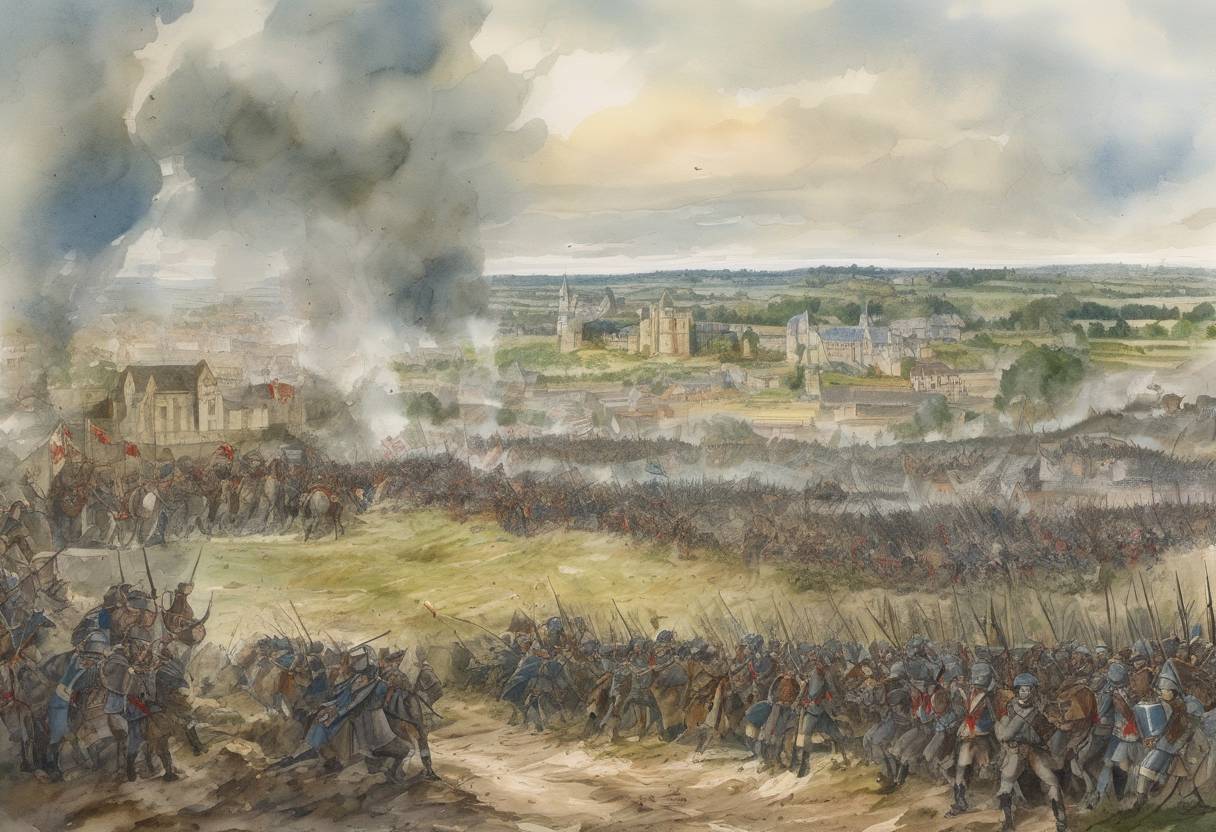
The Battle of Soissons, fought on June 12, 918, was a pivotal conflict in the history of the West Frankish Kingdom, marking a significant shift in the political landscape of the region. This battle saw King Charles III, also known as Charles the Simple, defeated by the forces led by Robert I of France. The outcome of this battle had profound implications for the Carolingian dynasty and the future of the French monarchy.
Charles III’s Reign: Charles the Simple became King of West Francia in 898. His reign was marked by efforts to consolidate power and manage the complex feudal system that characterized the Frankish territories. Despite his efforts, Charles faced challenges from powerful nobles who were dissatisfied with his rule.
Rise of Robert I: Robert I, a member of the Robertian dynasty, was a prominent noble with substantial influence. He was the brother of Odo, who had previously been King of West Francia. Robert’s ambitions and dissatisfaction with Charles’s leadership led him to challenge the king’s authority.
Political Tensions: The early 10th century was a period of political fragmentation and instability in West Francia. The Carolingian dynasty, to which Charles belonged, was struggling to maintain control over the increasingly autonomous and powerful regional nobility.
Location: The battle took place near Soissons, a significant location due to its strategic and symbolic importance in the Frankish realm.
Forces Involved: Charles III’s forces were composed of loyalists to the Carolingian crown, while Robert I’s army included disaffected nobles and their retinues, who sought to assert their independence and influence.
Outcome: The battle resulted in a decisive victory for Robert I. Charles III was captured, effectively ending his reign as king. This defeat underscored the waning power of the Carolingian dynasty and the rise of the Robertians.
Robert I’s Ascension: Following his victory, Robert I was proclaimed king by his supporters, although his reign was short-lived, as he died in battle in 923. Nevertheless, his victory at Soissons paved the way for the eventual establishment of the Capetian dynasty, which would dominate French history for centuries.
Impact on the Carolingians: The defeat and capture of Charles III marked the decline of Carolingian power in West Francia. Although Charles was briefly restored to power, his authority was severely weakened, and he spent the remainder of his life in captivity.
Political Fragmentation: The battle highlighted the fragmentation and decentralization of power in the West Frankish Kingdom, a trend that would continue until the consolidation of the French monarchy in later centuries.
In summary, the Battle of Soissons was a turning point in the history of medieval France, illustrating the shifting power dynamics and the decline of Carolingian authority, while setting the stage for the rise of new dynastic powers.
Source: en.wikipedia.org