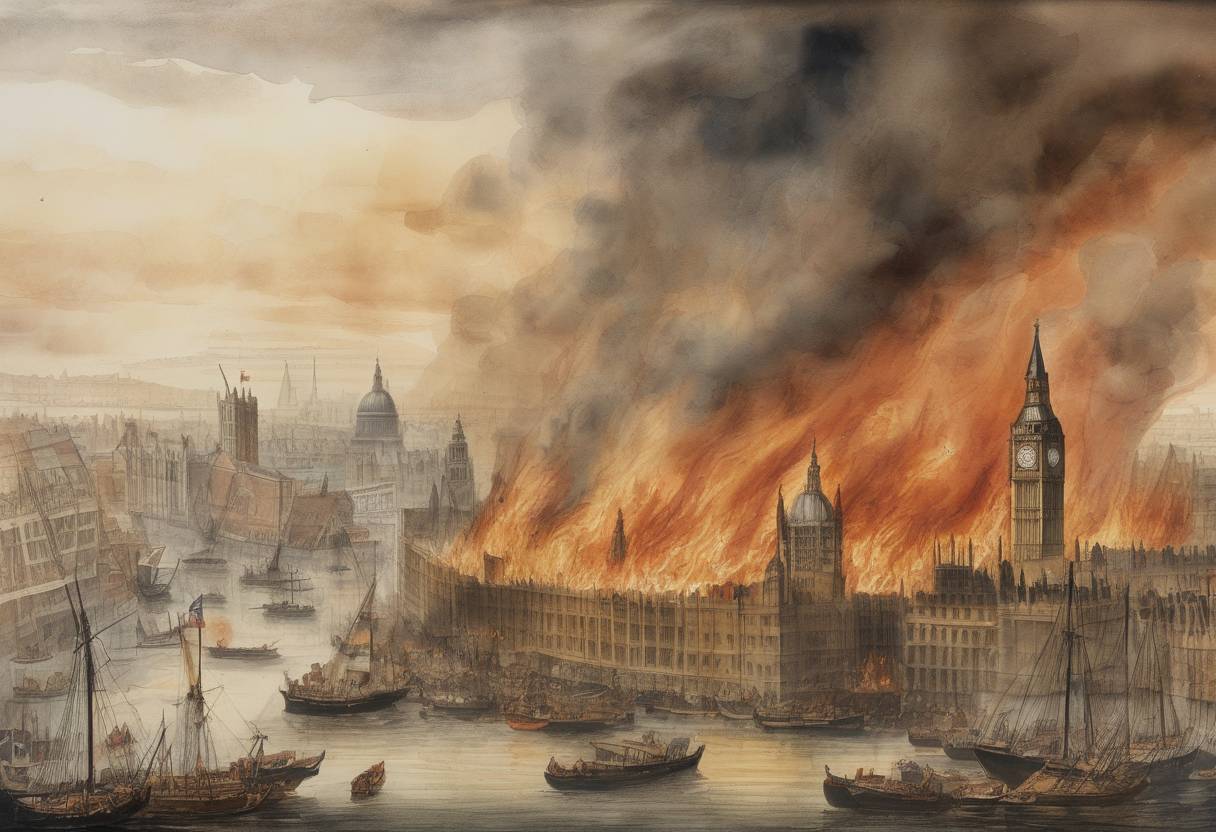
The Great Fire of London
Overview
The Great Fire of London was a devastating conflagration that swept through the central parts of the English capital from September 2 to September 5, 1666. It consumed a significant portion of the city, including 13,200 houses, 87 parish churches, and the iconic St. Paul’s Cathedral. The fire is remembered as one of the most catastrophic events in London’s history.
Context and Causes
- Pre-Fire Conditions: London in the 17th century was a bustling city with narrow streets and closely packed wooden buildings. The summer of 1666 had been exceptionally dry, creating conditions ripe for a fire.
- Ignition: The fire began in the early hours of September 2, in the bakery of Thomas Farriner on Pudding Lane. A spark from the bakery’s oven is believed to have ignited the blaze.
Key Events
- Spread of the Fire: Fueled by strong easterly winds, the fire spread rapidly through the city. The wooden structures and tar-covered buildings facilitated the fire’s swift expansion.
- Efforts to Control the Fire: Initial attempts to control the fire were hampered by indecision and inadequate firefighting methods. The use of fire hooks and the demolition of buildings to create firebreaks were not effectively implemented until later.
- Royal Intervention: King Charles II and his brother, the Duke of York, took an active role in firefighting efforts, ordering the creation of firebreaks by demolishing buildings.
Consequences
- Destruction: The fire destroyed a large portion of the medieval city, including key landmarks such as St. Paul’s Cathedral and the Royal Exchange.
- Human Impact: Despite the extensive property damage, the official death toll was surprisingly low, with only a few recorded deaths. However, the true number may have been higher, as records were not comprehensive.
- Rebuilding: The aftermath of the fire led to significant changes in urban planning and building regulations. Sir Christopher Wren was commissioned to design the new St. Paul’s Cathedral and many other city structures.
- Economic and Social Impact: The fire had a profound economic impact, displacing thousands of residents and businesses. It also led to improvements in firefighting techniques and the establishment of the first insurance companies.
Historical Significance
The Great Fire of London marked a turning point in the city’s development. It prompted advancements in urban planning, architecture, and fire safety. The rebuilding efforts transformed London into a more modern city, with wider streets and more durable building materials, setting a precedent for urban renewal in the face of disaster.