2000 · Baikonur, Kazakhstan
Soyuz TM-31, the first spacecraft to head to the International Space Station with a crew on board, is launched.
November 20, 1998
The first module of the International Space Station (ISS), Zarya, was launched from the Baikonur Cosmodrome in Kazakhstan. This marked the beginning of the construction of the ISS, a collaborative project involving multiple countries and space agencies.
Baikonur, Kazakhstan | Russian Federal Space Agency
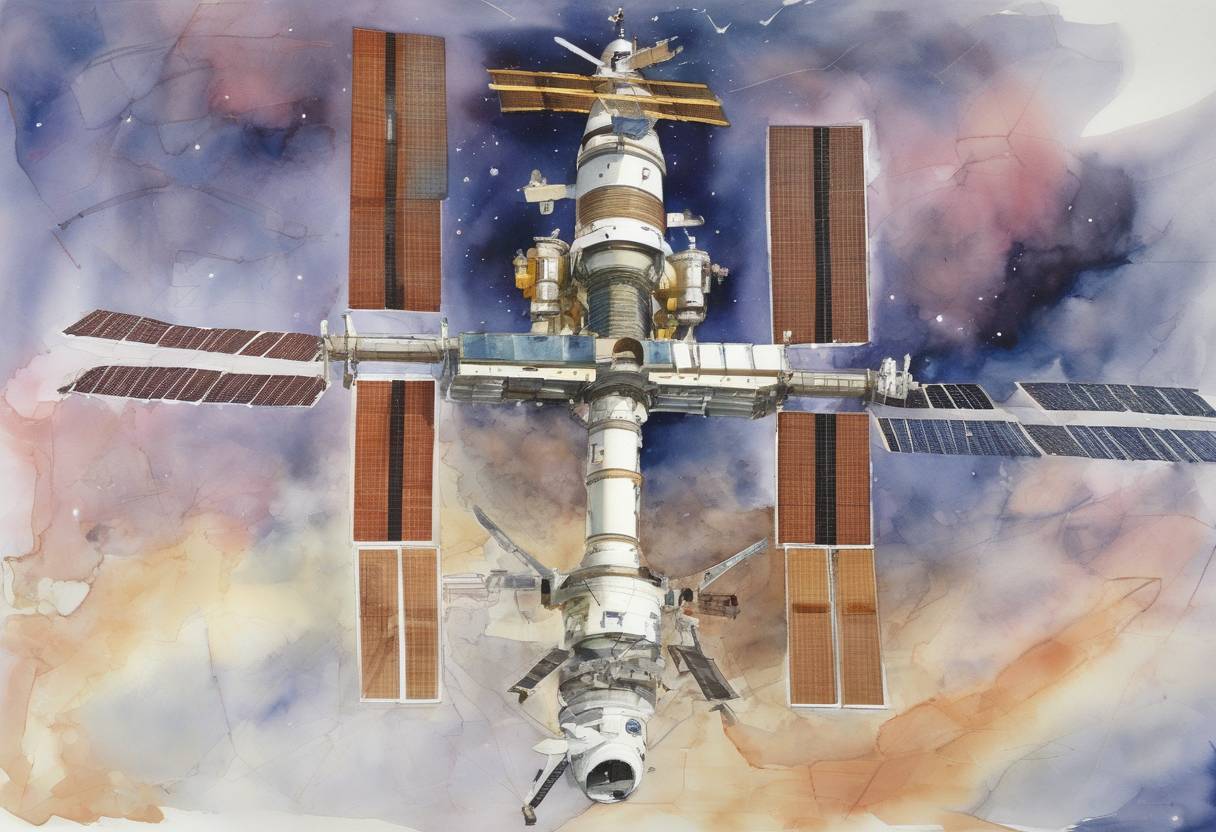
On November 20, 1998, the first module of the International Space Station (ISS), named Zarya, was launched into orbit from the Baikonur Cosmodrome in Kazakhstan. This event marked a significant milestone in international space collaboration and the beginning of the construction of the ISS, a project involving multiple countries and space agencies.
The International Space Station is a joint project involving five space agencies: NASA (United States), Roscosmos (Russia), JAXA (Japan), ESA (European Space Agency), and CSA (Canada). The idea for an international space station was conceived during the Cold War, but it wasn’t until the end of the Cold War that collaboration between former adversaries became feasible. The ISS was designed to serve as a microgravity and space environment research laboratory where scientific research is conducted in astrobiology, astronomy, meteorology, physics, and other fields.
Following the launch of Zarya, the Unity module, built by the United States, was launched on December 4, 1998, aboard the Space Shuttle Endeavour. Unity was connected to Zarya, forming the initial core of the ISS. Over the next several years, additional modules and components were added, gradually expanding the station.
The ISS has since become a symbol of international cooperation in space exploration. It serves as a platform for scientific research, international collaboration, and technological development. The station has been continuously inhabited since November 2000, hosting astronauts from various countries and contributing to our understanding of living and working in space.
The launch of the Zarya module on November 20, 1998, was a pivotal moment in the history of space exploration. It set the stage for the development of the International Space Station, a testament to what can be achieved through international collaboration and shared scientific goals. The ISS continues to be a vital asset for research and exploration, fostering cooperation among nations and advancing human knowledge.
Source: www.nasa.gov