Al Gore Concedes the 2000 U.S. Presidential Election
2000 · Washington, D.C., United States
Al Gore conceded the U.S. presidential election to George W. Bush following a Supreme Court decision.
September 29, 2005
John G. Roberts Jr. was sworn in as Chief Justice of the United States, becoming the 17th person to hold the position.
Washington, D.C., United States | Supreme Court of the United States
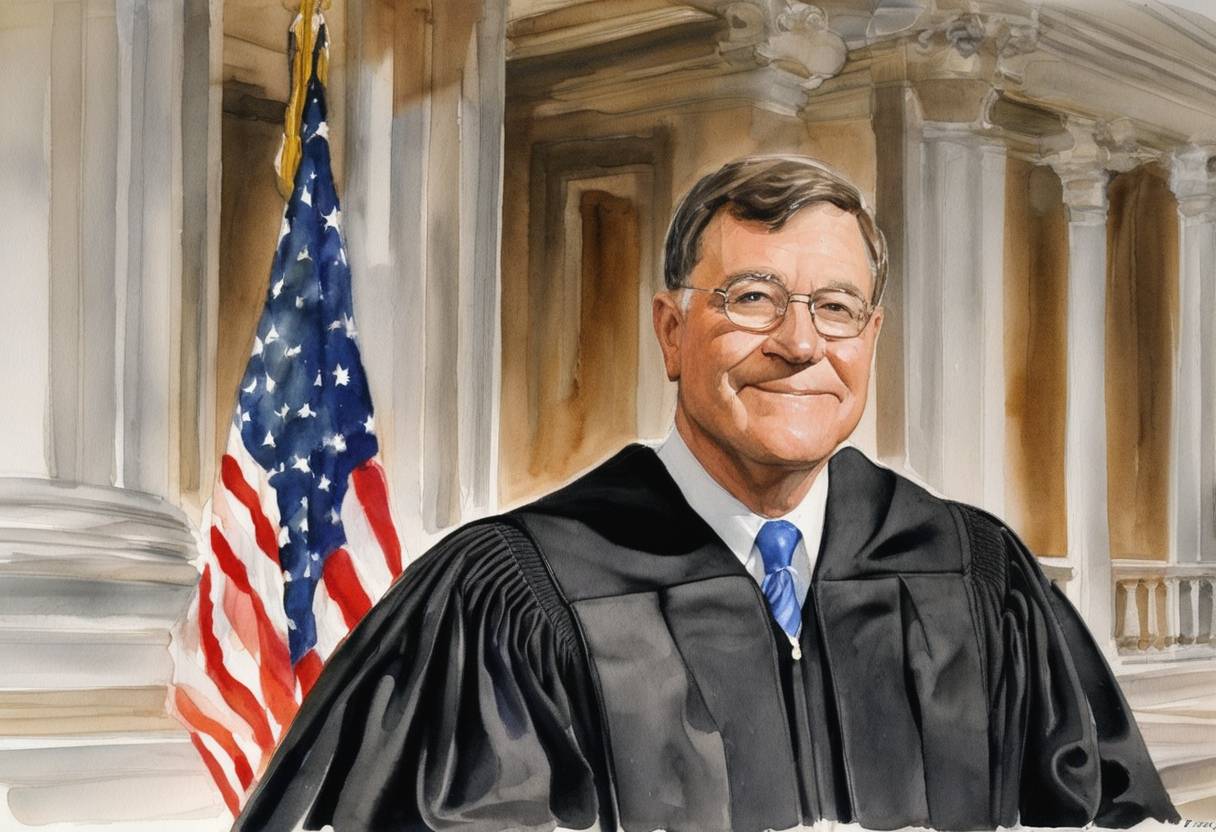
On September 29, 2005, John G. Roberts Jr. was sworn in as the 17th Chief Justice of the United States. This important event marked the beginning of his tenure at the helm of the Supreme Court, following the passing of Chief Justice William H. Rehnquist. Roberts received his commission after being nominated by President George W. Bush and confirmed by the Senate.
John Glover Roberts Jr. was born on January 27, 1955, in Buffalo, New York. An accomplished legal scholar and practitioner, Roberts attended Harvard College for his undergraduate studies and went on to Harvard Law School. Before his appointment to the Supreme Court, Roberts had an extensive career in law, including serving as a clerk for then-Associate Justice William H. Rehnquist, working in the Reagan Administration and the Department of Justice, and acting as a judge on the U.S. Court of Appeals for the District of Columbia Circuit.
President Bush nominated Roberts for the position of Chief Justice following Rehnquist’s death in early September 2005. Roberts had originally been nominated to replace retiring Justice Sandra Day O’Connor, but the vacancy created by Rehnquist’s death shifted the focus to the Chief Justice role. His confirmation hearings, managed by the Senate Judiciary Committee, focused on his judicial philosophy, particularly regarding issues like abortion, federalism, and executive power.
On September 29, 2005, Roberts was confirmed with a Senate vote of 78-22, a significant bipartisan approval reflecting both his qualifications and judicial temperament.
The swearing-in ceremony took place at the White House, administered by senior Associate Justice John Paul Stevens. The event was attended by President Bush and members of Congress, highlighting its significance in shaping the judiciary for decades to come.
Roberts’ ascension to Chief Justice signaled a continuity and potential shift in the Supreme Court’s direction. Known for his conservative leanings but also for his commitment to narrow, case-specific rulings, Roberts has aimed to bolster the institutional respect and nonpartisanship of the Court. His tenure has been marked by landmark decisions affecting health care, elections, same-sex marriage, and immigration, demonstrating the pivotal role of the Supreme Court in American public life.
Roberts’ leadership style and judicial reasoning continue to influence significant legal precedents and the broader scope of American constitutional law, making his role essential in shaping contemporary jurisprudence.
Source: www.supremecourt.gov