It appears there is a slight error in the date. The tragic fire on the steamboat General Slocum occurred on June 15, 1904, not on September 4, 1904. Here are the details of the incident that occurred on the actual date:
The General Slocum Disaster
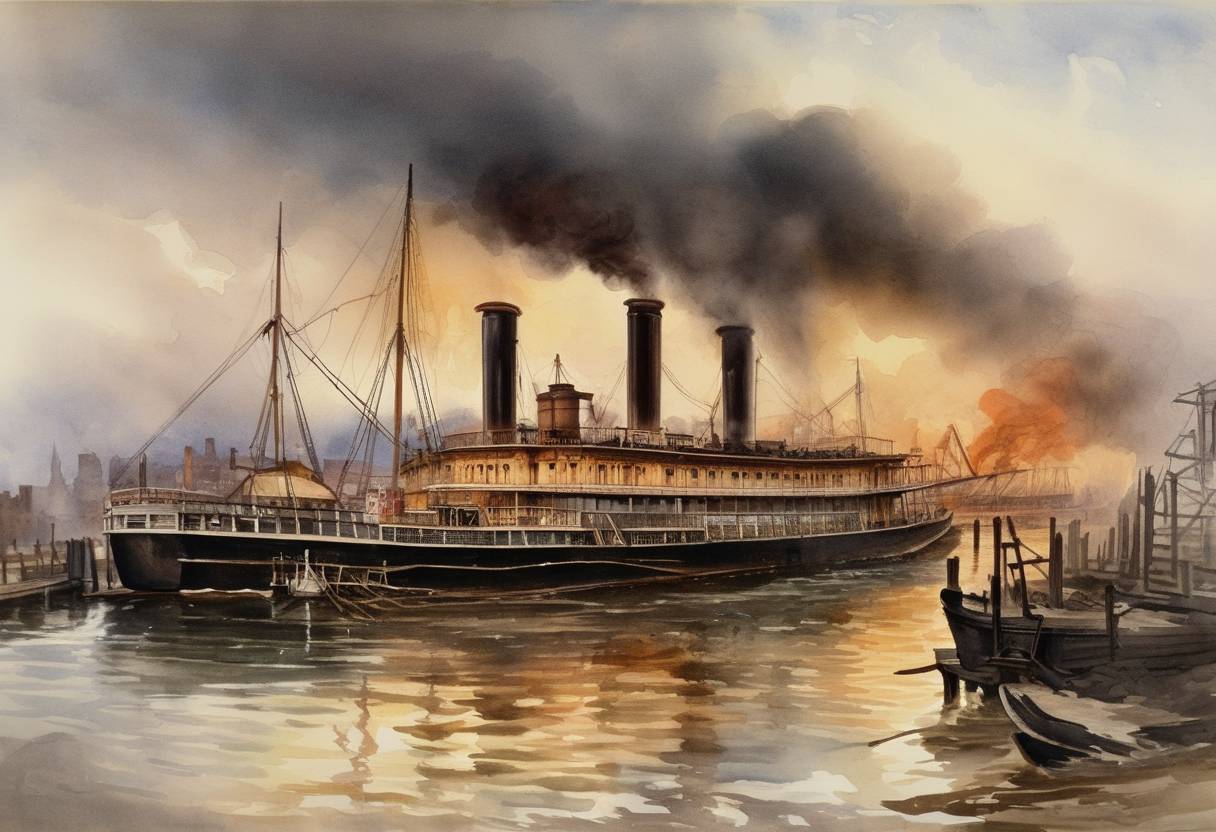
On June 15, 1904, the excursion steamboat General Slocum was engulfed in flames while navigating the East River of New York City. The disaster stands as one of the deadliest maritime incidents in United States history.
Background
- Vessel Details: The General Slocum was a sidewheel passenger steamboat owned by the Knickerbocker Steamboat Company, designed primarily for excursion trips along the New York City waterways.
- Purpose of the Voyage: On this ill-fated day, the steamboat was chartered for an annual picnic organized by St. Mark’s Evangelical Lutheran Church, carrying mostly German-American residents from the Little Germany neighborhood in Manhattan.
Incident
- Fire Outbreak: The fire broke out at about 10:00 AM, shortly after the vessel departed from the Third Street pier. It was discovered in a storage room containing flammable materials, including oil and hay.
- Response Failures: A series of safety lapses exacerbated the crisis:
- Unserviceable Equipment: Life preservers on board were reportedly old and filled with disintegrated material, rendering them ineffective.
- Ineffective Fire Drills: Crew members were inadequately trained for emergencies.
- Inadequate Firefighting Equipment: Fire hoses were found to be rotten, causing them to burst when crew members tried to extinguish the flames.
Casualties and Impact
- Loss of Life: The disaster resulted in the deaths of over 1,000 passengers, many of whom were women and children unable to swim or who drowned due to faulty life preservers. The final death toll was estimated at 1,021.
- Survivors’ Accounts: Survivors recalled chaos as passengers attempted to escape, with some jumping into the water while others were trapped by the rapidly spreading flames.
Aftermath and Significance
- Legal and Safety Reforms: The catastrophe led to public outcry and significant legal repercussions. The ship’s captain, William Van Schaick, was convicted of criminal negligence.
- Policy Changes: In response to the disaster, maritime safety regulations were rigorously reviewed and amended to ensure stricter adherence to safety protocols and equipment standards.
- Cultural and Historical Impact: The General Slocum disaster profoundly affected the German-American community in New York, leading to a decline in the population of the Little Germany area as grief-stricken families moved away.
The harrowing events of June 15, 1904, serve as a grim reminder of the necessity of stringent safety measures and regulations in maritime travel.