Martin Luther King Jr.: Birth and Early Life
1929 · Atlanta, United States
Martin Luther King Jr., American civil rights leader, was born.
September 18, 1895
Booker T. Washington delivers the Atlanta Compromise speech at the Cotton States and International Exposition in Atlanta, Georgia.
Atlanta, United States | Cotton States and International Exposition
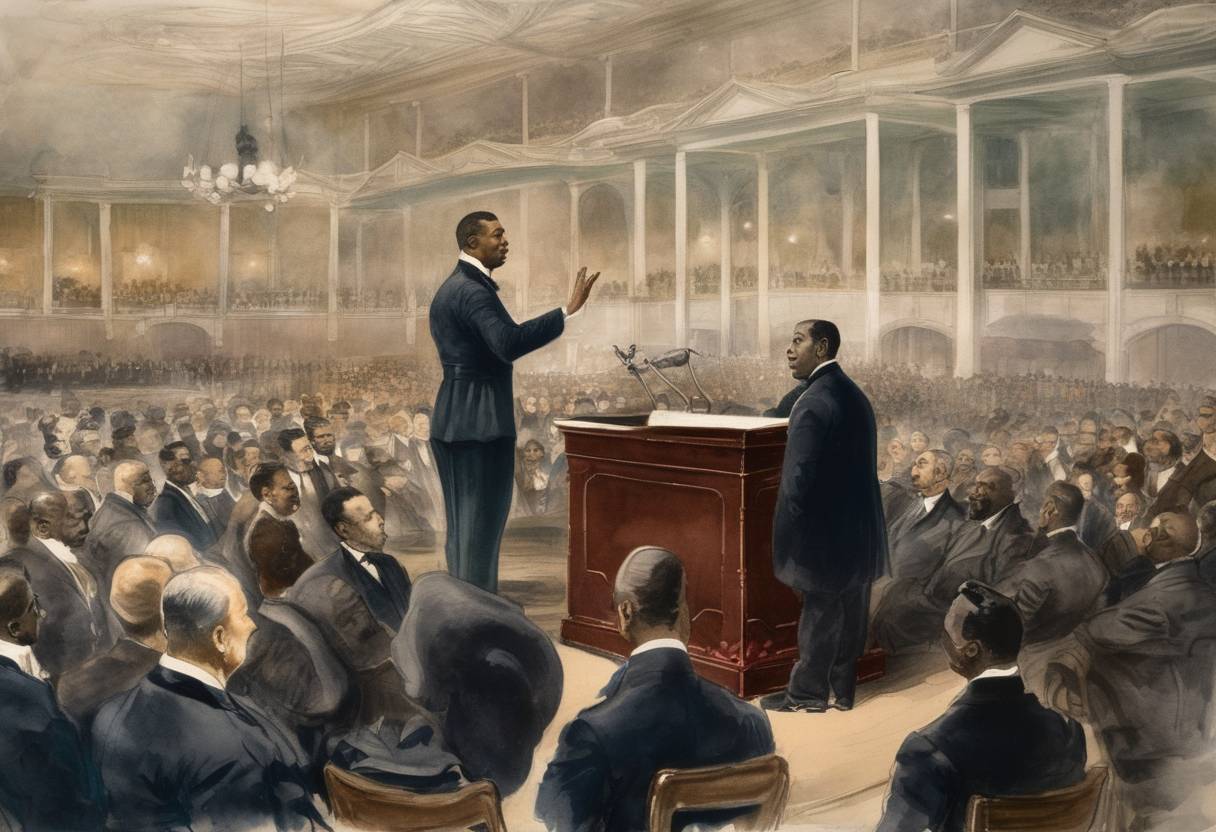
On September 18, 1895, Booker T. Washington, a prominent African American leader and educator, delivered his famous Atlanta Compromise speech at the Cotton States and International Exposition in Atlanta, Georgia. This milestone event marked a significant moment in the history of race relations in the United States during the Jim Crow era.
The speech came at a pivotal time when the country was deeply segregated and African Americans faced severe discrimination and disenfranchisement. The Cotton States and International Exposition was an event intended to promote trade and showcase the economic recovery of the Southern states after the Civil War, and Washington was invited to speak as a representative of African Americans.
In his address, Washington proposed a policy of accommodation, which later became known as the Atlanta Compromise. He advocated for African Americans to focus on vocational training and economic self-improvement rather than immediate demands for civil rights and social equality. Washington famously stated:
“In all things that are purely social, we can be as separate as the fingers, yet one as the hand in all things essential to mutual progress.”
He emphasized the importance of cooperation between whites and African Americans in developing the Southern economy, suggesting that both communities could benefit from shared progress in agriculture, industry, and commerce.
Washington’s speech received a warm reception from both the white and black audiences present. Many white leaders praised his practical approach to improving race relations, viewing it as a conciliatory gesture that could aid in defusing racial tensions.
However, not all African American leaders were supportive of Washington’s stance. Critics like W.E.B. Du Bois challenged the acceptance of second-class citizenship and argued for the pursuit of higher education and equal rights, fearing that Washington’s approach could be used to justify continued discrimination and segregation.
The Atlanta Compromise solidified Booker T. Washington’s standing as a leading African American voice of his time. His speech influenced the course of race relations in the United States and sparked important debates on the strategies and priorities in the African American struggle for equality.
The speech is remembered for its pragmatic approach to racial issues during a challenging period in American history and remains a subject of analysis in discussions on race, strategy, and leadership. Washington’s emphasis on education and economic advancement has had a lasting legacy in the development of the Tuskegee Institute (now Tuskegee University) and similar educational institutions for African Americans.
Source: www.history.com