The Battle of Ankara: July 20, 1402
1402 · Ankara, Turkey
The Battle of Ankara took place, where Timur (Tamerlane) defeated the Ottoman Sultan Bayezid I, leading to a temporary fragmentation of the Ottoman Empire.
December 17, 1398
Timur, also known as Tamerlane, captured and sacked Delhi, leading to significant destruction and loss of life in the city.
Delhi, India | Timurid Empire
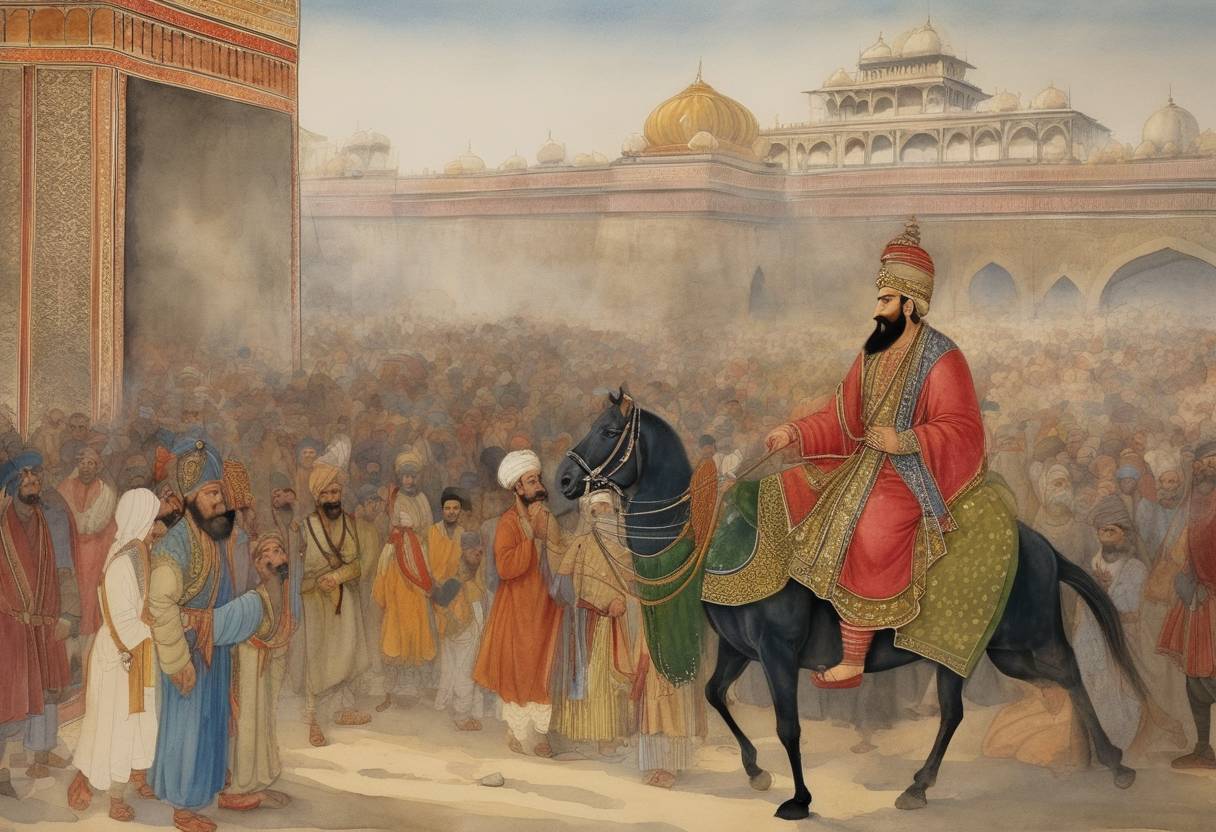
On December 17, 1398, the historical landscape of the Indian subcontinent was dramatically reshaped as Timur, also known as Tamerlane, a Turco-Mongol conqueror, captured and sacked the city of Delhi. This event is remembered for its severe destruction and the deeply traumatic impact it had on the local population.
Timur, born in 1336 in modern-day Uzbekistan, was the founder of the Timurid Empire and sought to expand his control across Central Asia and beyond. By the late 14th century, Timur had already established a reputation as a formidable conqueror with a vast and disciplined army. His campaigns were marked not only by military prowess but also by the extensive use of swift cavalry and tactical innovations.
The decision to invade India stemmed from multiple factors, including Timur’s ambition to emulate Genghis Khan by building an empire that spanned across Asia. Additionally, the fragmentation and political instability of the Delhi Sultanate under the rule of Sultan Nasir-ud-Din Mahmud Shah Tughlaq presented an opportunity for Timur to exploit.
Timur’s march into India began in September 1398. His forces traveled through the Punjab region, defeating local rulers and amassing plunder. The path to Delhi was marked by significant brutality, as Timur sought to instill fear and prevent resistance through the massacre of thousands of civilians along his route.
On reaching the outskirts of Delhi, Timur engaged in a strategic siege. Despite the city having prepared some defenses, the Sultanate’s forces were ill-prepared for Timur’s well-coordinated and experienced army.
On December 17, 1398, Timur’s forces successfully breached Delhi’s defenses. The capture of the city was followed by widespread pillaging and slaughter. Historical records indicate that the city was subjected to intense and methodical destruction. Estimates suggest that tens of thousands of inhabitants were killed, and many were taken as slaves or forcibly conscripted into Timur’s army.
The sack of Delhi was characterized by its brutality. Timur purportedly justified the massacre by claiming that it was necessary to prevent potential rebellion and maintain the security of his newfound control over the region.
The sack of Delhi had immediate and long-lasting impacts. The immediate aftermath was the physical and psychological devastation of one of the key cities of the Indian subcontinent, reducing it to ruin and drastically altering its demographics.
The broader consequences of Timur’s invasion weakened the Delhi Sultanate, already fragmented due to internal strife. This weakening paved the way for future invasions, including the eventual rise of the Mughal Empire under Babur, a descendant of Timur.
Timur’s legacy remains controversial, as his conquests were marked by destruction alongside the fostering of art and architecture within his empire. His invasion of Delhi is remembered as one of the most tragic events in the city’s history, emblematic of the era’s violent conquests.
Overall, the sack of Delhi in 1398 stands as a significant historical event, reflecting the era’s geopolitical realities, the ambitions of conquerors like Timur, and the ensuing changes in power dynamics within the Indian subcontinent.
Source: en.wikipedia.org