T. E. Lawrence and the Capture of Aqaba: July 6, 1917
1917 · Aqaba, Jordan
T. E. Lawrence, also known as Lawrence of Arabia, coordinates the attack and capture of the Red Sea port of Aqaba during the Arab Revolt.
October 1, 1918
Arab forces under T.E. Lawrence capture Damascus during World War I, leading to the end of 400 years of Ottoman rule in the city.
Damascus, Syria | Arab Revolt
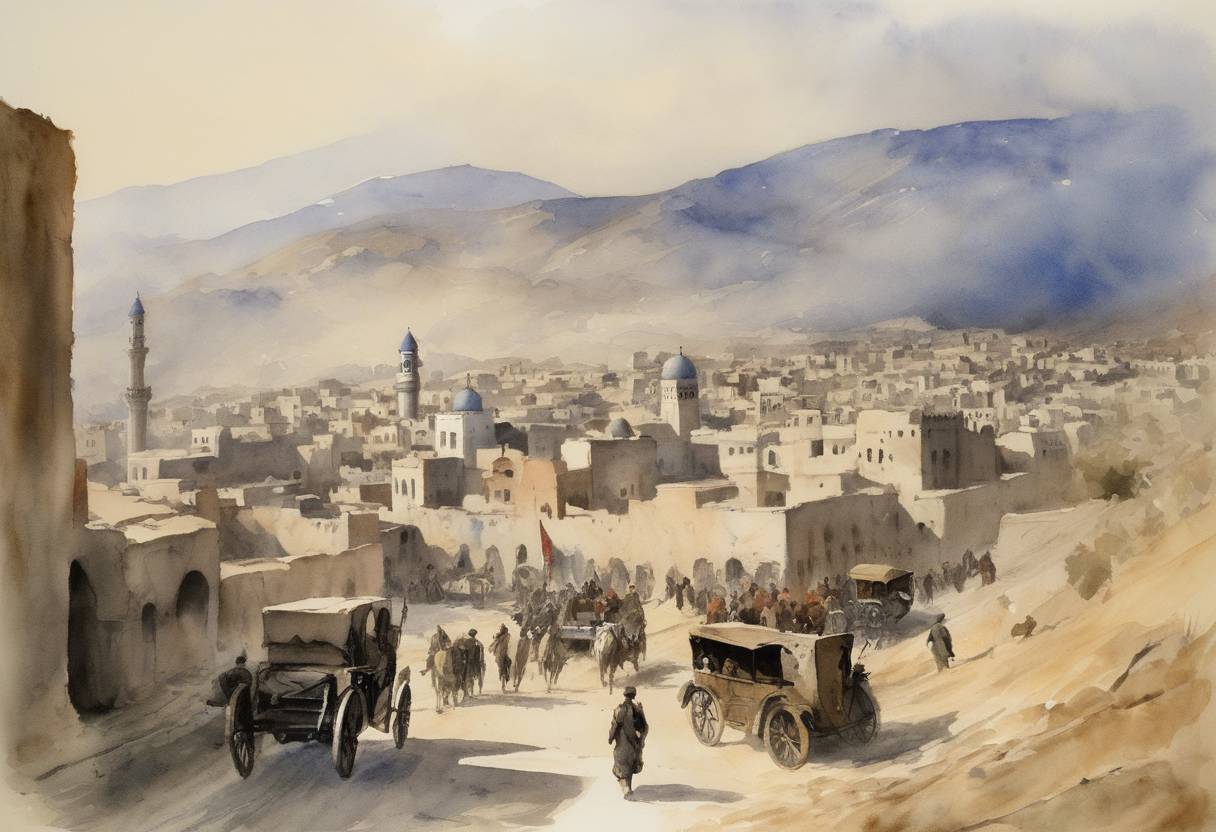
On October 1, 1918, during the closing stages of World War I, Arab forces led by Emir Faisal, with the support of British officer T.E. Lawrence, famously known as Lawrence of Arabia, entered and captured the city of Damascus. This event marked a significant turning point in the Arab Revolt and signaled the end of over 400 years of Ottoman rule in the city.
The capture of Damascus was part of a larger campaign known as the Arab Revolt, which began in June 1916. The revolt was initiated by Arab nationalists to achieve independence from Ottoman rule, hoping to establish a unified Arab state stretching from Aleppo in Syria to Aden in Yemen. T.E. Lawrence became closely associated with this cause, providing strategic and tactical assistance, as well as coordinating support from the British forces.
In the weeks leading up to the capture of Damascus, the Allied forces conducted military operations that significantly weakened Ottoman positions in the region. These included the Battle of Megiddo and the subsequent advance through Palestine and Syria. By late September 1918, the Ottoman forces were retreating northward, leaving Damascus vulnerable to attack.
On October 1st, the combined forces of Arab irregulars and Australian Mounted Division, part of the Allied forces commanded by General Edmund Allenby, entered Damascus. The city was teeming with the remnants of the Ottoman army, stragglers, and local populace unsure of the immediate future. The Australian Light Horse Brigade was among the first to enter the city, but it was the Arab forces who were given the symbolic honor of formally capturing the city due to the political implications.
Emir Faisal established a provisional Arab government in Damascus as a show of sovereignty and began to assert Arab claims to independence over the region. T.E. Lawrence played a crucial role in mediating between the Transitional Arab leadership and the British interests in the region.
The fall of Damascus was pivotal in dismantling the Ottoman Empire’s control over the Arab provinces. It marked a significant victory for Arab nationalists, although their aspirations for a vast independent Arab state were later complicated by the post-war geopolitical realities, including the Sykes-Picot Agreement and the establishment of the French Mandate in Syria.
This event is often highlighted not only for its military impact but also for its symbolic significance, representing the decline of Ottoman influence in the Middle East and foreshadowing the contentious post-war geopolitical restructuring that shaped modern Middle Eastern borders.
Source: www.britannica.com