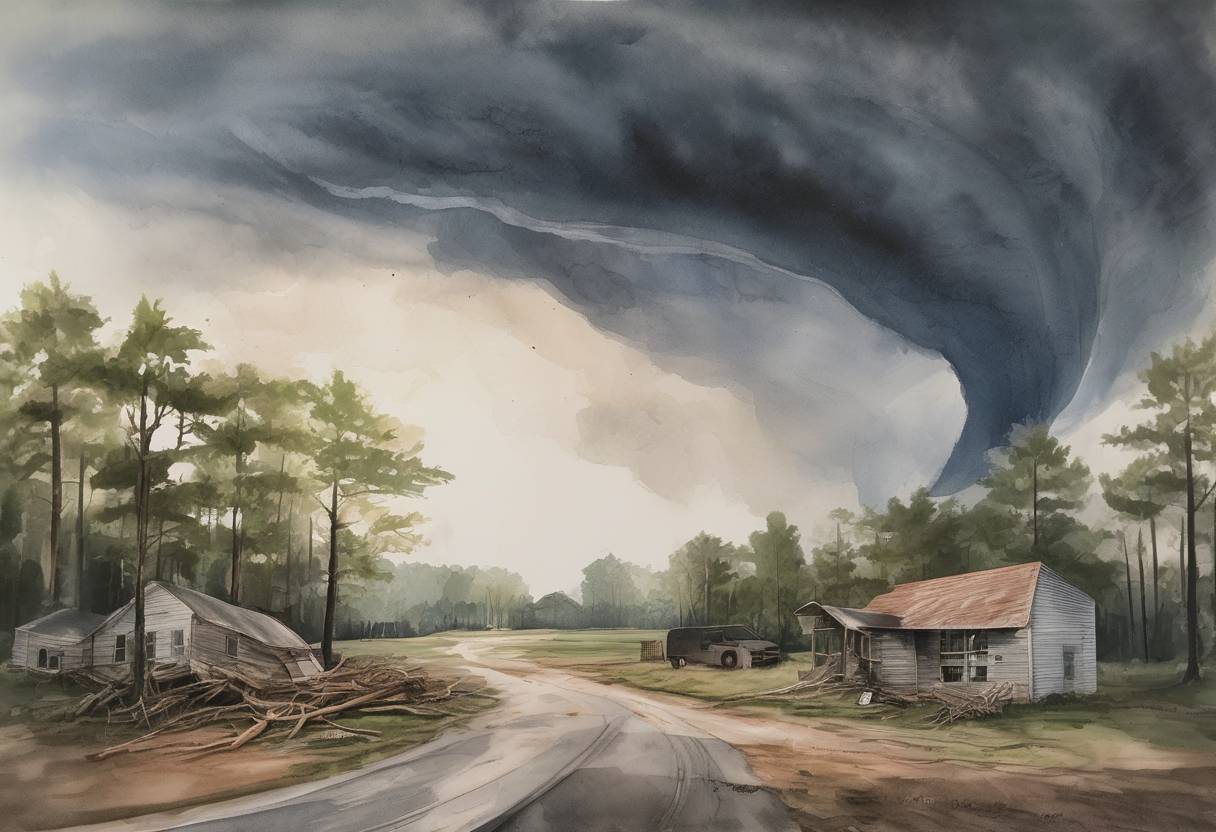
Tornado Outbreak in the Southeastern United States - March 3, 2019
On March 3, 2019, a devastating tornado outbreak struck the Southeastern United States, with the most severe impact felt in Lee County, Alabama. This tragic event resulted in 23 fatalities and significant destruction, marking it as one of the deadliest tornado events in the United States in recent years.
Context and Meteorological Conditions
The outbreak was part of a larger severe weather system that affected the region. The conditions conducive to tornado formation included a strong low-pressure system, warm and moist air from the Gulf of Mexico, and significant wind shear. These factors combined to create an environment ripe for the development of powerful and destructive tornadoes.
Key Events
Lee County, Alabama: The most catastrophic tornado of the outbreak was an EF4 tornado that struck Lee County. It had estimated peak winds of 170 mph and carved a path approximately 70 miles long, causing widespread devastation.
Fatalities and Damage: The tornado resulted in 23 deaths, making it the deadliest tornado in the United States since the Moore, Oklahoma tornado in 2013. In addition to the loss of life, the tornado caused extensive property damage, destroying homes, businesses, and infrastructure.
Emergency Response: In the aftermath, emergency services, volunteers, and local authorities mobilized quickly to conduct search and rescue operations, provide aid to survivors, and begin the recovery process.
Aftermath and Consequences
Community Impact: The tornado left a lasting impact on the communities affected, particularly in Lee County. Many residents faced the challenge of rebuilding their lives and homes in the wake of the destruction.
Federal and State Assistance: The disaster prompted a significant response from both state and federal agencies. The Federal Emergency Management Agency (FEMA) provided assistance to support recovery efforts, and Alabama’s state government declared a state of emergency to facilitate aid and resources.
Awareness and Preparedness: The event underscored the importance of tornado preparedness and the need for effective warning systems. It also highlighted the resilience of communities in the face of natural disasters.
Broader Historical Significance
This tornado outbreak serves as a reminder of the vulnerability of the Southeastern United States to severe weather events, particularly during the spring tornado season. It also emphasizes the ongoing need for advancements in meteorological forecasting, emergency preparedness, and community resilience to mitigate the impacts of such natural disasters in the future.