The Sale of the First Ford Model A: July 20, 1903
1903 · Detroit, United States
The Ford Motor Company sold its first car, the Model A.
June 16, 1903
The Ford Motor Company was incorporated by Henry Ford and a group of investors, marking the beginning of one of the most influential automobile companies in history.
Detroit, United States | Ford Motor Company
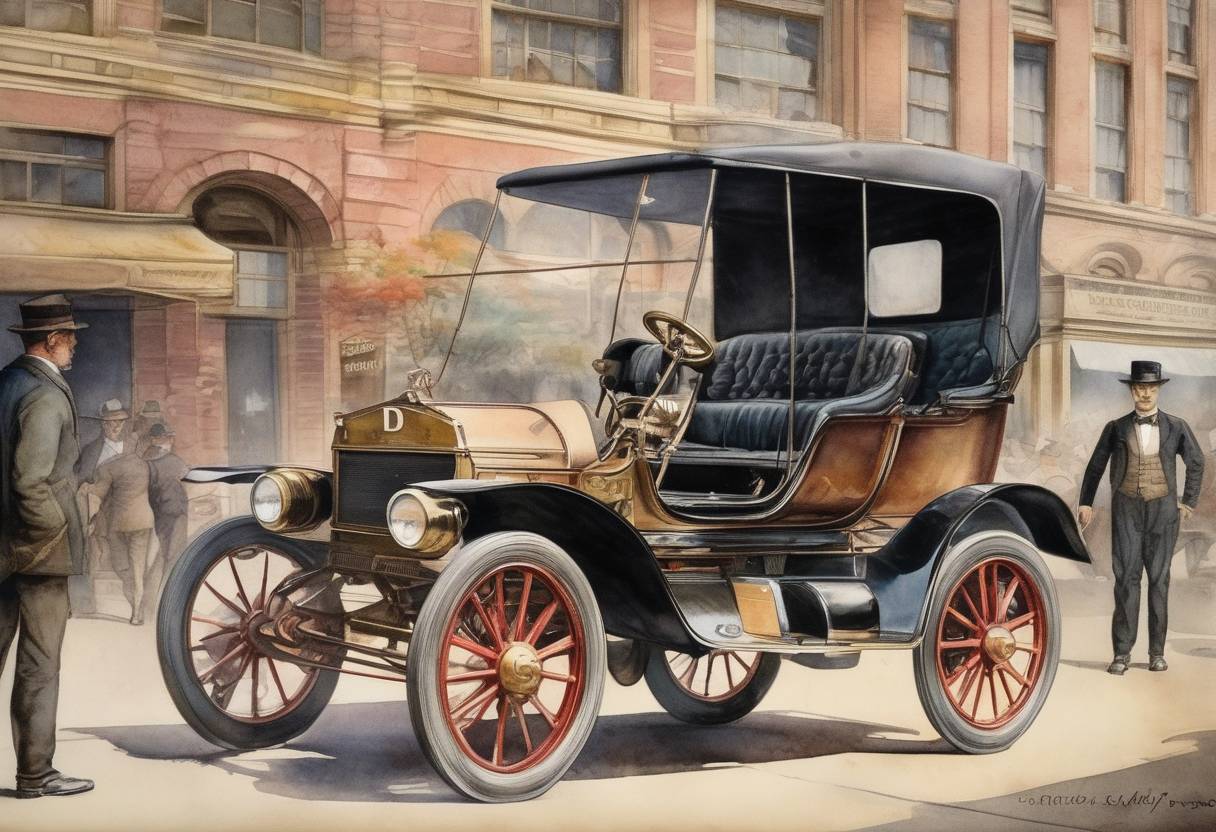
On June 16, 1903, the Ford Motor Company was officially incorporated, marking the beginning of one of the most influential automobile manufacturers in history. This pivotal moment in the automotive industry was spearheaded by Henry Ford, along with a group of investors who shared his vision for revolutionizing transportation.
Before the incorporation of the Ford Motor Company, Henry Ford had been involved in several automotive ventures, including the Detroit Automobile Company and the Henry Ford Company. However, these early attempts were not successful, primarily due to disagreements over production methods and financial management. Ford’s determination to create affordable and reliable automobiles for the masses drove him to seek new opportunities.
The Ford Motor Company was founded with an initial investment of $28,000, contributed by a group of twelve investors. Among these investors were notable figures such as Alexander Y. Malcomson, a coal dealer, and the Dodge brothers, John and Horace, who would later establish their own automobile company. Henry Ford held a 25.5% stake in the company, and he was appointed as vice president and chief engineer.
The company’s first production car, the Model A, was introduced in 1903. However, it was the launch of the Model T in 1908 that truly transformed the automotive landscape. The Model T was designed to be affordable, durable, and easy to maintain, making car ownership accessible to a broader segment of the population. Ford’s innovative use of assembly line production techniques significantly reduced manufacturing costs and time, further contributing to the Model T’s success.
The incorporation of the Ford Motor Company and the subsequent success of the Model T had profound effects on the automobile industry and society at large. Ford’s emphasis on mass production and efficiency set new standards for manufacturing processes across various industries. The widespread adoption of automobiles reshaped urban planning, infrastructure development, and the American way of life.
The Ford Motor Company continued to grow and innovate, becoming a global leader in the automotive industry. Its legacy is not only reflected in its vehicles but also in its contributions to industrial practices and economic development.
The incorporation of the Ford Motor Company on June 16, 1903, was a defining moment in automotive history. Henry Ford’s vision and the support of his investors laid the foundation for a company that would change the world, making personal transportation more accessible and setting the stage for the modern automotive industry.
Source: en.wikipedia.org