Pan American World Airways Ceases Operations
1991 · New York City, United States
Pan American World Airways ceases operations after 64 years due to financial difficulties.
January 6, 1947
Pan American Airlines became the first commercial airline to offer a round-the-world ticket.
New York, United States | Pan American World Airways
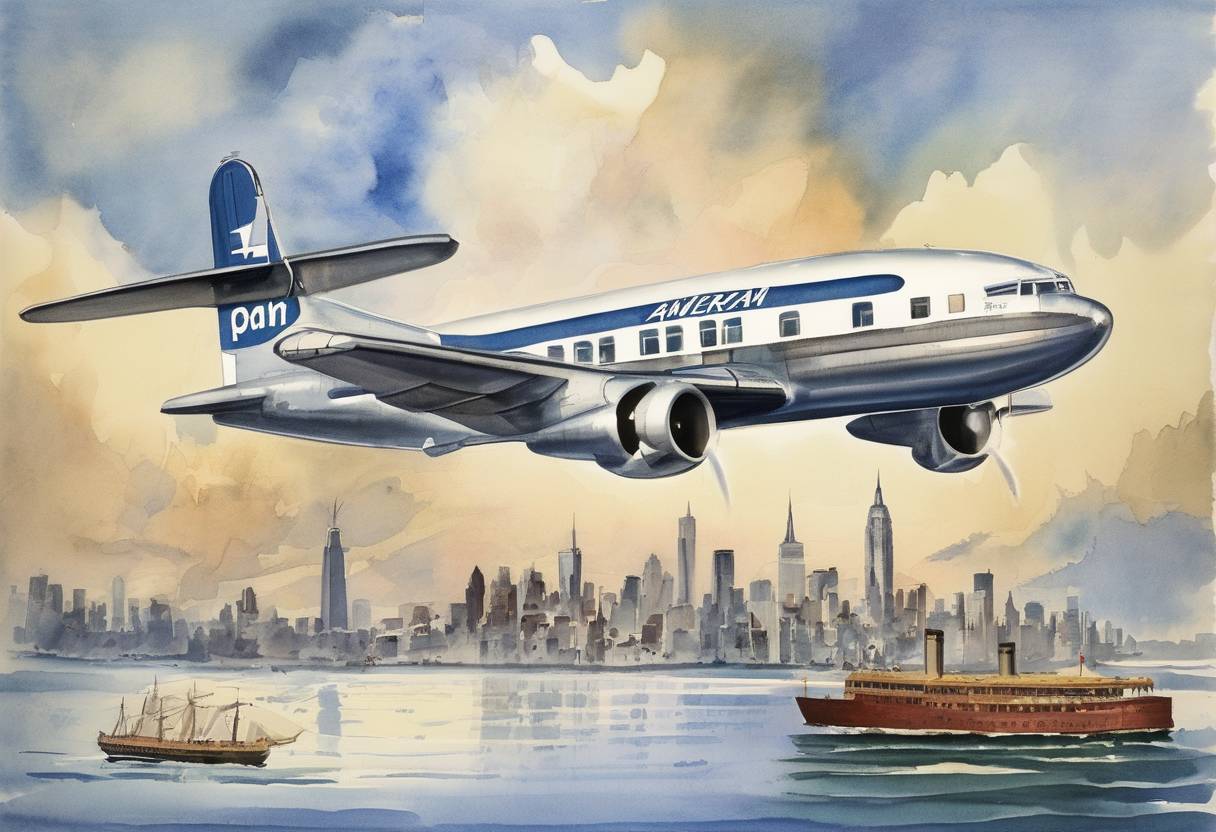
On January 6, 1947, Pan American World Airways, commonly known as Pan Am, made aviation history by becoming the first commercial airline to offer a round-the-world ticket. This milestone marked a significant advancement in global air travel and underscored Pan Am’s role as a pioneer in international aviation.
Pan Am was founded in 1927 and quickly established itself as a leader in the aviation industry. By the mid-20th century, it had become synonymous with international air travel, known for its innovation and expansive network. The airline’s introduction of a round-the-world service was a natural progression in its mission to connect the globe.
Route Details: The inaugural round-the-world service operated in both eastward and westward directions, allowing passengers to circumnavigate the globe. The primary route included stops in key cities such as New York, London, Istanbul, Karachi, Calcutta, Bangkok, Hong Kong, Manila, Guam, Wake Island, Honolulu, and San Francisco.
Aircraft: The service was initially operated using the Lockheed Constellation and Douglas DC-4 aircraft, which were among the most advanced long-range planes of the era.
Duration: The entire journey took approximately two weeks to complete, with scheduled stops for refueling and passenger layovers.
Global Connectivity: This service symbolized a new era of global connectivity, making it possible for travelers to explore multiple continents with a single ticket. It was a significant step towards the modern concept of global tourism and business travel.
Cultural Exchange: By facilitating easier and faster travel between diverse regions, Pan Am’s round-the-world service contributed to increased cultural exchange and understanding.
Economic Impact: The service also had economic implications, as it opened new markets and opportunities for international trade and commerce.
Pan Am’s round-the-world service set a precedent for other airlines, encouraging them to expand their international routes and services. It also solidified Pan Am’s reputation as a trailblazer in the aviation industry. Although Pan Am ceased operations in 1991, its legacy lives on, particularly in how it shaped the development of global air travel.
The introduction of the round-the-world ticket remains a landmark event in aviation history, illustrating the transformative power of air travel in connecting the world.
Source: en.wikipedia.org