Establishment of Jamestown: May 13, 1607
1607 · Jamestown, United States
English settlers establish Jamestown, the first permanent English settlement in North America.
May 14, 1607
Jamestown, the first permanent English settlement in North America, was established in the Colony of Virginia.
Jamestown, Colony of Virginia | Virginia Company
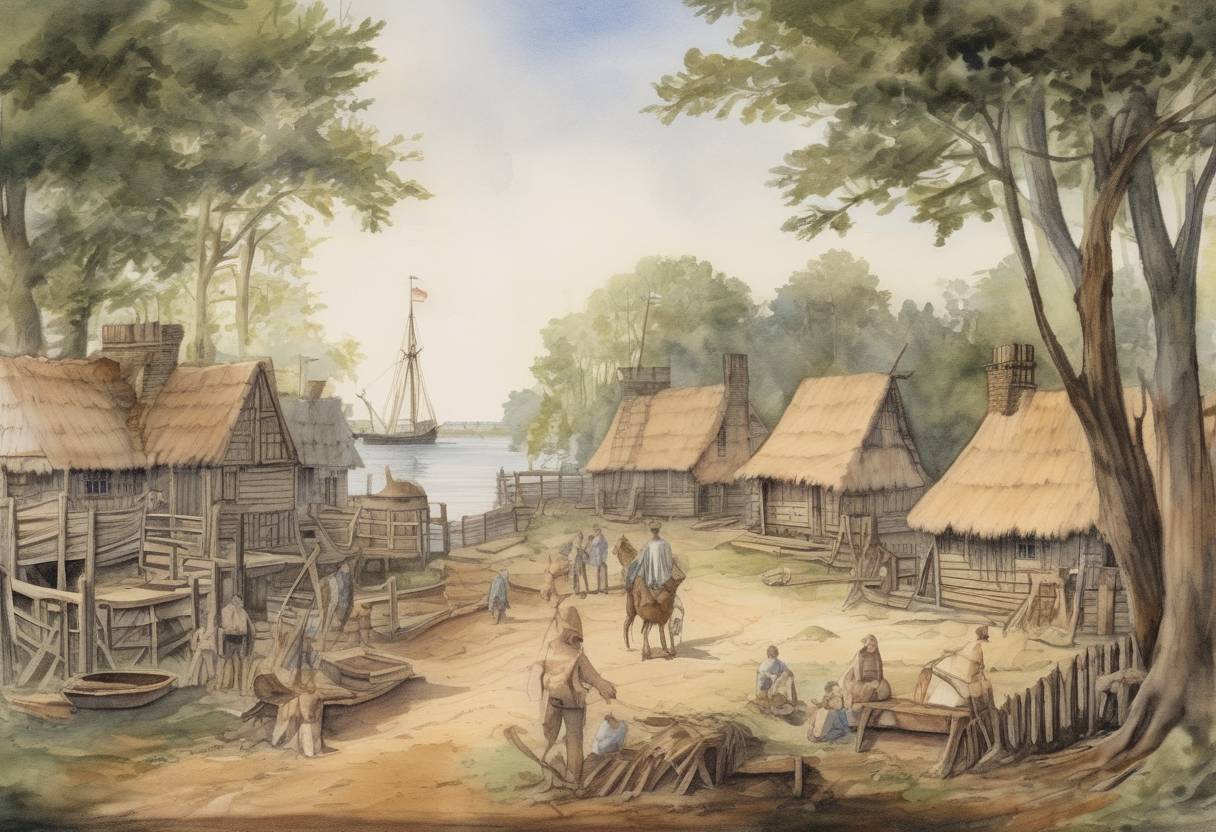
On May 14, 1607, Jamestown was established as the first permanent English settlement in North America. This significant event marked the beginning of what would become the United States. Located in the Colony of Virginia, Jamestown was founded by the Virginia Company of London, a joint-stock company chartered by King James I.
The Virginia Company: The Virginia Company was established to expand English trade and to find new resources. It was motivated by the promise of gold, the desire to find a passage to the Indies, and the opportunity to spread Christianity.
Previous Attempts: Before Jamestown, there were earlier attempts at colonization, such as the Roanoke Colony, which mysteriously disappeared. These failures underscored the challenges of establishing a permanent settlement.
The Voyage: In December 1606, three ships—the Susan Constant, the Godspeed, and the Discovery—set sail from England carrying 104 settlers. The journey was arduous, lasting over four months.
Arrival and Settlement: Upon arrival in May 1607, the settlers chose a site on a peninsula in the James River, which they named Jamestown in honor of King James I. The location was selected for its defensible position and deep-water anchorage.
Harsh Conditions: The settlers faced numerous challenges, including hostile relations with the indigenous Powhatan Confederacy, disease, and a lack of food. The swampy location led to outbreaks of malaria and dysentery.
The “Starving Time”: During the winter of 1609-1610, known as the “Starving Time,” the colony suffered extreme food shortages. Of the 500 colonists, only about 60 survived.
Captain John Smith: A pivotal leader in the early years of Jamestown, Smith’s leadership and negotiations with the Powhatan Confederacy were crucial for the colony’s survival.
Pocahontas: The daughter of Chief Powhatan, Pocahontas played a significant role in mediating relations between the settlers and the indigenous people. Her marriage to John Rolfe in 1614 helped establish a period of peace.
Tobacco Cultivation: John Rolfe’s introduction of tobacco cultivation in 1612 transformed Jamestown into a profitable enterprise, ensuring its economic survival and growth.
Expansion and Legacy: Jamestown served as the capital of the Virginia Colony until 1699. Its establishment laid the groundwork for further English colonization and expansion in North America.
Cultural Impact: The settlement’s history is a complex narrative of cooperation and conflict with Native Americans, the beginnings of American democracy with the establishment of the House of Burgesses in 1619, and the introduction of African slaves, marking the start of a long and troubled history of slavery in America.
Jamestown’s establishment on May 14, 1607, represents a pivotal moment in American history, symbolizing both the potential and the challenges of European colonization in the New World.
Source: en.wikipedia.org