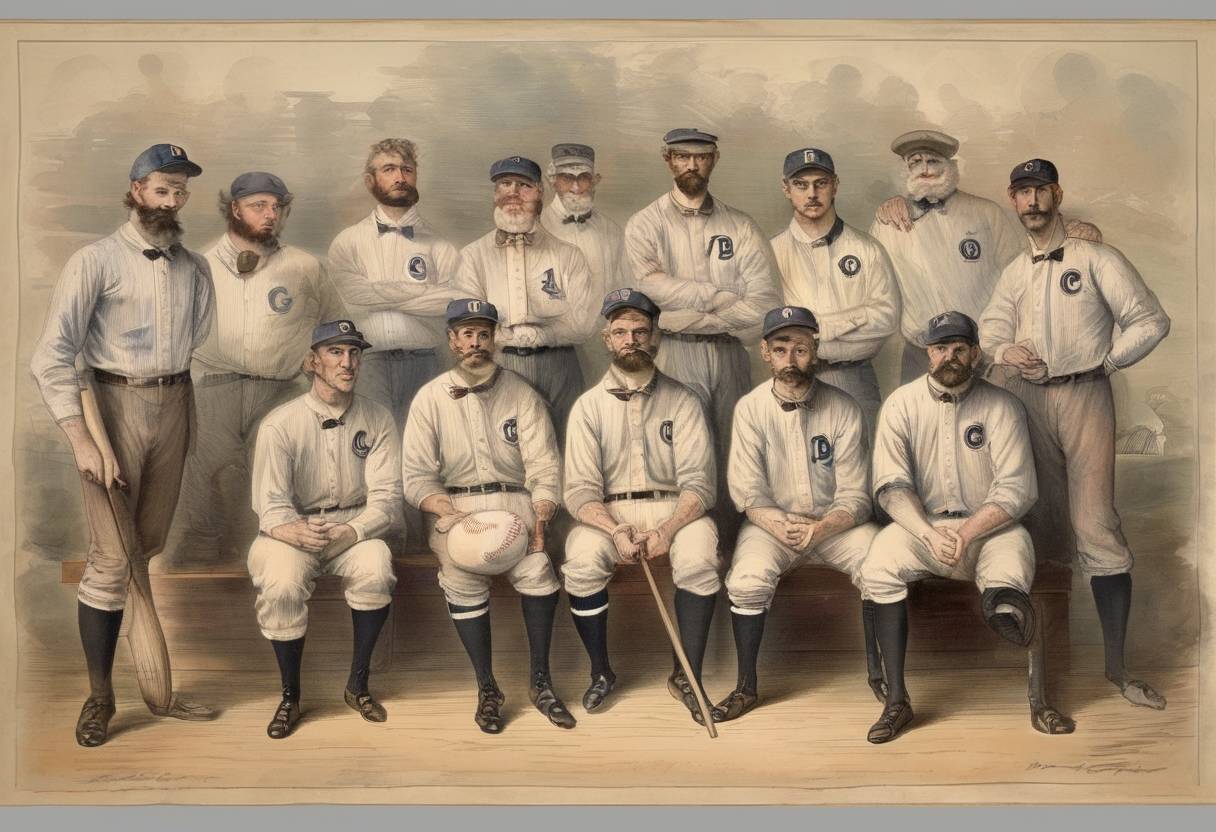
On February 2, 1876, a pivotal moment in the history of American sports occurred with the formation of The National League of Professional Baseball Clubs. This event marked the establishment of the first major league in baseball, setting the foundation for the modern structure of professional baseball in the United States.
Context and Background
Before the formation of the National League, baseball was primarily organized through the National Association of Professional Base Ball Players (NAPBBP), which was established in 1871. However, the NAPBBP faced numerous challenges, including financial instability, lack of centralized authority, and issues with gambling and game-fixing. These problems led to a desire for a more structured and reliable organization.
William Hulbert’s Initiative: William Hulbert, a Chicago businessman and president of the Chicago White Stockings (now the Chicago Cubs), was a driving force behind the creation of the National League. He sought to create a league that would bring more stability and integrity to professional baseball.
Meeting in New York City: On February 2, 1876, representatives from eight baseball clubs met at the Grand Central Hotel in New York City. These clubs included the Boston Red Stockings, Chicago White Stockings, Cincinnati Red Stockings, Hartford Dark Blues, Louisville Grays, New York Mutuals, Philadelphia Athletics, and St. Louis Brown Stockings.
Adoption of a Constitution: During this meeting, the representatives adopted a constitution that outlined the structure and governance of the new league. This included rules for scheduling, player contracts, and the prohibition of alcohol sales at games.
Significance and Impact
Structured Competition: The National League introduced a more organized and competitive structure to professional baseball, with a fixed schedule and standardized rules. This helped increase the sport’s popularity and credibility.
Foundation for Modern Baseball: The establishment of the National League laid the groundwork for the development of Major League Baseball (MLB) as we know it today. It set a precedent for the creation of other leagues and the eventual formation of the American League in 1901, leading to the first World Series in 1903.
Cultural Influence: Baseball’s growth into America’s pastime can be traced back to the stability and organization brought about by the National League. It played a crucial role in shaping the cultural and social landscape of the United States.
Aftermath and Legacy
The National League’s formation was a turning point that helped professionalize baseball and elevate it to a major national sport. Over the years, it has expanded and evolved, but its foundational principles continue to influence the sport. The league’s creation marked the beginning of a new era in sports, where organized leagues became a model for professional sports worldwide.
In summary, the establishment of The National League of Professional Baseball Clubs on February 2, 1876, was a landmark event that transformed baseball into a structured and professional sport, paving the way for its enduring legacy in American culture.