The Last Commercial Flight of the Concorde: October 24, 2003
2003 · London, United Kingdom
The Concorde makes its last commercial flight, ending an era of supersonic passenger travel.
January 21, 1976
The Concorde supersonic passenger jet began commercial service with flights from London to Bahrain and Paris to Rio de Janeiro.
London and Paris, United Kingdom and France | British Airways and Air France
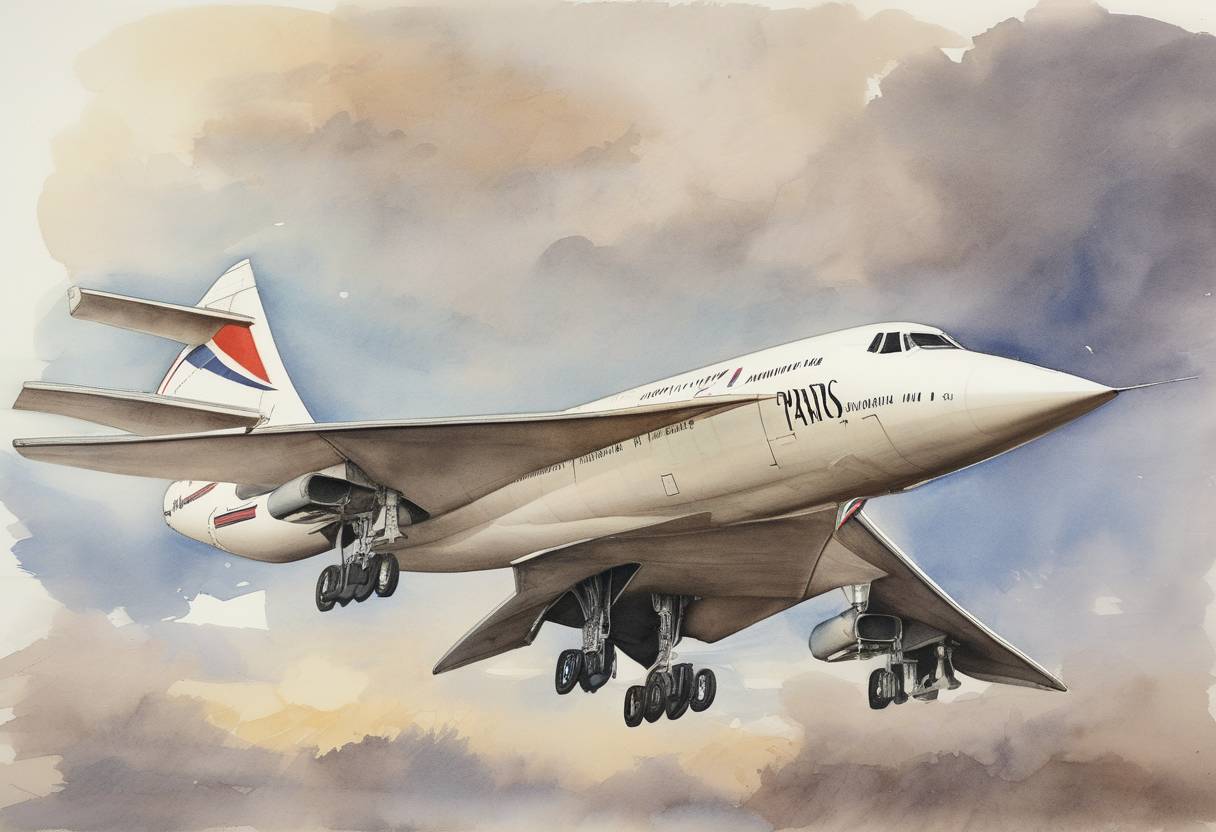
On January 21, 1976, the Concorde supersonic passenger jet embarked on its inaugural commercial flights, marking a significant milestone in aviation history. This event was the culmination of years of development and international collaboration between the British and French governments and their respective aerospace industries.
The Concorde project began in the early 1960s as a joint venture between the United Kingdom and France, with the goal of creating a supersonic passenger aircraft. The British Aircraft Corporation (BAC) and France’s Aérospatiale were the primary manufacturers. The Concorde was designed to fly at speeds over twice the speed of sound (Mach 2), significantly reducing transatlantic flight times.
On January 21, 1976, two Concorde aircraft took off simultaneously from different locations:
British Airways Flight: Departed from London Heathrow Airport, bound for Bahrain. This route was chosen due to political and economic considerations, as well as the need to establish a viable market for supersonic travel.
Air France Flight: Departed from Paris Charles de Gaulle Airport, heading to Rio de Janeiro with a stopover in Dakar, Senegal. This route highlighted the Concorde’s ability to connect distant continents with unprecedented speed.
The Concorde’s entry into commercial service was a landmark achievement in aviation, showcasing advanced aerodynamics, engineering, and international cooperation. It offered a glimpse into the future of air travel, promising reduced travel times and a luxurious flying experience.
Despite its technological marvel, the Concorde faced several challenges:
The Concorde continued to operate until 2003, when it was retired due to a combination of economic factors and a decline in demand following the tragic crash of Air France Flight 4590 in 2000.
The Concorde remains an iconic symbol of 20th-century aviation innovation. Its inaugural flights on January 21, 1976, demonstrated the potential of supersonic travel and left a lasting legacy in the history of commercial aviation. Despite its eventual retirement, the Concorde’s influence persists in ongoing discussions about the future of supersonic passenger travel.
Source: en.wikipedia.org