The Battle of Bloody Run: July 31, 1763
1763 · Detroit, United States
The Battle of Bloody Run took place during Pontiac's War, where British forces were ambushed by Native American warriors.
June 2, 1763
Pontiac's War: A coordinated attack on British forts in the Great Lakes region begins, led by Pontiac, an Ottawa leader.
Great Lakes region, present-day United States | Pontiac's War
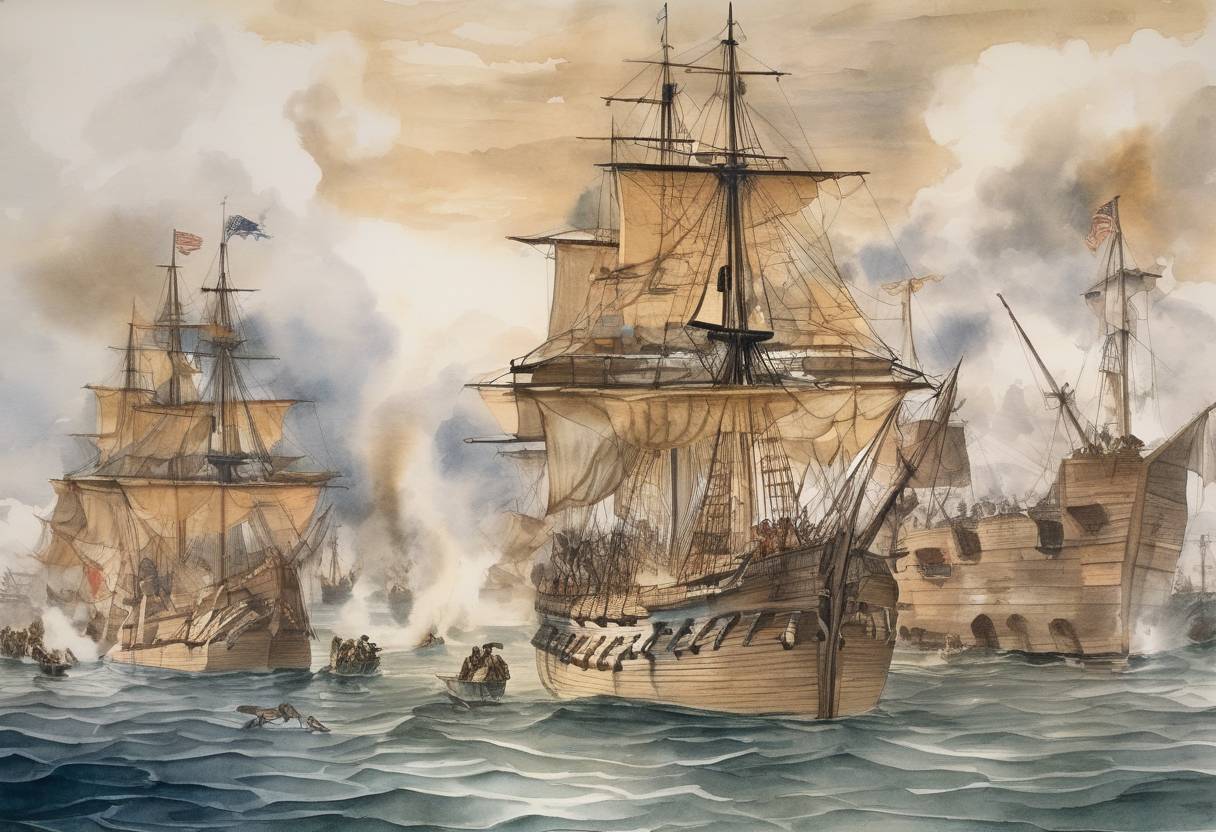
On June 2, 1763, a significant event in the history of Native American resistance against European colonial powers took place. This was the beginning of a coordinated series of attacks on British forts in the Great Lakes region, led by Pontiac, an influential leader of the Ottawa tribe. This conflict, known as Pontiac’s War, was a pivotal moment in the struggle for control over North American territories following the French and Indian War.
The roots of Pontiac’s War can be traced back to the conclusion of the French and Indian War in 1763. The Treaty of Paris, which ended the war, resulted in France ceding vast territories in North America to the British. This shift in power dynamics greatly affected the indigenous tribes of the region, who had previously maintained alliances with the French. The British, unlike the French, were less inclined to engage in the same level of trade and diplomatic relations with the Native American tribes, leading to increased tensions.
Pontiac, an Ottawa leader, emerged as a central figure in the resistance against British encroachment. Recognizing the threat posed by British expansion and their disregard for existing agreements with Native tribes, Pontiac sought to unite various tribes in a concerted effort to expel the British from their lands. His leadership was instrumental in organizing a widespread uprising across the Great Lakes region.
On June 2, 1763, Pontiac and his allies initiated a series of attacks on British forts and settlements. The strategy involved simultaneous assaults on multiple forts, aiming to surprise and overwhelm the British forces. The attacks were part of a broader campaign that saw the capture or destruction of several key forts, including Fort Sandusky and Fort Michilimackinac.
The initial success of Pontiac’s coordinated attacks demonstrated the effectiveness of Native American resistance and highlighted the vulnerabilities of British colonial defenses. However, the British eventually responded with military reinforcements and strategic counterattacks. The conflict continued until 1766, when a peace treaty was negotiated.
While Pontiac’s War did not achieve its ultimate goal of driving the British out of the region, it had significant consequences. It prompted the British government to reconsider its policies towards Native American tribes, leading to the Proclamation of 1763, which aimed to stabilize the frontier by restricting colonial expansion westward.
Pontiac’s War is a testament to the resilience and agency of Native American tribes in the face of colonial expansion. It underscored the complexities of colonial-Native relations and set the stage for future conflicts and negotiations. The war also highlighted the limitations of British colonial power and the necessity of engaging with indigenous peoples as sovereign entities.
In summary, the coordinated attacks led by Pontiac on June 2, 1763, were a crucial moment in the broader narrative of Native American resistance and colonial history in North America.
Source: en.wikipedia.org