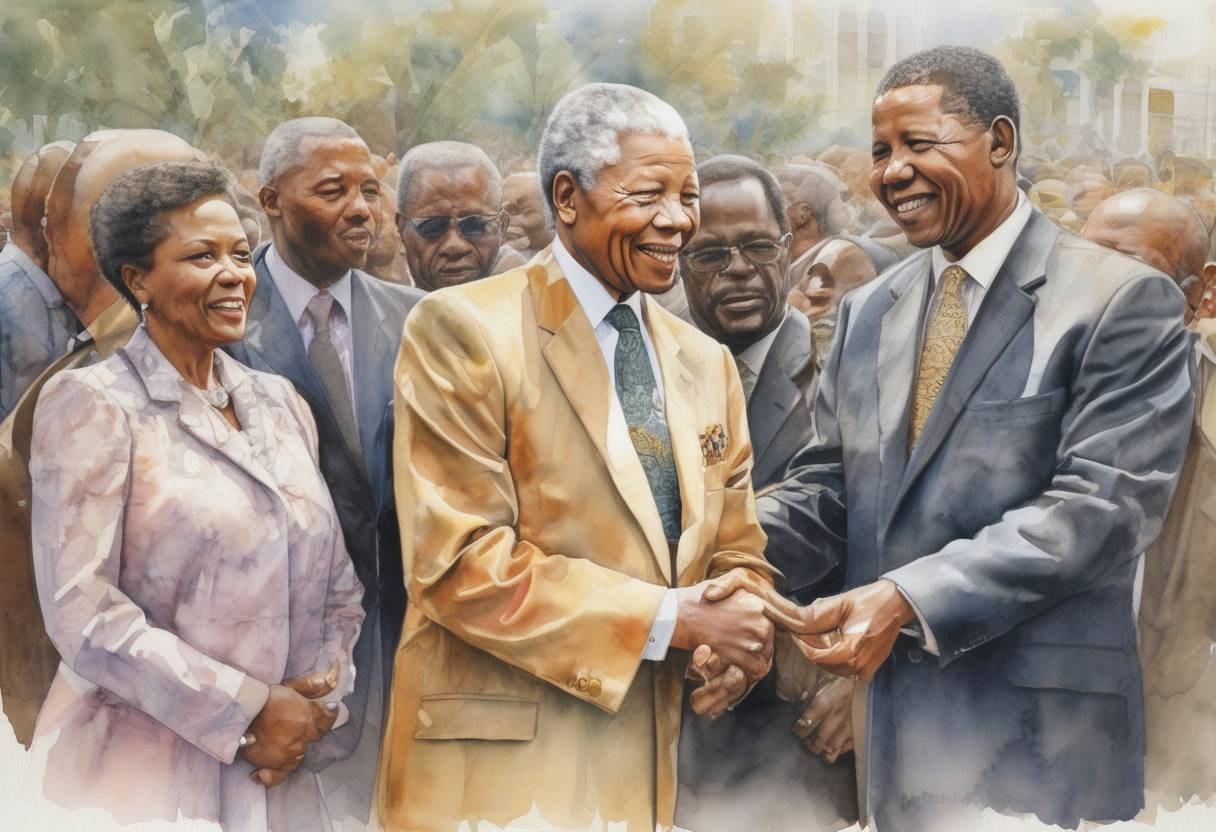
Nelson Mandela’s Inauguration: May 9, 1994
On May 9, 1994, Nelson Mandela was inaugurated as the first black president of South Africa, a pivotal moment in the nation’s history that marked the official end of apartheid—a system of institutionalized racial segregation and discrimination that had been in place since 1948.
Context Leading Up to the Inauguration
Apartheid Regime: For decades, South Africa was governed under apartheid, which enforced racial discrimination and disenfranchised the non-white population. This system was characterized by severe racial segregation, economic disparity, and political oppression.
Mandela’s Imprisonment: Nelson Mandela, a key figure in the anti-apartheid movement, was imprisoned for 27 years, from 1962 until his release in 1990. His imprisonment became a global symbol of the struggle against apartheid.
Negotiations and Reforms: The late 1980s and early 1990s saw significant political changes. Under President F.W. de Klerk, the South African government began dismantling apartheid laws and negotiating with anti-apartheid leaders, including Mandela, to transition towards a multiracial democracy.
1994 General Elections: In April 1994, South Africa held its first multiracial general elections. The African National Congress (ANC), led by Mandela, won a decisive victory, securing 62% of the vote.
The Inauguration Ceremony
Date and Venue: The inauguration took place on May 10, 1994, at the Union Buildings in Pretoria, South Africa.
Significance: Mandela’s inauguration was attended by numerous international dignitaries and was broadcast worldwide. It symbolized a new era of reconciliation and unity for South Africa.
Mandela’s Speech: In his inaugural address, Mandela emphasized the themes of reconciliation, nation-building, and the importance of a united South Africa. He famously stated, “Never, never and never again shall it be that this beautiful land will again experience the oppression of one by another.”
Aftermath and Historical Significance
Reconciliation and Nation-Building: Mandela’s presidency focused on healing the deep racial divides and fostering national unity. He established the Truth and Reconciliation Commission to address past human rights abuses.
Legacy: Mandela’s leadership and commitment to peace and equality earned him global respect and admiration. His presidency laid the groundwork for a democratic South Africa and inspired movements for justice and equality worldwide.
Continued Challenges: Despite the end of apartheid, South Africa faced ongoing challenges, including economic inequality and social tensions. Mandela’s successors continued to address these issues in the years following his presidency.
Nelson Mandela’s inauguration was not just a political milestone but a profound moment of transformation for South Africa, symbolizing hope and the triumph of the human spirit over adversity.