Battle of Köse Dağ - July 1, 1243
1243 · Köse Dağ, Turkey
Battle of Köse Dağ: The Seljuk Turks are decisively defeated by the Mongols, resulting in Mongol dominance over Anatolia.
July 14, 1223
The Battle of the Kalka River took place, where the Mongol Empire defeated the Kievan Rus' and their allies.
Kalka River, Ukraine | Mongol Empire
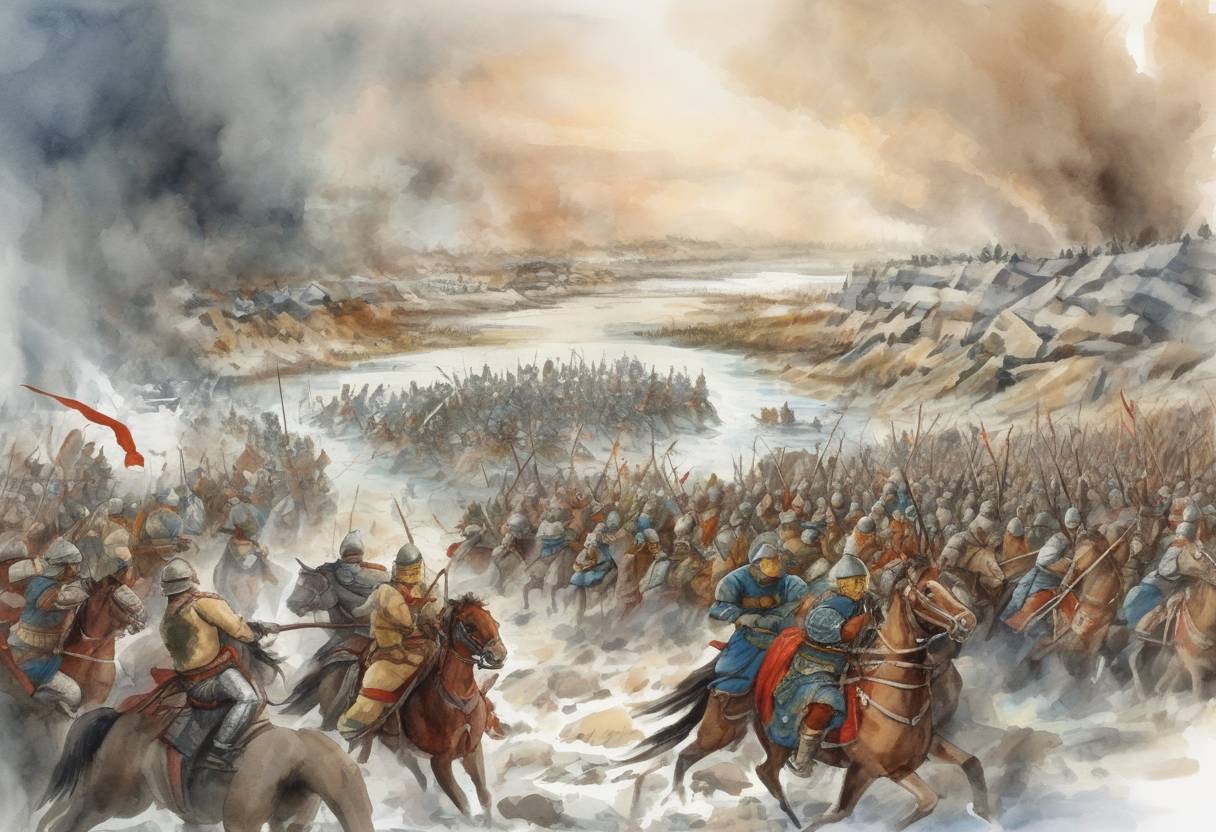
The Battle of the Kalka River, which occurred on May 31, 1223, was a significant military engagement between the Mongol Empire and a coalition of Kievan Rus’ principalities and their allies. This battle is notable for its demonstration of Mongol military prowess and its impact on the Kievan Rus’ territories.
Mongol Expansion: By the early 13th century, the Mongol Empire, under the leadership of Genghis Khan, was rapidly expanding across Asia. The Mongols had already conquered large parts of Central Asia and were pushing westward.
Kievan Rus’: The Kievan Rus’ was a federation of Slavic and Finnic peoples in Eastern Europe, centered around the city of Kiev. By the early 13th century, the federation was fragmented into various principalities, often engaged in internal conflicts.
Mongol Incursion: In 1222, Mongol generals Subutai and Jebe led a reconnaissance mission into the Caucasus and the Pontic Steppe, defeating several local powers, including the Cumans, who sought refuge with the Kievan Rus’.
Allied Forces: The Kievan Rus’, led by Mstislav the Bold of Galich, Mstislav III of Kiev, and other regional princes, formed an alliance with the Cumans to confront the Mongol threat. The coalition gathered a substantial force, estimated to be around 30,000 to 40,000 troops.
Mongol Strategy: The Mongols, numbering around 20,000, employed their typical tactics of feigned retreats and ambushes. They lured the Rus’ forces into a trap by pretending to retreat, drawing them into a vulnerable position.
Decisive Mongol Victory: The battle culminated near the Kalka River, where the Mongols decisively defeated the Rus’ and Cuman forces. The Mongols’ superior mobility, discipline, and tactical acumen overwhelmed the larger but less coordinated Rus’ army.
Rus’ Losses: The defeat was catastrophic for the Kievan Rus’. Many of their leaders were captured and executed, and the coalition forces suffered heavy casualties.
Mongol Withdrawal: Despite their victory, the Mongols did not immediately occupy the Rus’ territories. Their primary mission was reconnaissance, and they returned eastward after the battle.
Long-term Impact: The battle exposed the vulnerabilities of the fragmented Kievan Rus’ and foreshadowed future Mongol invasions. In the 1230s, the Mongols would return under Batu Khan, leading to the eventual subjugation of the Rus’ principalities during the Mongol invasion of Rus’.
The Battle of the Kalka River is a pivotal moment in Eastern European history. It marked the first major encounter between the Mongols and the Eastern Slavs, setting the stage for the Mongol domination of the region. The battle highlighted the need for unity among the Rus’ principalities, a lesson that would resonate throughout their subsequent history under Mongol rule.
Source: en.wikipedia.org