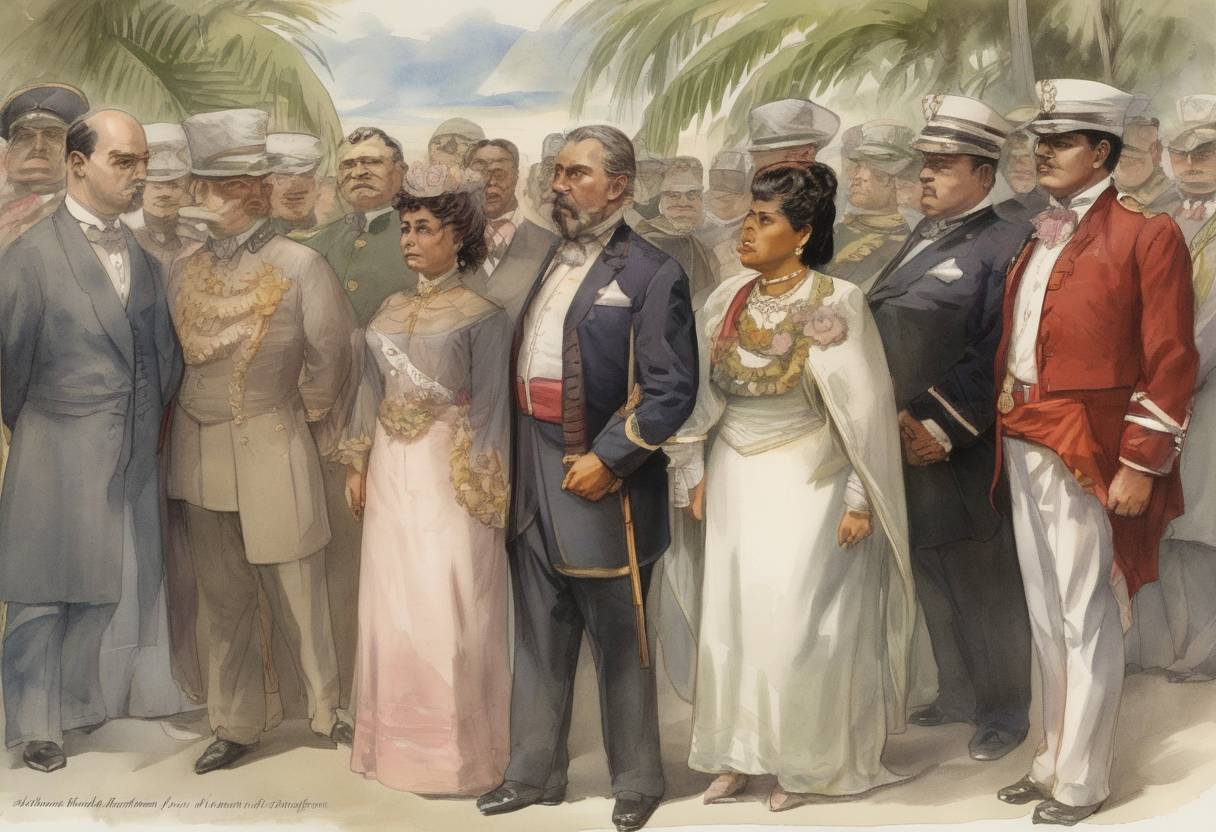
Overthrow of the Hawaiian Kingdom - January 17, 1893
On January 17, 1893, a pivotal event in Hawaiian history unfolded as Queen Liliʻuokalani, the last reigning monarch of the Hawaiian Kingdom, was deposed in a coup orchestrated by a group of American and European businessmen. This event marked the end of the Hawaiian monarchy and led to the establishment of the Republic of Hawaii.
Background
The Hawaiian Kingdom, established in 1795, had been an independent nation with a constitutional monarchy. By the late 19th century, Hawaii’s strategic location and fertile lands attracted significant interest from foreign powers, particularly the United States. American businessmen had established a strong economic presence in Hawaii, particularly in the sugar industry, which was a major driver of the Hawaiian economy.
In 1887, the “Bayonet Constitution” was imposed on King Kalākaua by a group of mostly American residents, significantly reducing the monarch’s powers and disenfranchising many native Hawaiians. This constitution also granted substantial influence to foreign residents.
Key Events Leading to the Overthrow
Economic Interests: The American business community in Hawaii was concerned about the potential loss of economic privileges and the imposition of tariffs on sugar exports to the United States. They sought to protect their interests by advocating for annexation to the U.S.
Political Tensions: Queen Liliʻuokalani ascended to the throne in 1891 and attempted to restore the monarchy’s authority by drafting a new constitution that would restore power to the crown and the native Hawaiian people. This move alarmed the foreign business community.
Formation of the Committee of Safety: In response to the Queen’s proposed constitution, a group of 13 businessmen and politicians, known as the “Committee of Safety,” was formed. They sought support from the U.S. government to overthrow the monarchy.
The Overthrow
On January 17, 1893, the Committee of Safety, with the backing of the U.S. Minister to Hawaii, John L. Stevens, and the presence of U.S. Marines from the USS Boston, executed a coup d’état. The Queen, recognizing the futility of armed resistance and hoping to avoid bloodshed, peacefully surrendered under protest, trusting that the United States would eventually restore her to the throne.
Establishment of the Republic of Hawaii
Following the overthrow, a provisional government was established, led by Sanford B. Dole. In 1894, the Republic of Hawaii was declared, with Dole as its president. The new government sought annexation by the United States, a goal that was realized in 1898 when Hawaii became a U.S. territory.
Aftermath and Historical Significance
Annexation: The annexation of Hawaii by the United States in 1898 was a significant step in America’s expansionist policies in the Pacific.
Cultural Impact: The overthrow and subsequent annexation had profound effects on Hawaiian culture and identity, leading to a resurgence of native Hawaiian activism in the 20th century.
Apology Resolution: In 1993, the U.S. Congress passed the “Apology Resolution,” formally apologizing for the overthrow of the Hawaiian Kingdom and acknowledging the historical injustices faced by native Hawaiians.
The overthrow of the Hawaiian Kingdom remains a deeply significant and contentious event in Hawaiian history, symbolizing the complex interplay of power, economics, and cultural identity.