Peru Declares Independence from Spain: July 28, 1821
1821 · Lima, Peru
Peru declared its independence from Spain, marking a significant moment in the Latin American wars of independence.
July 9, 1816
Argentina declares independence from Spain.
San Miguel de Tucumán, Argentina | Congress of Tucumán
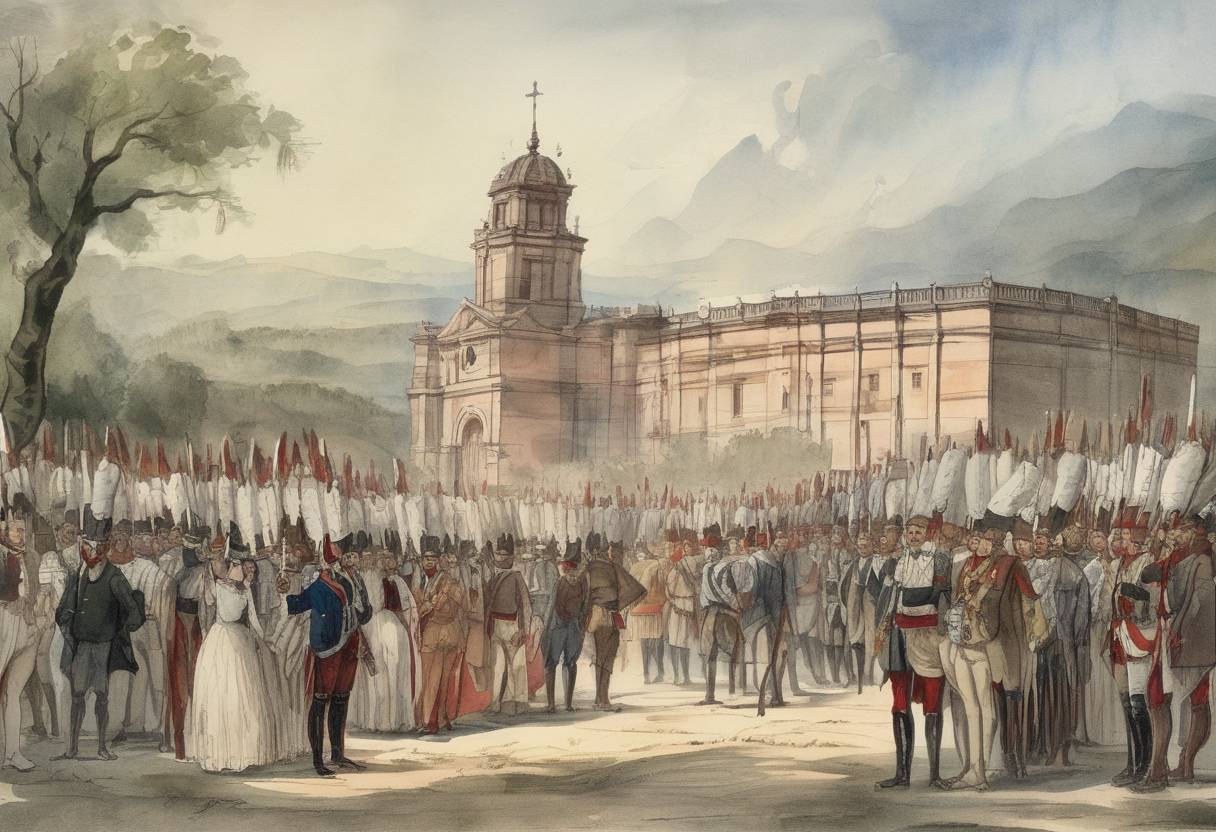
On July 9, 1816, the Congress of Tucumán declared the independence of the United Provinces of the Río de la Plata, marking a pivotal moment in the history of Argentina. This declaration was a significant step in the broader Latin American struggle for independence from Spanish colonial rule.
The early 19th century was a period of upheaval in Latin America, influenced by the Enlightenment ideas of liberty and self-governance, as well as the successful American and French Revolutions. The Napoleonic Wars further destabilized Spanish control over its colonies. In 1808, Napoleon’s invasion of Spain and the subsequent abdication of King Ferdinand VII created a power vacuum, prompting many Spanish colonies to reconsider their allegiance to the Spanish crown.
In the Río de la Plata region, which included present-day Argentina, the May Revolution of 1810 marked the beginning of the independence movement. The revolution led to the establishment of a local government, the Primera Junta, which sought greater autonomy from Spain.
By 1816, the need for a formal declaration of independence became apparent. Representatives from various provinces convened in the city of San Miguel de Tucumán to discuss the future of the region. The Congress of Tucumán was tasked with drafting a declaration that would solidify the region’s break from Spanish rule.
On July 9, 1816, the Congress declared the independence of the United Provinces of the Río de la Plata. The declaration was a bold assertion of sovereignty and a rejection of Spanish colonial authority. It was signed by representatives from several provinces, although some regions, such as Paraguay and the Banda Oriental (modern-day Uruguay), were not represented due to ongoing conflicts and differing political alignments.
The declaration of independence was a crucial step in the consolidation of Argentine national identity. However, the struggle for independence was far from over. The region faced internal conflicts and external threats, including attempts by Spanish forces to regain control. It wasn’t until the defeat of the Spanish at the Battle of Ayacucho in 1824 that the independence of the former Spanish colonies in South America was fully secured.
The declaration laid the groundwork for the development of Argentina as a sovereign nation. It also inspired other Latin American territories to pursue their own paths to independence, contributing to the wave of decolonization that swept across the continent in the early 19th century.
Argentina’s declaration of independence is a landmark event in the history of Latin America. It symbolizes the region’s struggle for self-determination and the broader movement against colonialism. The events of July 9, 1816, are celebrated annually in Argentina as Independence Day, a national holiday commemorating the country’s journey towards freedom and sovereignty.
Source: en.wikipedia.org