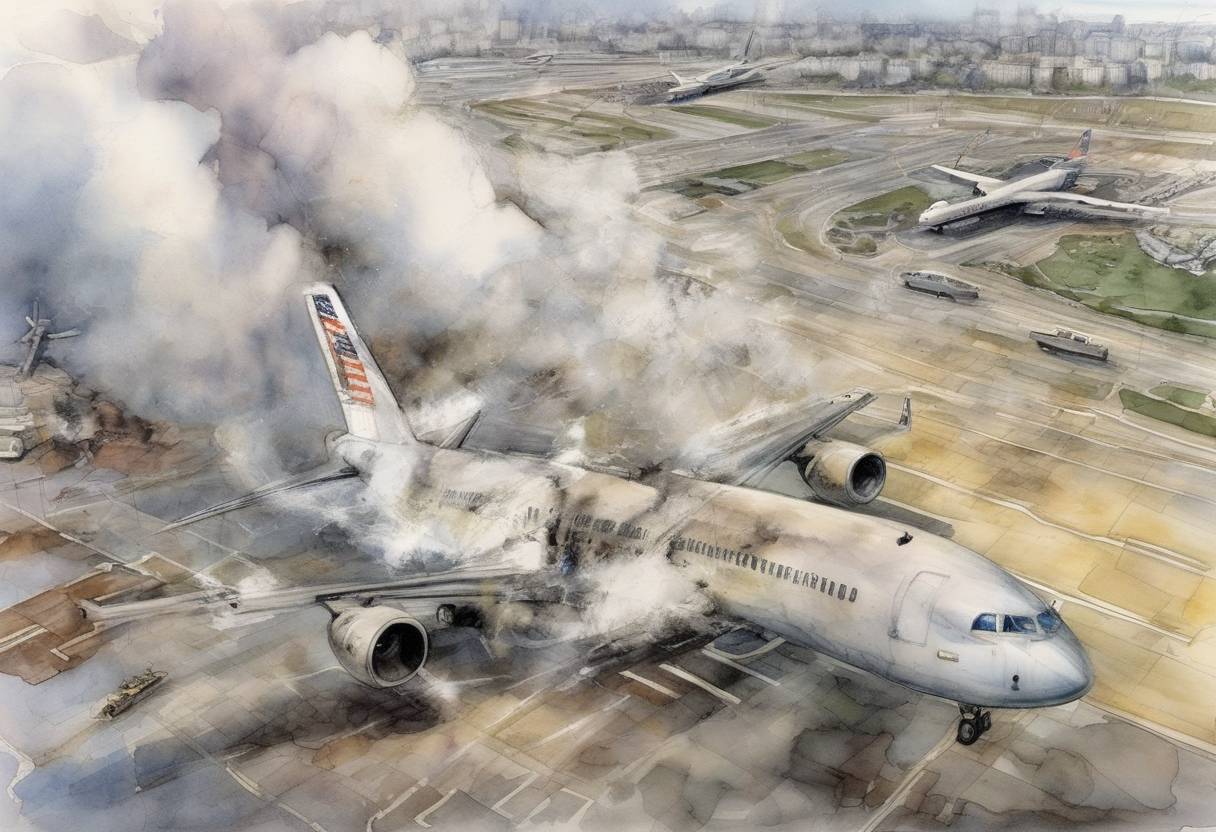
Grounding of Civilian Aircraft Traffic on September 13, 2001
In the wake of the September 11, 2001, terrorist attacks, the United States government took unprecedented measures to ensure national security and public safety. On September 13, 2001, for the first time in U.S. history, all civilian aircraft traffic was grounded, with only military and emergency flights permitted to operate. This decision was part of a broader strategy to prevent further attacks and to assess the security situation across the nation.
Context Leading to the Grounding
September 11 Attacks: On September 11, 2001, four commercial airliners were hijacked by members of the terrorist group al-Qaeda. Two planes were flown into the Twin Towers of the World Trade Center in New York City, one into the Pentagon in Arlington, Virginia, and the fourth, United Airlines Flight 93, crashed into a field in Pennsylvania after passengers attempted to regain control from the hijackers.
Immediate Response: In response to the attacks, the Federal Aviation Administration (FAA) ordered all aircraft to land at the nearest airport, effectively grounding all flights across the United States. This was a rapid response to the unfolding crisis, aimed at preventing any further hijackings.
The Grounding on September 13
Security Assessment: By September 13, the U.S. government, in coordination with the FAA and other agencies, continued to keep civilian air traffic grounded to conduct a thorough security assessment. This included reviewing airport security protocols and ensuring that no additional threats were imminent.
Military and Emergency Flights: During this period, only military and emergency flights were allowed to operate. This included flights for medical emergencies, military operations, and other critical missions deemed necessary for national security.
Aftermath and Consequences
Resumption of Flights: The grounding of civilian flights lasted until September 14, 2001, when the FAA began a phased reopening of the airspace. This process involved implementing new security measures, such as reinforced cockpit doors and increased screening procedures for passengers and luggage.
Long-term Security Changes: The events of September 11 and the subsequent grounding led to significant changes in aviation security. The Transportation Security Administration (TSA) was established in November 2001 to oversee security in all modes of transportation, with a particular focus on aviation.
Impact on the Aviation Industry: The grounding had a profound impact on the aviation industry, leading to financial losses and operational challenges. Airlines faced a sharp decline in passenger numbers, prompting restructuring and changes in business models.
Broader Historical Significance
The grounding of civilian aircraft traffic on September 13, 2001, marked a pivotal moment in U.S. history, highlighting the vulnerabilities in national security and prompting a comprehensive overhaul of aviation safety protocols. It underscored the need for vigilance and adaptability in the face of new types of threats, shaping policies and practices that continue to influence aviation security today.