Christopher Columbus' Fourth and Final Voyage
1502 · Cadiz, Spain
Christopher Columbus embarked on his fourth and final voyage to the New World, aiming to find a passage to Asia.
September 18, 1502
Christopher Columbus lands at Costa Rica on his fourth and final voyage to the New World.
Puerto Limón, Costa Rica | Spanish Crown
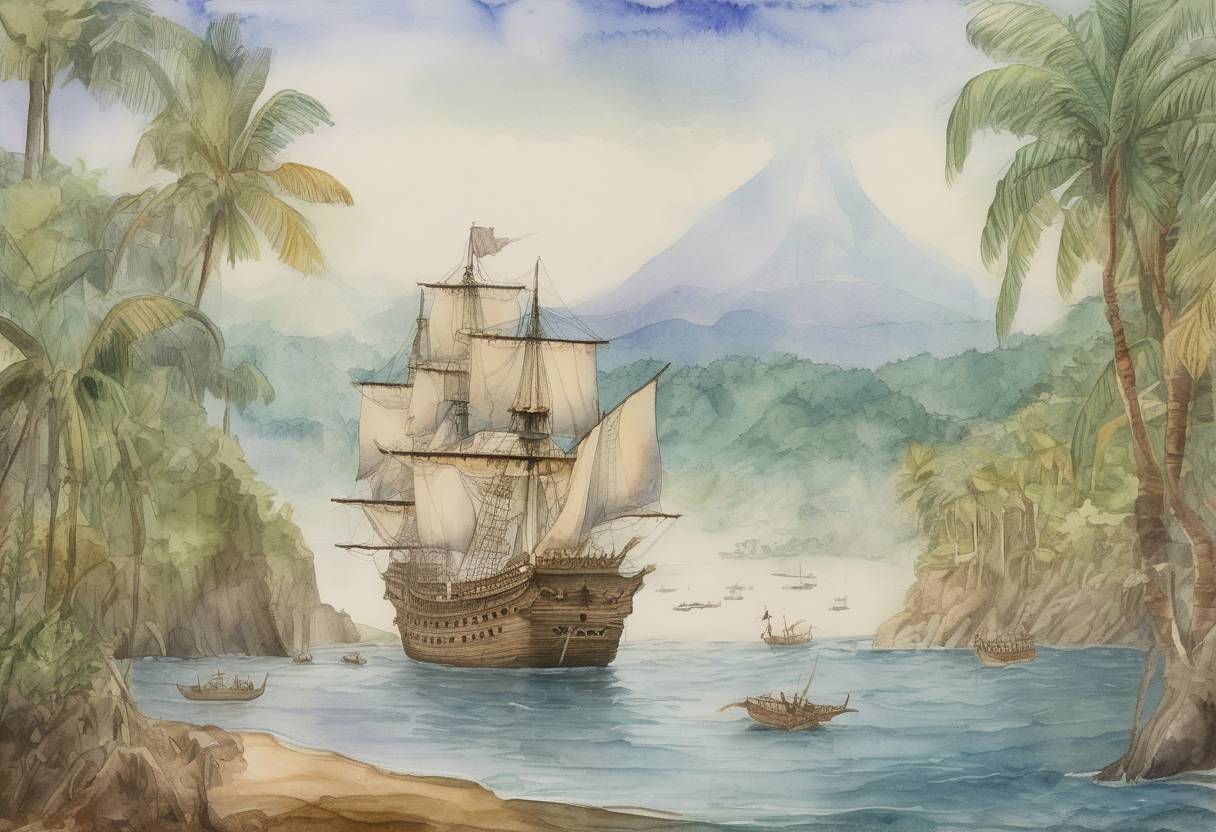
On September 18, 1502, during his fourth and final voyage to the New World, Christopher Columbus landed on the coast of what is now known as Costa Rica. This event marked a significant moment in the exploration of Central America and the broader Age of Discovery.
Fourth Voyage Objectives: Columbus embarked on his fourth voyage in 1502 with the primary goal of finding a westward passage to Asia. Despite previous setbacks and controversies, he was determined to continue his explorations under the sponsorship of the Spanish Crown.
Fleet Composition: The expedition consisted of four ships: the Capitana, Gallega, Vizcaína, and Santiago de Palos. Columbus was accompanied by his brother Bartholomew and his son Ferdinand, along with a crew of seasoned sailors.
Initial Challenges: Columbus faced numerous challenges during this voyage, including severe storms and hostile encounters with indigenous peoples. His fleet was battered by hurricanes as they navigated the Caribbean Sea.
Discovery of Costa Rica: On September 18, 1502, Columbus and his crew reached the coast of present-day Costa Rica. They landed near the area known today as Puerto Limón. The name “Costa Rica,” meaning “Rich Coast,” was inspired by the gold ornaments worn by the indigenous people they encountered.
Interactions with Indigenous Peoples: Columbus and his crew had interactions with the local indigenous groups, who were part of the complex network of societies in Central America. These encounters were marked by both trade and tension.
Exploration of Central America: This landing was part of Columbus’s broader exploration of the Central American coastline, which included visits to parts of modern-day Honduras, Nicaragua, and Panama. His observations and reports contributed to European knowledge of the region.
End of the Voyage: Columbus’s fourth voyage was fraught with difficulties, including shipwrecks and deteriorating health. He eventually returned to Spain in 1504, marking the end of his exploratory endeavors.
Legacy of Columbus: Columbus’s voyages, including his landing in Costa Rica, played a crucial role in the European exploration and eventual colonization of the Americas. His expeditions opened the door for subsequent explorers and the expansion of European influence in the New World.
Cultural and Historical Reflection: The arrival of Columbus in the Americas is a complex historical event, viewed differently by various cultures and communities. It is a subject of ongoing reflection and discussion regarding its impact on indigenous populations and the course of world history.
In summary, Columbus’s landing at Costa Rica on September 18, 1502, was a pivotal moment in his final voyage, contributing to the European exploration narrative and shaping the historical trajectory of the Americas.
Source: en.wikipedia.org