The Sixth Ecumenical Council (Third Council of Constantinople) Closes - January 12, 681
681 · Constantinople, Byzantine Empire
The Sixth Ecumenical Council (Third Council of Constantinople) closes, having condemned Monothelitism.
January 14, 0870
The Fourth Council of Constantinople (Roman Catholic) ends, which was convened to address the issue of Photius's claim to the Patriarchate of Constantinople.
Constantinople, Byzantine Empire | Roman Catholic Church
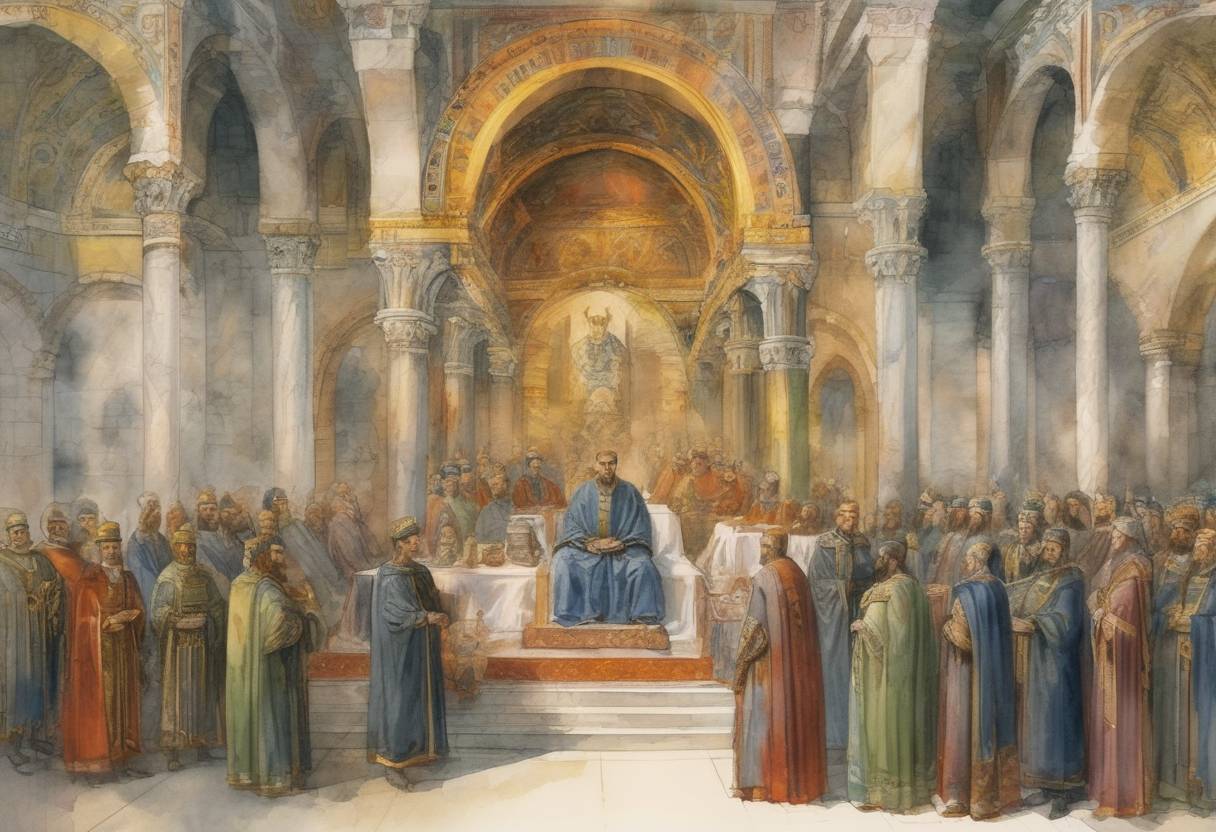
The Fourth Council of Constantinople, recognized by the Roman Catholic Church, concluded on January 14, 870. This council was convened primarily to address the contentious issue surrounding Photius’s claim to the Patriarchate of Constantinople, a significant ecclesiastical and political controversy of the time.
The controversy began with the deposition of Patriarch Ignatius of Constantinople in 858 by Emperor Michael III, who replaced him with Photius, a layman who was rapidly elevated through the ecclesiastical ranks. This move was met with resistance, particularly from Pope Nicholas I, who refused to recognize Photius’s appointment, leading to a schism between the Eastern and Western Churches.
Deposition of Ignatius (858): Ignatius was removed from his position under contentious circumstances, leading to Photius’s appointment.
Papal Opposition: Pope Nicholas I opposed Photius’s elevation, citing canonical irregularities and asserting papal authority over such appointments.
Council of 867: An earlier council convened by Photius excommunicated Pope Nicholas I, exacerbating tensions.
Political Changes: The assassination of Emperor Michael III and the rise of Basil I to power in 867 shifted the political landscape, leading to a more conciliatory approach towards the papacy.
The Fourth Council of Constantinople was convened by Emperor Basil I and Pope Adrian II in 869. It was attended by representatives from both the Eastern and Western Churches, aiming to resolve the schism and address the legitimacy of Photius’s patriarchate.
The Fourth Council of Constantinople was a pivotal moment in church history, reflecting the intricate interplay of religious authority and political power in the medieval world. Its resolutions, while temporarily effective, underscored the enduring challenges of maintaining unity within Christendom.
Source: en.wikipedia.org