Establishment of Jamestown: May 14, 1607
1607 · Jamestown, Colony of Virginia
Jamestown, the first permanent English settlement in North America, was established in the Colony of Virginia.
December 19, 1606
The Susan Constant, the Godspeed, and the Discovery set sail from England to establish the Jamestown Colony in Virginia.
London, England | Virginia Company
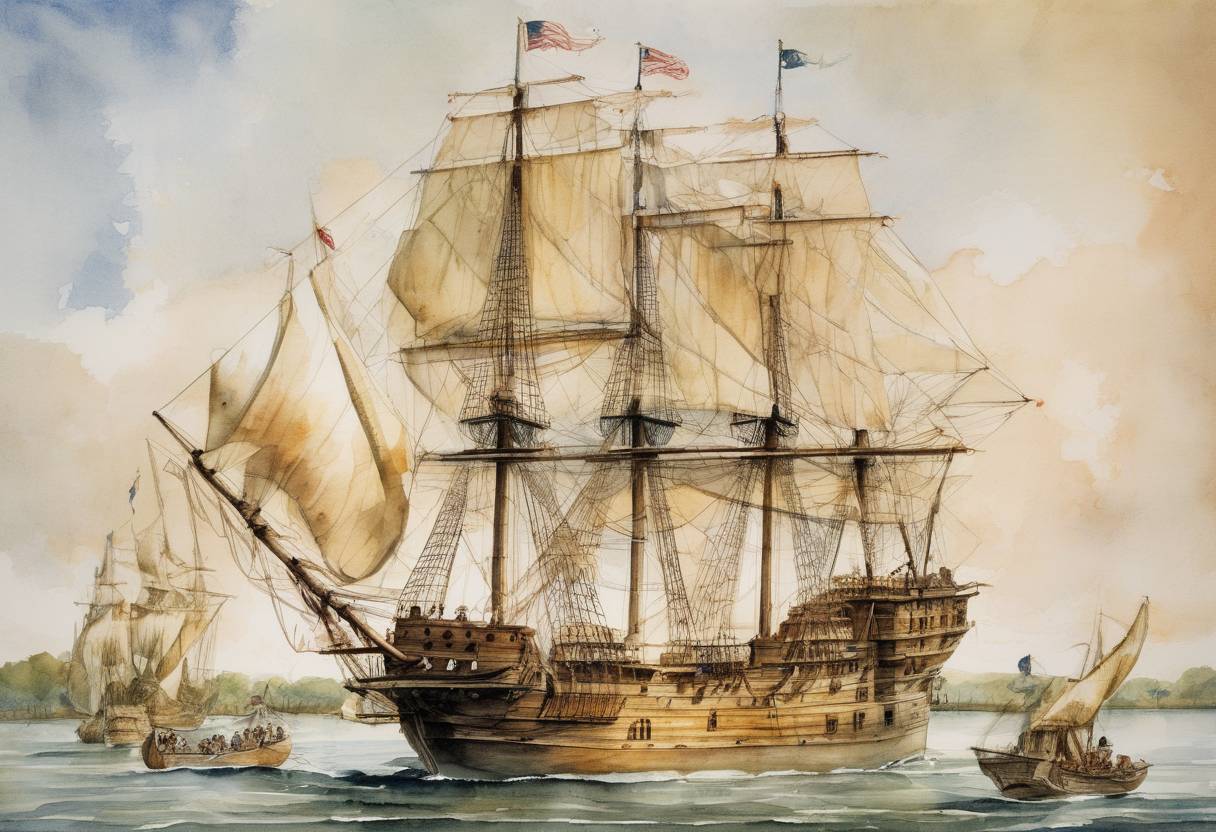
On December 19, 1606, three ships—the Susan Constant, the Godspeed, and the Discovery—set sail from England, marking the beginning of a significant chapter in American history. These vessels were part of an expedition organized by the Virginia Company of London, a joint-stock company established to create a permanent English settlement in the New World. The mission was to establish what would become the Jamestown Colony in present-day Virginia, the first permanent English settlement in North America.
The Virginia Company: Chartered by King James I in 1606, the Virginia Company was tasked with establishing a colony in the New World. The company was motivated by the promise of wealth from resources like gold and the potential for expanding English influence.
The Ships:
The Crew and Passengers: The expedition carried approximately 105 settlers, including gentlemen, craftsmen, and laborers. Notable figures among them were John Smith, a soldier and adventurer, and Edward Maria Wingfield, who would become the first president of the colony’s governing council.
Departure: The fleet departed from Blackwall, London, on December 19, 1606. The journey was arduous, taking nearly four months due to adverse weather conditions and navigational challenges.
Route: The ships sailed down the Thames River, across the English Channel, and then followed a southerly route across the Atlantic Ocean. They made stops in the Canary Islands and the Caribbean for supplies and repairs.
Landfall: The fleet finally arrived in the Chesapeake Bay in late April 1607. After exploring the area, they chose a site on the James River, which they named Jamestown in honor of King James I.
Significance: The establishment of Jamestown marked the beginning of English colonization in America. Despite facing severe hardships, including conflicts with Indigenous peoples, disease, and food shortages, the colony survived and laid the groundwork for future English settlements.
Survival and Growth: The early years were challenging, with a high mortality rate among settlers. However, the introduction of tobacco cultivation by John Rolfe in 1612 eventually ensured the colony’s economic viability.
Legacy: Jamestown’s establishment was a pivotal moment in American history, setting the stage for the expansion of English influence in the New World. It also marked the beginning of complex interactions between European settlers and Indigenous peoples, with lasting consequences.
The departure of the Susan Constant, Godspeed, and Discovery on December 19, 1606, represents a significant moment in the history of exploration and colonization, highlighting the ambitions and challenges of early English settlers in North America.
Source: en.wikipedia.org