Adoption of Belgium's Constitution - February 7, 1831
1831 · Brussels, Belgium
Belgium's National Congress adopted the country's constitution, establishing Belgium as a constitutional monarchy.
July 21, 1831
Leopold I was inaugurated as the first King of the Belgians, marking the beginning of the Kingdom of Belgium.
Brussels, Belgium | Belgian Monarchy
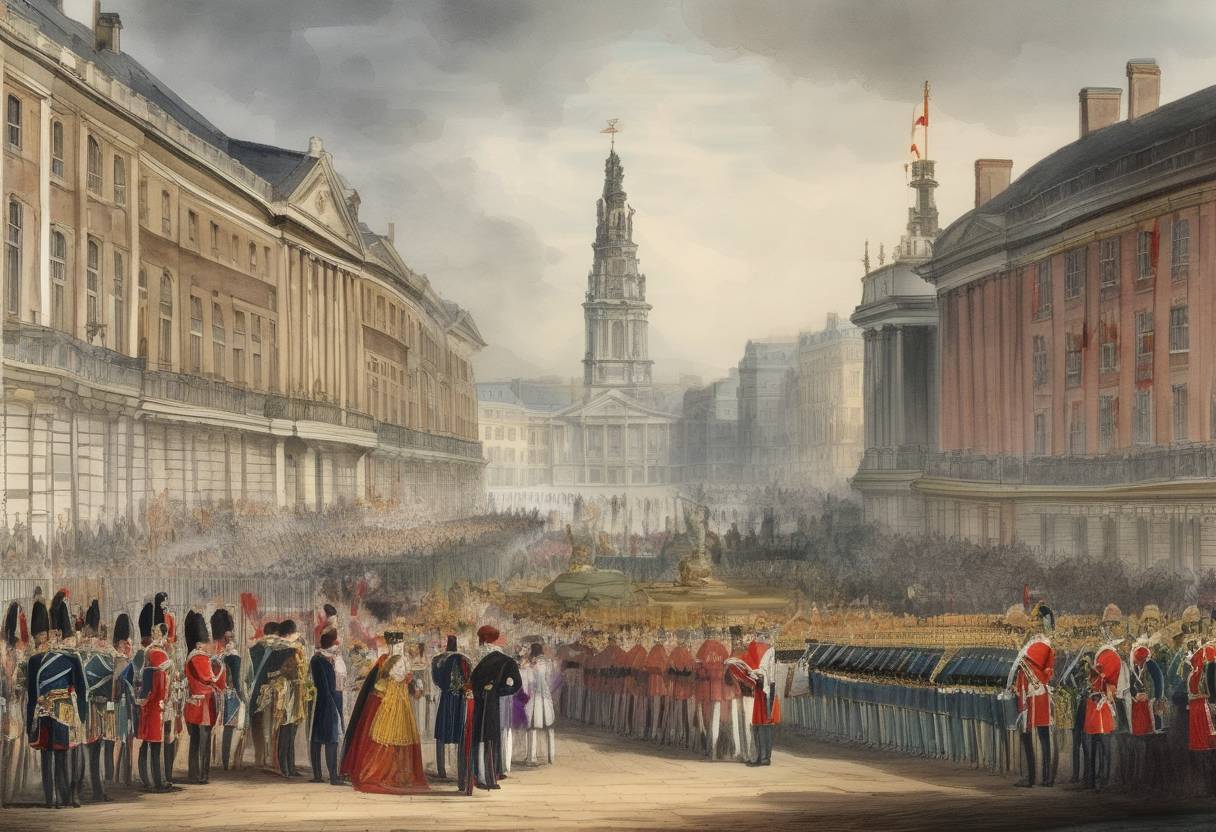
On July 21, 1831, Leopold I was inaugurated as the first King of the Belgians, marking the establishment of the Kingdom of Belgium. This significant event was a pivotal moment in European history, as it signified the emergence of Belgium as an independent constitutional monarchy.
The creation of the Kingdom of Belgium was the result of the Belgian Revolution of 1830, which was driven by a combination of political, religious, and economic factors. Prior to its independence, Belgium was part of the United Kingdom of the Netherlands, a union established in 1815 after the defeat of Napoleon. The union was unpopular among the predominantly Catholic and French-speaking Belgians, who felt marginalized by the Protestant and Dutch-speaking government based in The Hague.
The revolution began in August 1830, sparked by a performance of the opera “La Muette de Portici” in Brussels, which inspired nationalist sentiments. The ensuing unrest led to widespread protests and clashes, culminating in the declaration of independence from the Netherlands on October 4, 1830.
Following independence, the newly formed Belgian National Congress sought a monarch to lead the country. Leopold of Saxe-Coburg and Gotha, a German prince with strong connections to European royalty, was chosen. He was seen as a suitable candidate due to his diplomatic skills and his ties to the British royal family, which were expected to help secure international recognition and support for the fledgling nation.
Leopold accepted the offer and arrived in Belgium in July 1831. His inauguration took place on July 21, 1831, in Brussels, where he swore allegiance to the Belgian constitution. This day is now celebrated annually as Belgium’s National Day.
Leopold I’s reign marked the beginning of a stable constitutional monarchy in Belgium. His leadership helped navigate the young nation through its early challenges, including the Ten Days’ Campaign, a brief military conflict with the Netherlands in August 1831. The conflict ended with the intervention of the Great Powers, leading to the Treaty of London in 1839, which recognized Belgium’s independence and neutrality.
Leopold I’s reign lasted until his death in 1865, during which he laid the foundations for Belgium’s development as a modern state. His diplomatic efforts and internal reforms contributed to Belgium’s growth and stability, setting the stage for its industrial expansion in the latter half of the 19th century.
The inauguration of Leopold I as the first King of the Belgians was a defining moment in Belgian history. It not only established the monarchy but also solidified Belgium’s status as an independent nation. The event is remembered for its role in shaping the political landscape of Europe and for laying the groundwork for Belgium’s future prosperity.
Source: en.wikipedia.org