Nikita Khrushchev Appointed General Secretary of the Communist Party
1953 · Moscow, Soviet Union
Nikita Khrushchev was appointed the General Secretary of the Communist Party of the Soviet Union.
March 5, 1953
Joseph Stalin, the leader of the Soviet Union, died after suffering a stroke. His death marked the end of an era of Soviet history characterized by widespread purges and totalitarian rule.
Moscow, Soviet Union | Communist Party of the Soviet Union
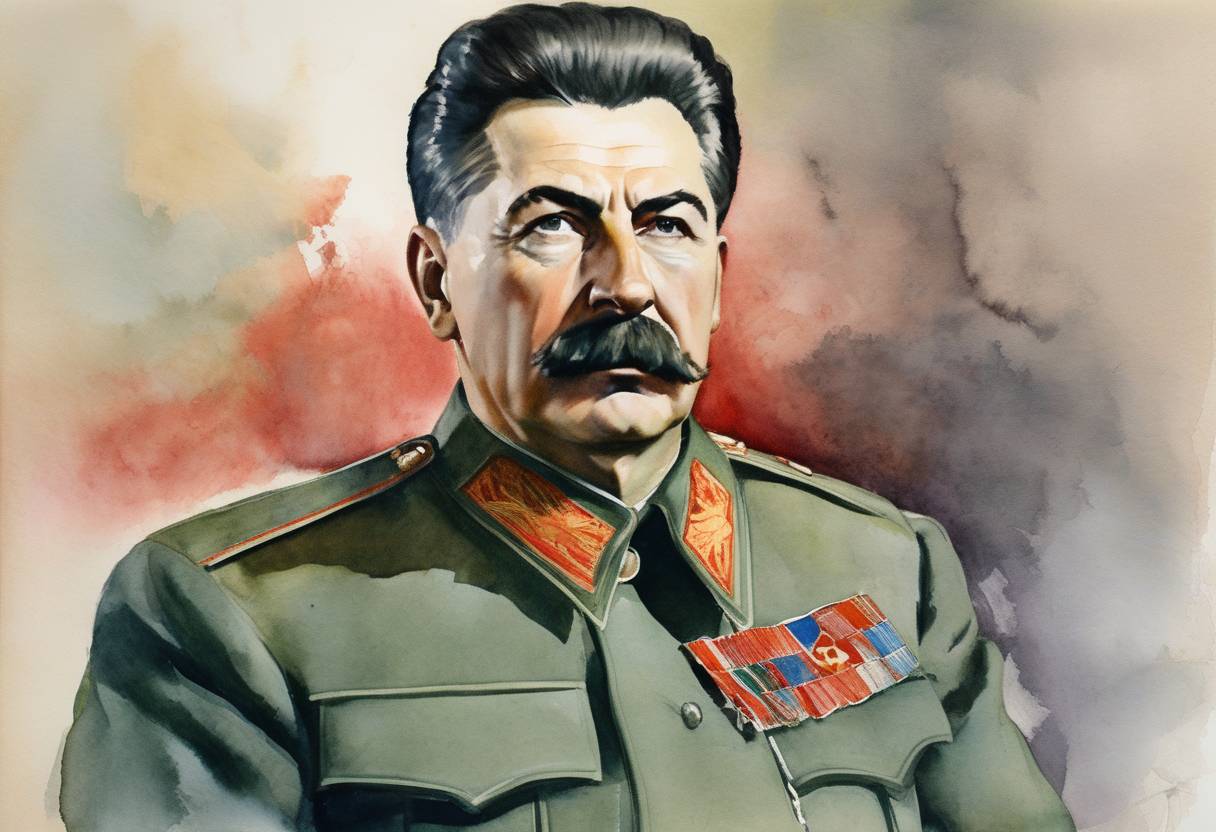
Joseph Stalin, the leader of the Soviet Union, died on March 5, 1953, marking the end of an era characterized by his totalitarian rule and widespread purges. His death was a significant turning point in Soviet history and had profound implications for the future of the USSR and the global political landscape.
Joseph Stalin, born Ioseb Besarionis dze Jughashvili in 1878, rose to power following the death of Vladimir Lenin in 1924. By the late 1920s, Stalin had consolidated power, becoming the de facto leader of the Soviet Union. His rule was marked by:
Industrialization and Collectivization: Stalin implemented rapid industrialization and forced collectivization of agriculture, which led to significant economic changes but also caused widespread famine and suffering, particularly in Ukraine during the Holodomor.
The Great Purge: From 1936 to 1938, Stalin orchestrated a series of political purges, targeting perceived enemies within the Communist Party, the military, and broader Soviet society. Millions were executed or sent to labor camps (Gulags).
World War II: Stalin’s leadership during World War II was pivotal in the defeat of Nazi Germany, but it came at a tremendous human cost. The Soviet Union suffered immense casualties, and Stalin’s post-war policies further solidified his control.
On March 1, 1953, Stalin suffered a severe stroke at his dacha (country house) in Kuntsevo, near Moscow. He was found unconscious and remained incapacitated for several days. Despite efforts to treat him, Stalin passed away on March 5, 1953.
Stalin’s death led to a power struggle among Soviet leaders, eventually resulting in Nikita Khrushchev’s rise to power. This transition initiated a period known as “De-Stalinization,” characterized by:
Political Reforms: Khrushchev denounced Stalin’s cult of personality and the excesses of his regime in his famous “Secret Speech” at the 20th Party Congress in 1956.
Easing of Repression: There was a gradual relaxation of the oppressive political climate, with many political prisoners being released and some degree of cultural thaw.
Impact on the Cold War: Stalin’s death and the subsequent policy shifts influenced the dynamics of the Cold War, as the Soviet Union sought to present a less aggressive image to the world.
Stalin’s legacy remains controversial, with debates over his role in Soviet history continuing to this day. His death marked the end of one of the most repressive regimes in modern history and set the stage for significant changes in Soviet domestic and foreign policy.
Source: www.britannica.com