The Velvet Revolution: Beginning of the End for Communist Rule in Czechoslovakia
1989 · Prague, Czechoslovakia
The Velvet Revolution began in Czechoslovakia with a student demonstration in Prague, leading to the end of communist rule.
November 25, 1992
The Czechoslovak Federal Assembly votes to split the country into the Czech Republic and Slovakia, effective January 1, 1993, peacefully dissolving Czechoslovakia.
Prague, Czechoslovakia | Czechoslovak Federal Assembly
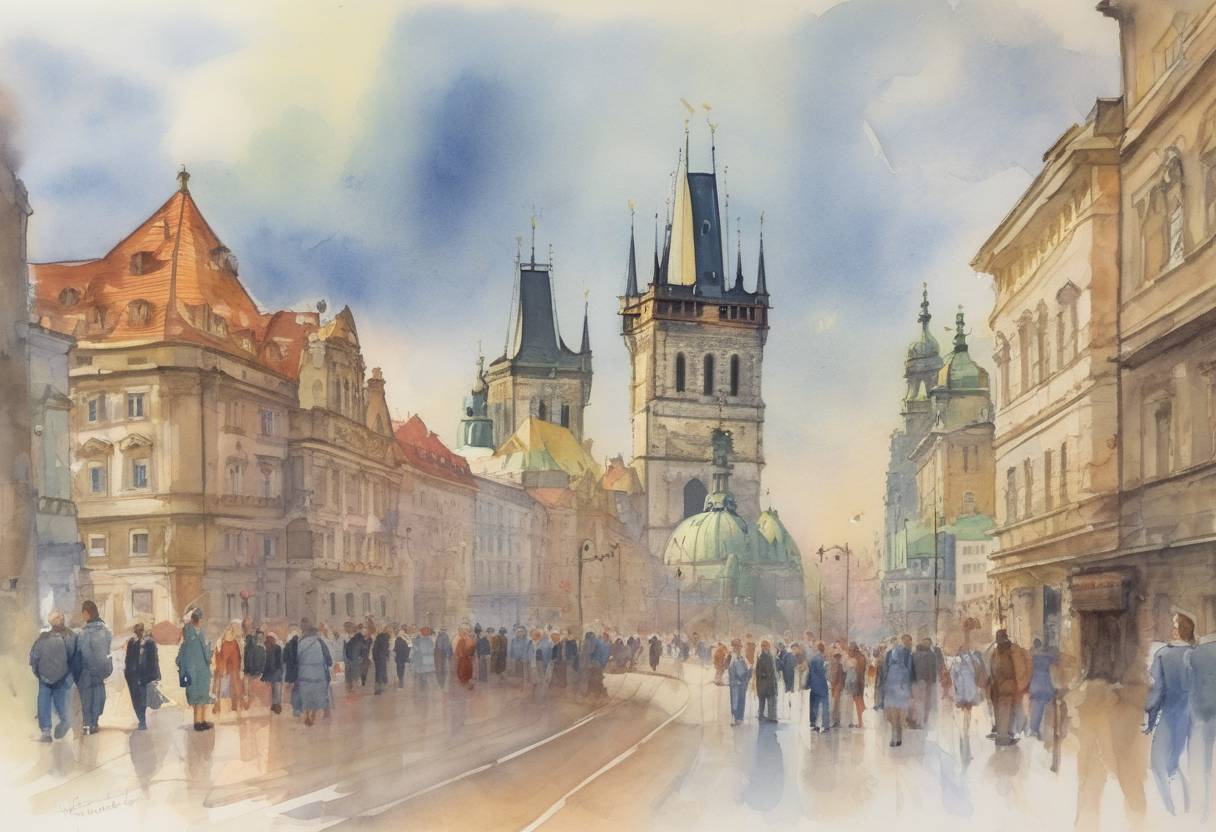
On November 25, 1992, a significant event in European history unfolded as the Czechoslovak Federal Assembly voted to dissolve Czechoslovakia, leading to the peaceful creation of two independent nations: the Czech Republic and Slovakia. This decision marked the culmination of a series of political and social changes that had been developing since the fall of communism in Eastern Europe.
Czechoslovakia was established in 1918, following the collapse of the Austro-Hungarian Empire after World War I. It was a multi-ethnic state, primarily composed of Czechs and Slovaks, along with other minority groups. The country experienced periods of both democracy and authoritarian rule throughout the 20th century, including Nazi occupation during World War II and communist control from 1948 until the Velvet Revolution in 1989.
The Velvet Revolution was a non-violent transition of power that ended 41 years of communist rule in Czechoslovakia. This paved the way for democratic reforms and the re-establishment of a market economy. However, the post-revolution period also highlighted the differing political and economic priorities between the Czech and Slovak regions.
Throughout the early 1990s, tensions grew between the Czech and Slovak political leaders over issues such as economic policy and the degree of autonomy each region should have. The Czech lands, being more industrialized, favored rapid economic reforms, while Slovakia, with its more agrarian economy, preferred a slower transition.
Negotiations between Czech and Slovak leaders, including Czech Prime Minister Václav Klaus and Slovak Prime Minister Vladimír Mečiar, failed to reach a consensus on the future structure of the federation. As a result, both sides agreed that a peaceful separation would be the best course of action.
On November 25, 1992, the Czechoslovak Federal Assembly voted in favor of the “Constitutional Act on the Dissolution of Czechoslovakia,” which set the stage for the formal split of the country. The vote was a decisive step towards the dissolution, which was to take effect on January 1, 1993.
The dissolution of Czechoslovakia, often referred to as the “Velvet Divorce,” was notable for its peaceful nature, contrasting with the violent breakups seen in other parts of Eastern Europe during the same period. Both the Czech Republic and Slovakia emerged as independent states, each embarking on its own path of political and economic development.
The peaceful dissolution of Czechoslovakia is often cited as a successful example of a negotiated and non-violent separation of a state. It demonstrated the possibility of resolving national and ethnic differences through dialogue and compromise. Both countries have since joined the European Union and NATO, further integrating into the European and global community.
The events of November 25, 1992, and the subsequent peaceful transition, remain a significant chapter in the history of Central Europe, illustrating the power of diplomacy and the importance of respecting the aspirations of distinct national identities within a shared historical framework.
Source: en.wikipedia.org