The Death of Emperor Wen of Sui
599 · Chang'an, China
The death of Emperor Wen of Sui, the founder of the Sui Dynasty in China, who is credited with unifying the country after centuries of division and initiating major reforms.
January 22, 0613
The Eight Trigrams rebellion, led by Yang Xuangan, was suppressed by the Sui Dynasty in China.
unknown, China | Sui Dynasty
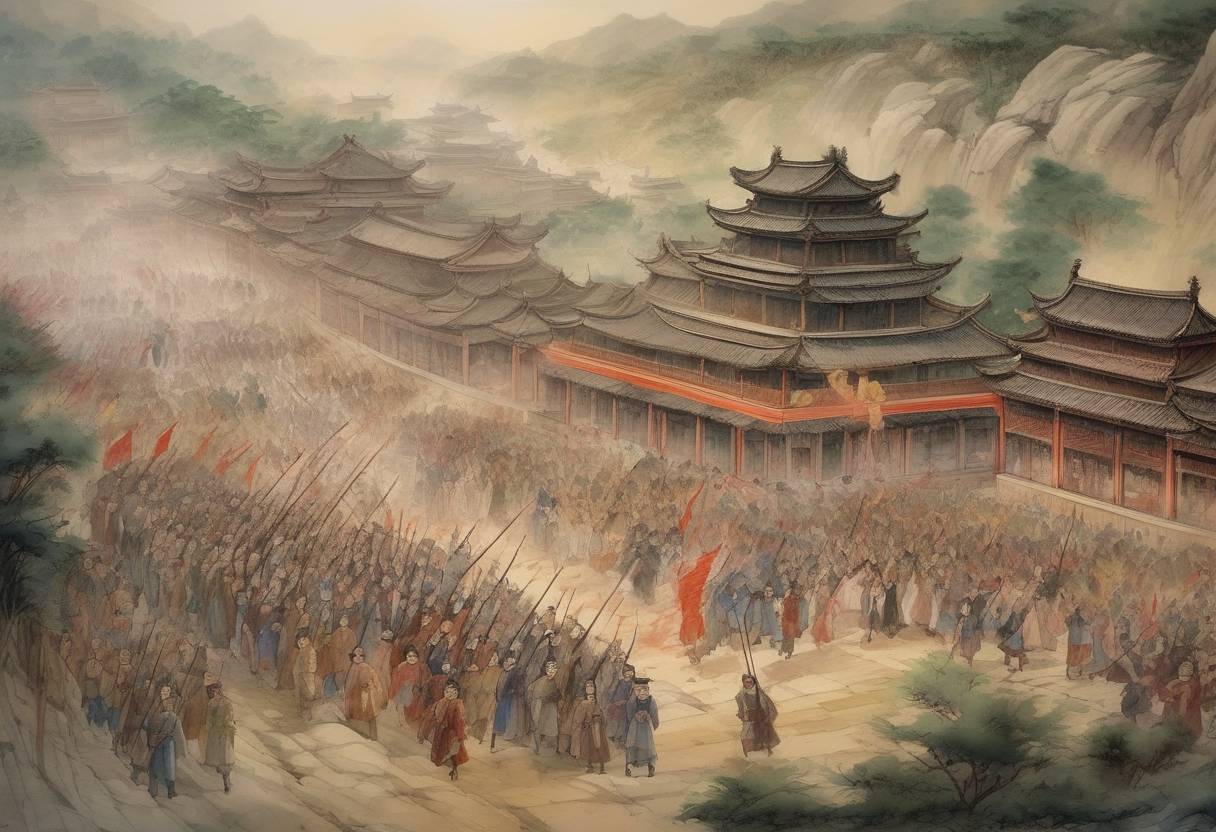
On January 22, 613, the Sui Dynasty successfully suppressed the Eight Trigrams Rebellion, a significant uprising led by Yang Xuangan. This event marked a critical moment in the history of the Sui Dynasty, highlighting the internal challenges faced by the regime during its relatively short existence.
The Sui Dynasty, established in 581 by Emperor Wen, was a pivotal period in Chinese history, known for its ambitious projects such as the Grand Canal and the reconstruction of the Great Wall. However, these projects placed a heavy burden on the populace, leading to widespread discontent due to excessive taxation and forced labor.
Yang Xuangan, a former official of the Sui Dynasty, was deeply dissatisfied with the administration’s oppressive policies. He was particularly concerned about the centralization of power and the emperor’s extravagant projects, which strained the empire’s resources and the people’s patience.
In 613, Yang Xuangan capitalized on the growing unrest and rallied support from disgruntled officials and peasants. He declared a rebellion against Emperor Yang of Sui, aiming to overthrow the dynasty and establish a more just rule. The rebellion was named after the “Eight Trigrams,” a symbol from the I Ching, representing balance and harmony, which Yang Xuangan used to legitimize his cause.
Yang Xuangan’s forces initially gained momentum, capturing several key locations and threatening the stability of the Sui regime. However, the rebellion lacked sufficient coordination and resources to sustain a prolonged conflict against the well-equipped imperial forces.
On January 22, 613, the Sui Dynasty’s military, under the command of capable generals, decisively defeated Yang Xuangan’s forces. The rebellion was swiftly crushed, and Yang Xuangan was captured and executed. The suppression of the rebellion temporarily restored stability to the Sui Dynasty, but it exposed the underlying vulnerabilities and widespread dissatisfaction within the empire.
The failure of the Eight Trigrams Rebellion did not resolve the systemic issues plaguing the Sui Dynasty. The continued strain on resources and the emperor’s unpopular policies eventually led to further uprisings and the dynasty’s downfall in 618, paving the way for the rise of the Tang Dynasty.
The Eight Trigrams Rebellion is significant as it underscores the challenges faced by the Sui Dynasty in maintaining control over a vast and diverse empire. It also highlights the role of internal dissent and popular discontent in the decline of dynastic rule in China. The rebellion serves as a reminder of the importance of addressing the needs and grievances of the populace to ensure the longevity of a regime.
Source: en.wikipedia.org