Battle of Lagos - August 18, 1759
1759 · off the coast of Lagos, Portugal
The battle of Lagos occurs during the Seven Years' War, where the British fleet under Admiral Boscawen defeats a French fleet off the coast of Portugal.
November 22, 1718
British pirate Edward Teach, better known as Blackbeard, was killed in battle off the coast of North Carolina.
Ocracoke, United States | Royal Navy
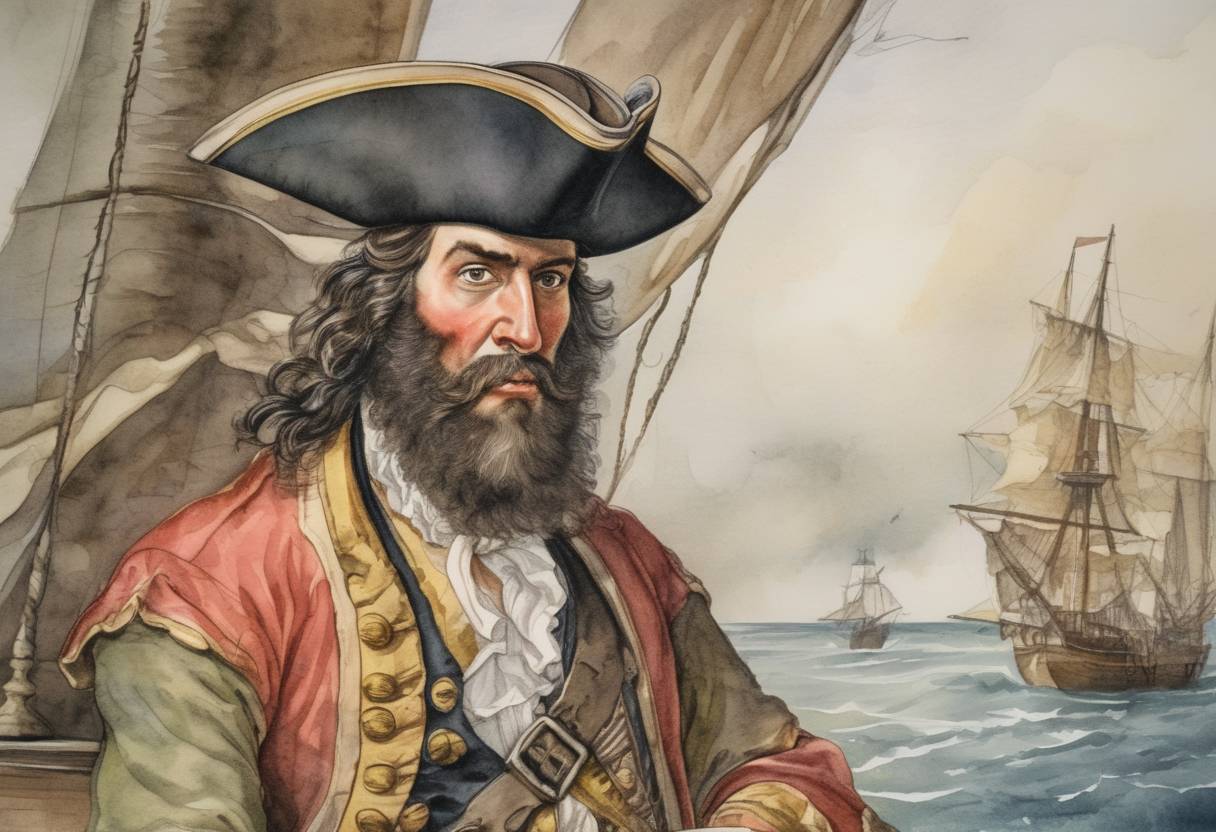
On November 22, 1718, the infamous British pirate Edward Teach, better known as Blackbeard, met his end in a fierce battle off the coast of North Carolina. This event marked the culmination of Blackbeard’s notorious career and had significant implications for piracy in the Atlantic.
Edward Teach, whose real name is believed to be Edward Thatch or Edward Drummond, emerged as one of the most feared pirates of the early 18th century. Operating primarily in the West Indies and along the eastern coast of the American colonies, Blackbeard became notorious for his fearsome appearance and ruthless tactics. His flagship, the Queen Anne’s Revenge, was a former French slave ship that he captured and outfitted with 40 guns.
Blackbeard’s reign of terror included the blockade of Charleston, South Carolina, in May 1718, where he held the city hostage until his demands for medical supplies were met. His activities drew the ire of colonial authorities and merchants, leading to increased efforts to capture or kill him.
The decisive confrontation occurred near Ocracoke Island, North Carolina. The Governor of Virginia, Alexander Spotswood, determined to end Blackbeard’s piracy, commissioned Lieutenant Robert Maynard of the Royal Navy to hunt him down. Maynard set sail with two ships, the Ranger and the Jane, and a crew of about 60 men.
On the morning of November 22, Maynard’s forces engaged Blackbeard’s crew. The battle was brutal and chaotic, with Maynard employing a clever tactic by hiding most of his men below deck to lure Blackbeard into a false sense of security. As Blackbeard and his pirates boarded Maynard’s ship, the hidden sailors emerged, overwhelming the pirates in close combat.
Blackbeard fought fiercely, reportedly sustaining multiple gunshot wounds and cuts before finally succumbing. His death marked the end of a significant chapter in the history of piracy.
The death of Blackbeard was a significant blow to piracy in the Atlantic. It demonstrated the increasing resolve of colonial governments to combat piracy and restore order to the seas. The display of Blackbeard’s severed head on the bowsprit of Maynard’s ship served as a grim warning to other pirates.
In the broader context, Blackbeard’s demise signaled a turning point in the “Golden Age of Piracy,” as increased naval patrols and legal actions against pirates gradually diminished their presence. The legend of Blackbeard, however, lived on, becoming a symbol of the pirate era and inspiring countless stories and myths.
Blackbeard’s life and death continue to captivate historians and enthusiasts, serving as a reminder of the complex interplay between lawlessness and authority in the early 18th century.
Source: en.wikipedia.org