Pioneer 10 Launch: March 2, 1972
1972 · Cape Canaveral, United States
The Pioneer 10 spacecraft was launched from Cape Canaveral, becoming the first spacecraft to travel through the asteroid belt and make a flyby of Jupiter.
May 14, 1973
Skylab, the United States' first space station, was launched by NASA.
Cape Canaveral, United States | NASA
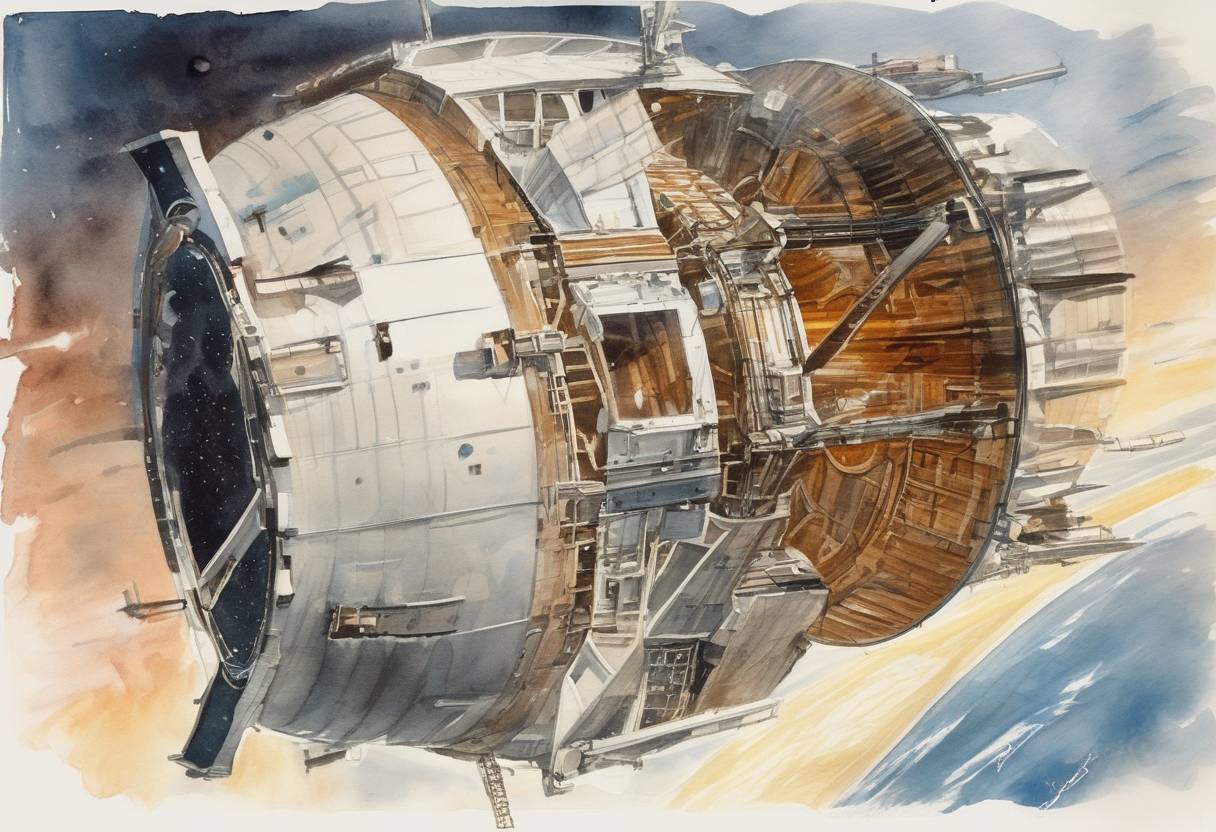
On May 14, 1973, NASA launched Skylab, marking a significant milestone in the history of space exploration as the United States’ first space station. This ambitious project aimed to expand human capabilities in space, conduct scientific experiments, and pave the way for future long-duration missions.
Skylab was conceptualized during the 1960s as part of NASA’s efforts to utilize the technology and experience gained from the Apollo program. The space station was designed to be a laboratory, observatory, and workshop in space, allowing astronauts to conduct experiments in microgravity and observe the Earth and the Sun.
The station was constructed using a modified Saturn V rocket, the same type that had been used to send astronauts to the Moon. The Saturn V’s third stage was converted into the Orbital Workshop, which served as the main living and working area for the astronauts.
The launch of Skylab on May 14, 1973, was not without its challenges. Shortly after reaching orbit, the space station encountered significant problems. A critical meteoroid shield was torn away during launch, causing one of the station’s solar panels to be lost and the other to become jammed. This resulted in a severe power shortage and overheating inside the station.
NASA quickly devised a plan to save Skylab. On May 25, 1973, the first crewed mission, Skylab 2, was launched. Astronauts Charles “Pete” Conrad, Joseph Kerwin, and Paul Weitz successfully deployed a parasol-like sunshade to cool the station and freed the jammed solar panel, restoring power.
Over the course of three crewed missions, Skylab hosted nine astronauts who conducted a wide range of scientific experiments. These included solar observations, medical studies on the effects of long-duration spaceflight on the human body, and Earth resources experiments.
Skylab’s missions provided invaluable data and experience that informed future space endeavors, including the development of the Space Shuttle and the International Space Station (ISS). The program demonstrated the feasibility of living and working in space for extended periods, contributing to our understanding of human adaptability to space environments.
The last crewed mission to Skylab ended in February 1974, and the station remained in orbit until it re-entered Earth’s atmosphere and disintegrated on July 11, 1979. Despite its relatively short operational period, Skylab laid the groundwork for future space stations and remains a significant achievement in the history of space exploration.
Source: www.nasa.gov