The Council of Constantinople Ends - February 18, 842
842 · Constantinople, Byzantine Empire
The Council of Constantinople ends, which was convened to address the issue of iconoclasm in the Byzantine Empire.
September 24, 0787
The Second Council of Nicaea was convened by the Byzantine Empress Irene and her son Constantine VI, marking the end of the first phase of the Iconoclast Controversy.
Nicaea, Byzantine Empire | Byzantine Empire
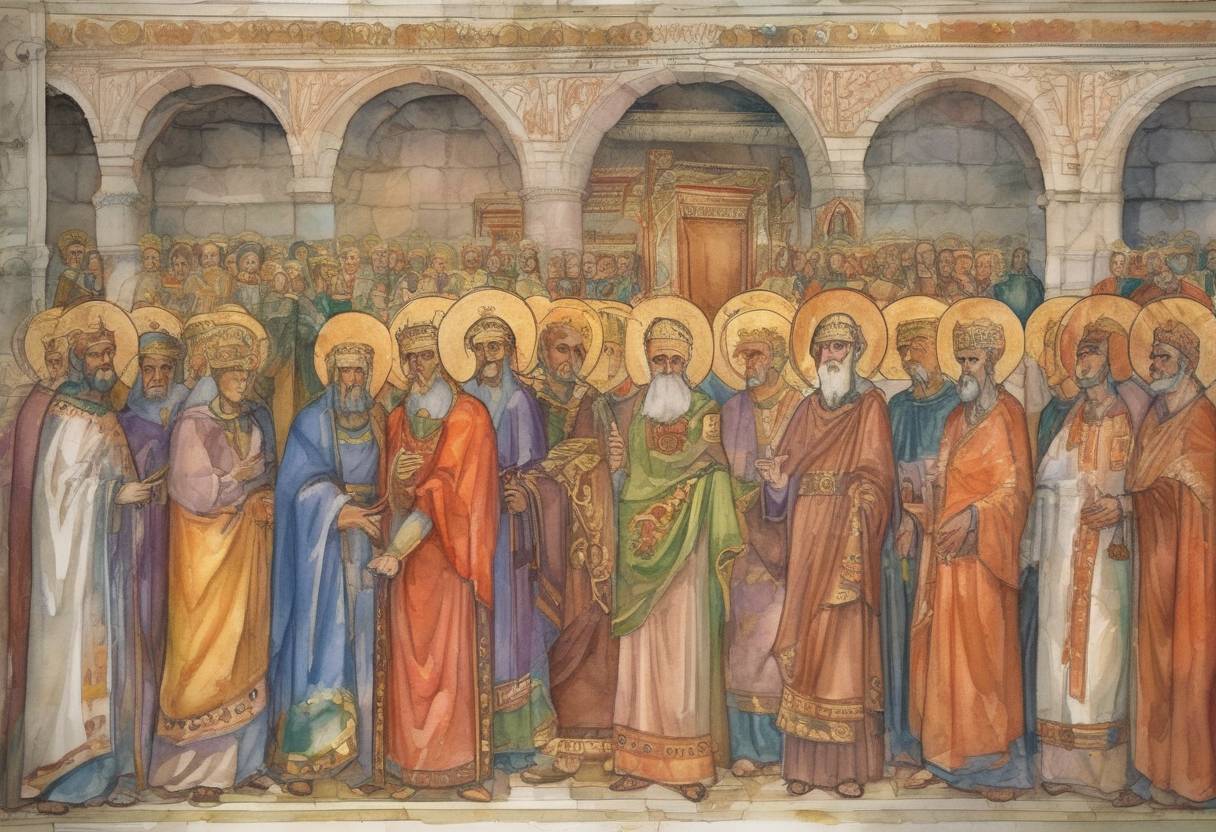
The Second Council of Nicaea, convened on September 24, 787, was a pivotal event in the history of the Christian Church, marking the end of the first phase of the Iconoclast Controversy. This ecumenical council was called by the Byzantine Empress Irene and her son, Emperor Constantine VI, to address the theological and political turmoil surrounding the use of religious images, or icons, in Christian worship.
The Iconoclast Controversy began in the early 8th century when Emperor Leo III issued a series of edicts against the veneration of icons, viewing them as idolatrous. This policy, known as iconoclasm, was continued by his successors, leading to widespread destruction of religious images and persecution of those who supported their use.
The controversy created deep divisions within the Byzantine Empire and the broader Christian community, with iconoclasts (those opposing icons) and iconodules (those supporting icons) clashing over theological interpretations and the role of images in worship.
Empress Irene, acting as regent for her young son Constantine VI, sought to restore unity within the church and the empire by addressing the contentious issue of iconoclasm. She was a supporter of the veneration of icons and aimed to reverse the iconoclastic policies of her predecessors.
The council was convened in Nicaea, a city with historical significance as the site of the First Council of Nicaea in 325. It was attended by approximately 350 bishops and other church leaders, including representatives from the Pope in Rome, highlighting the ecumenical nature of the gathering.
The Second Council of Nicaea reaffirmed the veneration of icons, distinguishing between the worship due to God alone and the veneration given to holy images. The council decreed that icons were to be respected and honored, as they served as windows to the divine, aiding the faithful in their spiritual devotion.
The council’s decisions were encapsulated in the “Horos,” or definition of faith, which articulated the theological justification for the use of icons, drawing on the tradition of the Incarnation of Christ as a justification for their use.
The Second Council of Nicaea effectively ended the first phase of the Iconoclast Controversy, restoring the veneration of icons within the Byzantine Empire. However, the issue would resurface in the 9th century, leading to a second period of iconoclasm before being definitively resolved in 843 with the “Triumph of Orthodoxy.”
The council’s decisions had a lasting impact on the development of Christian doctrine and practice, reinforcing the role of images in worship and influencing the artistic and cultural heritage of the Byzantine Empire and beyond.
In summary, the Second Council of Nicaea was a crucial moment in church history, addressing a significant theological dispute and shaping the future of Christian worship and iconography.
Source: en.wikipedia.org