President Woodrow Wilson's War Message to Congress: April 2, 1917
1917 · Washington D.C., United States
President Woodrow Wilson asks the U.S. Congress for a declaration of war against Germany, leading the United States into World War I.
February 24, 1917
The British government presented the Zimmermann Telegram to the United States, a secret communication from Germany proposing a military alliance with Mexico.
London, United Kingdom | British government
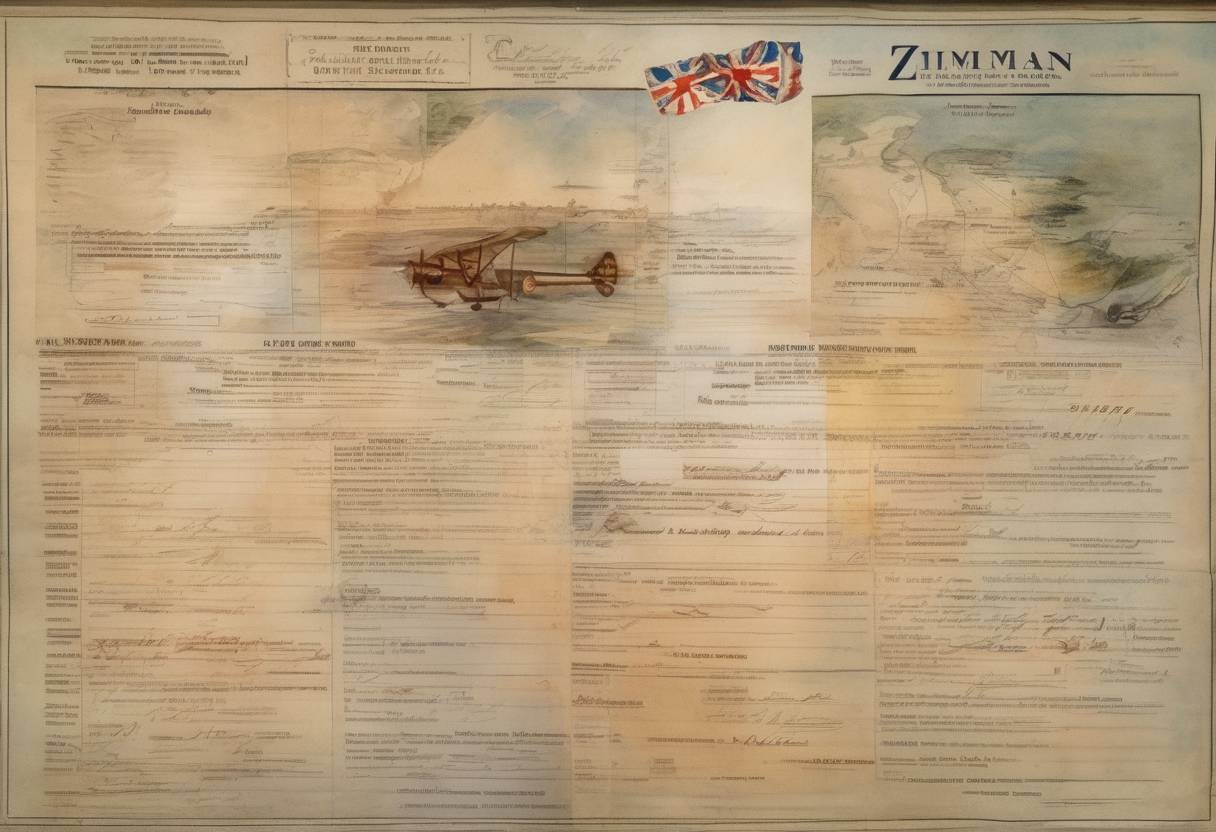
On February 24, 1917, the British government presented the Zimmermann Telegram to the United States, a pivotal moment in the events leading up to America’s entry into World War I. This secret communication from Germany proposed a military alliance with Mexico, should the United States enter the war against Germany.
During World War I, Germany sought to weaken its enemies by engaging them on multiple fronts. In January 1917, German Foreign Minister Arthur Zimmermann sent a coded telegram to the German ambassador in Mexico, Heinrich von Eckardt. The message outlined Germany’s plan to resume unrestricted submarine warfare, a strategy aimed at cutting off supplies to the Allies, particularly from the United States.
The Zimmermann Telegram proposed that if the United States declared war on Germany, Mexico should join forces with Germany. In return, Germany promised to support Mexico in reclaiming territories lost to the United States, specifically Texas, New Mexico, and Arizona. The telegram also suggested that Mexico should encourage Japan to join the Central Powers.
The British had been intercepting and decoding German communications since the war’s early days. The Zimmermann Telegram was intercepted by British intelligence in January 1917 and decoded by cryptographers in Room 40, a secret British code-breaking unit. Recognizing the potential impact of the telegram, the British decided to share it with the United States.
On February 24, 1917, the British government presented the decoded telegram to the U.S. ambassador in London, Walter Hines Page. The revelation of Germany’s proposal to Mexico was a diplomatic bombshell. President Woodrow Wilson was informed and, after verifying the authenticity of the telegram, decided to make it public.
The publication of the Zimmermann Telegram in American newspapers on March 1, 1917, caused a public outcry. It significantly shifted American public opinion, which had been largely isolationist, towards supporting entry into the war. The telegram, combined with Germany’s resumption of unrestricted submarine warfare, convinced President Wilson and Congress of the necessity to join the Allies against the Central Powers.
On April 6, 1917, the United States formally declared war on Germany, marking a turning point in World War I. The entry of the United States into the war provided the Allies with fresh troops and resources, ultimately contributing to the defeat of the Central Powers.
The Zimmermann Telegram is often cited as a critical factor in the United States’ decision to enter World War I. It exemplifies the importance of intelligence and communication in warfare and highlights the complex diplomatic maneuvers that characterized the early 20th century. The event underscores the interconnectedness of global politics and the far-reaching consequences of diplomatic actions.
Source: en.wikipedia.org