Emperor Shōmu's Ascension to the Throne of Japan
724 · Nara, Japan
Emperor Shōmu ascended to the throne of Japan, marking the beginning of his reign.
July 10, 0645
Emperor Kōtoku ascends to the throne of Japan following the Isshi Incident.
Nara, Japan | Imperial Court of Japan
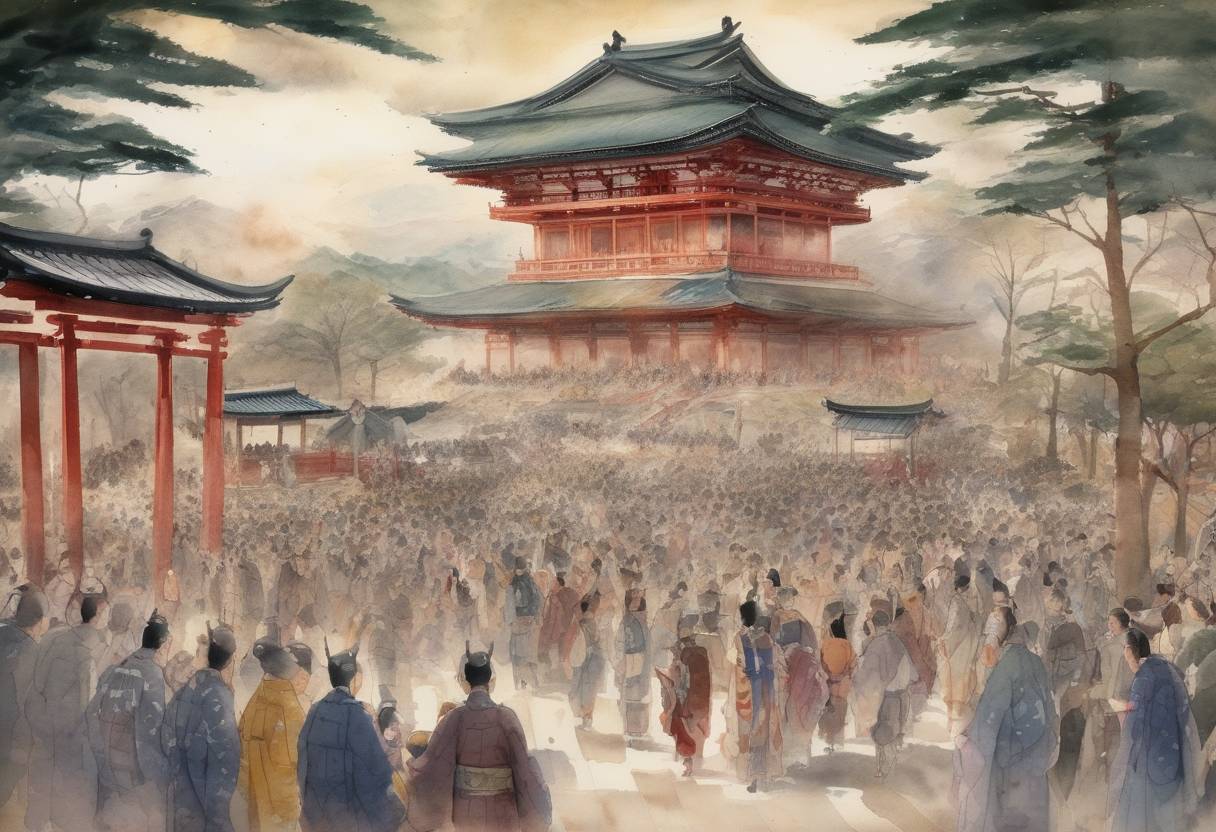
The ascension of Emperor Kōtoku to the throne of Japan on July 10, 645, was a pivotal moment in Japanese history, closely tied to the Isshi Incident. This event marked a significant shift in the political landscape of Japan, leading to the implementation of the Taika Reforms, which aimed to centralize and strengthen imperial power.
The Isshi Incident occurred in 645 and was a coup d’état orchestrated by Prince Naka no Ōe (later Emperor Tenji) and Nakatomi no Kamatari, the founder of the Fujiwara clan. The incident was primarily aimed at eliminating the powerful Soga clan, which had dominated the Japanese court and wielded significant influence over the imperial family.
Key Figures:
Events Leading to the Coup:
Following the successful coup, Prince Naka no Ōe chose not to ascend the throne immediately. Instead, he supported the enthronement of his uncle, who became Emperor Kōtoku. This decision was strategic, allowing Prince Naka no Ōe to consolidate power behind the scenes while implementing reforms.
Taika Reforms: Initiated shortly after Kōtoku’s ascension, these reforms aimed to centralize the government, reduce the power of regional clans, and enhance the authority of the emperor. They included:
Cultural and Political Impact:
Emperor Kōtoku’s reign, though relatively short (645-654), was marked by significant transformations in Japanese society and governance. The Taika Reforms, initiated during his rule, had long-lasting effects on the political structure of Japan, influencing the development of a more cohesive and centralized state.
In summary, Emperor Kōtoku’s ascension following the Isshi Incident was a turning point in Japanese history, marking the beginning of significant political and administrative reforms that would shape the nation’s future.
Source: en.wikipedia.org