Inauguration of the Tokyo Trials - January 10, 1946
1946 · Tokyo, Japan
Inauguration of the first trial at the International Military Tribunal for the Far East (Tokyo Trials) to prosecute Japanese war crimes committed during World War II.
November 12, 1948
An international military tribunal in Tokyo sentences seven Japanese military and government officials to death for war crimes committed during World War II.
Tokyo, Japan | International Military Tribunal for the Far East
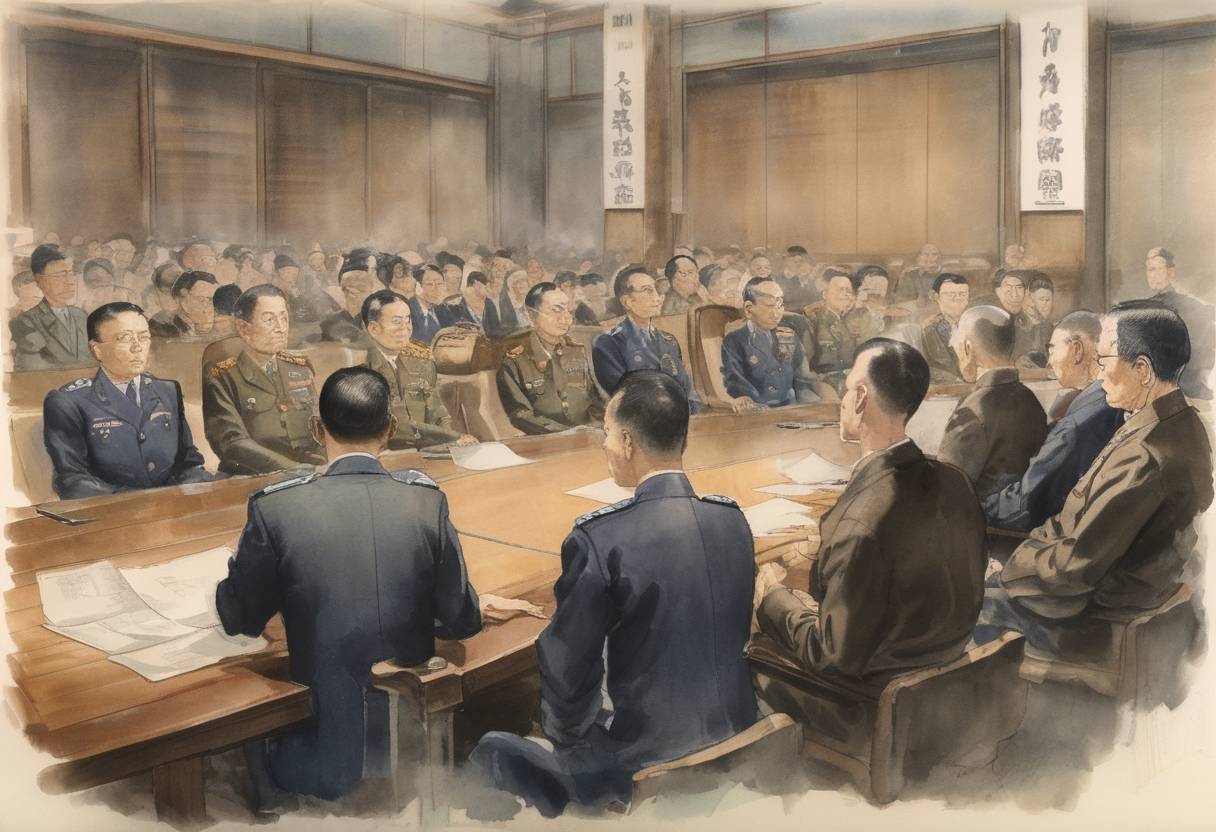
On November 12, 1948, the International Military Tribunal for the Far East (IMTFE), commonly known as the Tokyo Trials, delivered its verdicts, sentencing seven Japanese military and government officials to death for war crimes committed during World War II. This tribunal was established to prosecute major Japanese war criminals, similar to the Nuremberg Trials held for Nazi leaders in Europe.
The IMTFE was convened on April 29, 1946, in Tokyo, Japan, following the end of World War II. It was established by the Allied powers to address the atrocities committed by Japanese forces during the war, including crimes against peace, war crimes, and crimes against humanity. The tribunal was composed of judges from 11 Allied nations: Australia, Canada, China, France, India, the Netherlands, New Zealand, the Philippines, the Soviet Union, the United Kingdom, and the United States.
On November 12, 1948, the tribunal sentenced the following seven individuals to death by hanging:
The tribunal charged the defendants with various counts, including:
The tribunal found these individuals guilty of the charges, particularly emphasizing their roles in orchestrating and executing Japan’s aggressive military campaigns and the brutal treatment of civilians and prisoners of war.
The executions were carried out on December 23, 1948, at Sugamo Prison in Tokyo. The Tokyo Trials were significant as they established a precedent for international law and accountability for wartime actions. They underscored the principle that individuals, including state leaders, could be held accountable for war crimes and crimes against humanity.
The trials also contributed to the post-war reconstruction of Japan, as they were part of broader efforts to demilitarize and democratize the country. While the trials were criticized by some for their perceived victors’ justice and selective prosecution, they remain a pivotal moment in the development of international criminal law and the pursuit of justice for wartime atrocities.
Source: en.wikipedia.org