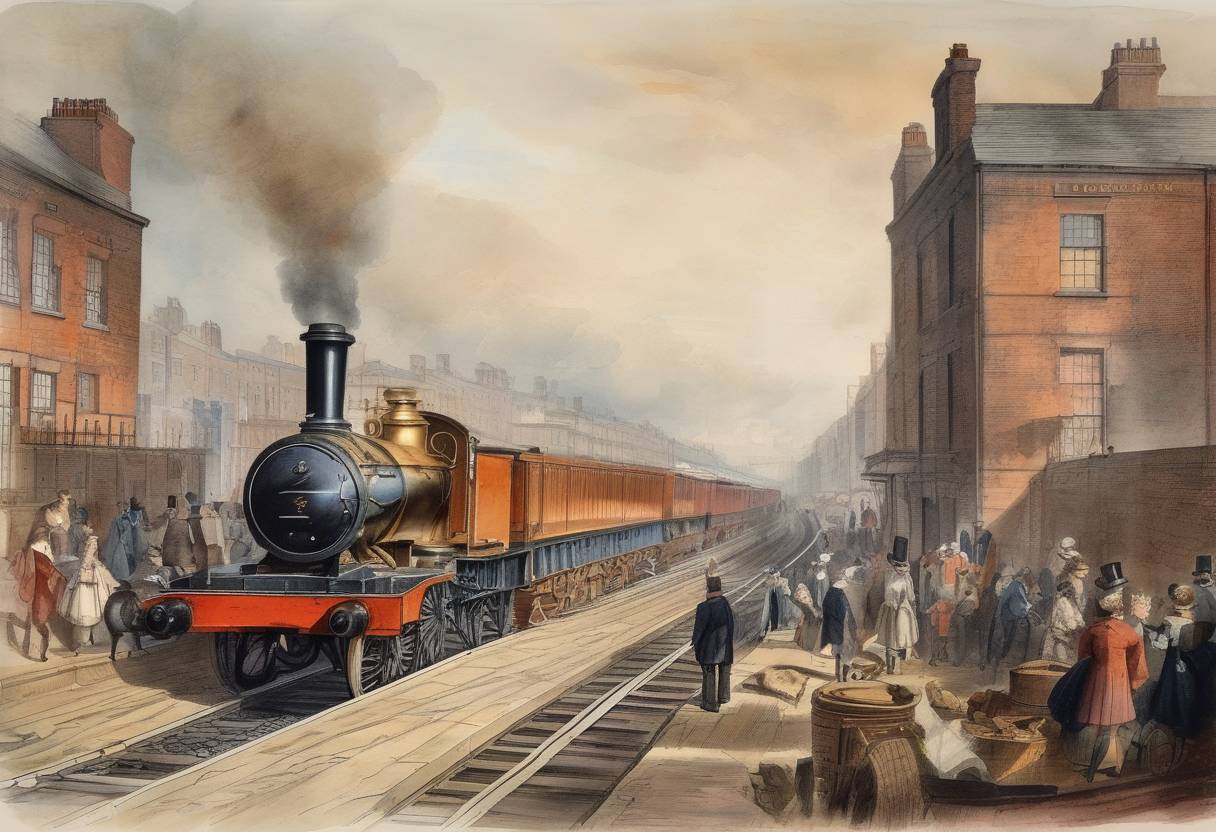
The Opening of the Liverpool and Manchester Railway: September 15, 1830
The Liverpool and Manchester Railway (L&MR) holds a significant place in history as the world’s first inter-city railway line, officially opened on September 15, 1830. This groundbreaking event marked a pivotal moment in the Industrial Revolution, transforming transportation and commerce in Britain and beyond.
Background
- Industrial Revolution Context: By the early 19th century, Britain was undergoing rapid industrialization. The need for efficient transportation of goods, particularly between industrial hubs, was becoming increasingly urgent.
- Liverpool and Manchester: Liverpool was a major port city, while Manchester was a burgeoning industrial center. The existing modes of transportation, primarily canals and roads, were inadequate for the volume and speed required for trade and communication between these cities.
Key Developments
- Planning and Construction: The idea for the railway was proposed in the 1820s, with George Stephenson, a pioneering railway engineer, playing a crucial role in its design and construction. The project faced significant challenges, including engineering obstacles like Chat Moss, a large peat bog that had to be traversed.
- Innovative Engineering: The railway featured several engineering innovations, including the use of double tracks and the construction of the Rainhill Trials to select the best locomotive design. Stephenson’s “Rocket” won the trials, setting the standard for future locomotive designs.
The Opening Day
- Ceremonial Launch: The opening ceremony on September 15, 1830, was a grand affair attended by numerous dignitaries, including the Prime Minister, the Duke of Wellington. The event was marred by tragedy when William Huskisson, a Member of Parliament, was accidentally struck and killed by a train, highlighting the potential dangers of this new technology.
- Operational Success: Despite the accident, the railway quickly proved its worth. It reduced travel time between Liverpool and Manchester from several hours by road to just over an hour by train, significantly boosting trade and passenger travel.
Broader Impact
- Economic Growth: The success of the L&MR demonstrated the viability of rail transport, leading to a railway boom across Britain and eventually the world. It facilitated the rapid movement of goods and people, contributing to economic growth and urbanization.
- Technological Advancements: The railway spurred advancements in engineering and technology, influencing the design and construction of future railways.
- Social Change: By making travel more accessible, the railway helped to break down social barriers and contributed to the spread of ideas and cultural exchange.
Conclusion
The opening of the Liverpool and Manchester Railway on September 15, 1830, was a landmark event that heralded a new era in transportation. It not only revolutionized the way goods and people moved but also had profound economic, technological, and social impacts that resonated throughout the 19th century and beyond.