The Trial of Guy Fawkes and the Gunpowder Plot Conspirators
1606 · London, England
The trial of Guy Fawkes and other conspirators involved in the Gunpowder Plot begins in London.
November 17, 1603
English explorer Sir Walter Raleigh went on trial for treason.
London, England | English Court
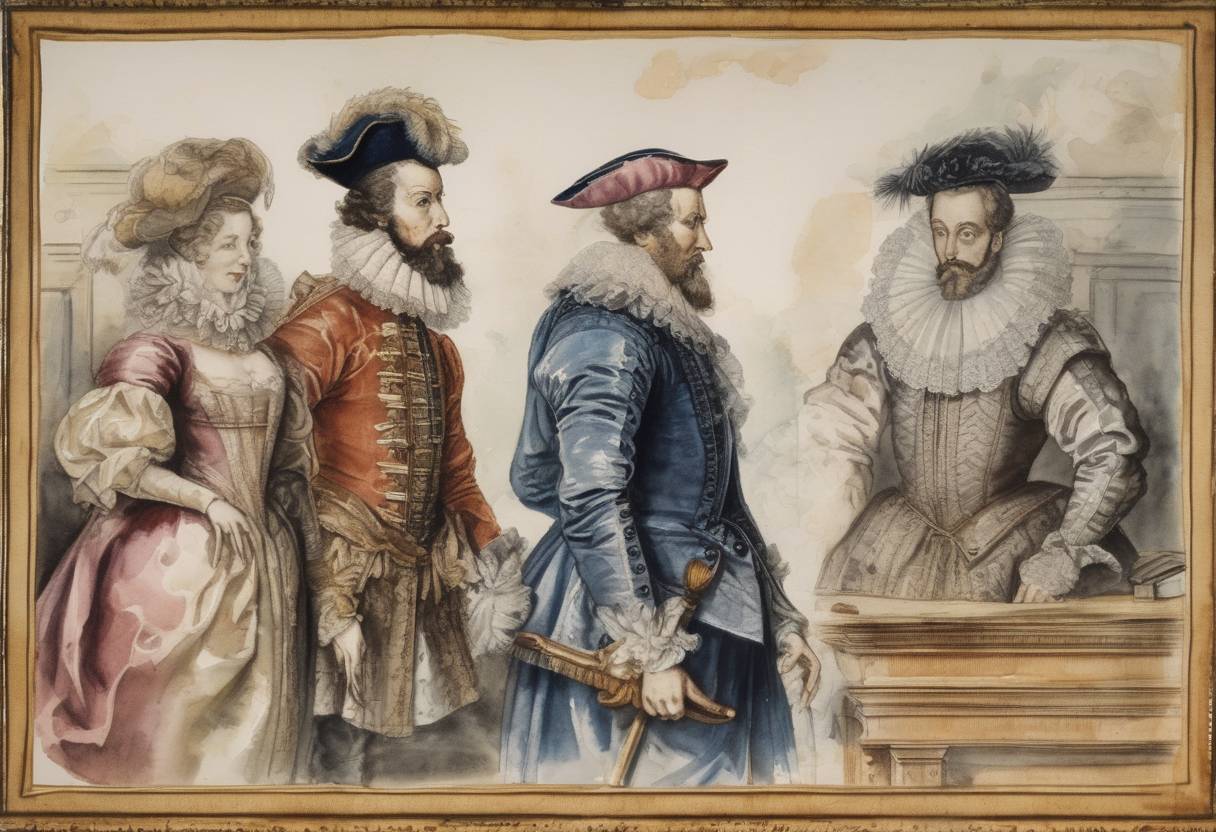
On November 17, 1603, the renowned English explorer and courtier Sir Walter Raleigh faced trial for treason at the Winchester Castle in England. This event marked a significant moment in the early reign of King James I, illustrating the political tensions and intrigues of the period.
Sir Walter Raleigh was a prominent figure in Elizabethan England, known for his expeditions to the Americas and his role in the English colonization efforts, including the ill-fated Roanoke Colony. He was a favorite of Queen Elizabeth I, who granted him various privileges and titles. However, with the accession of King James I in 1603, Raleigh’s fortunes changed dramatically.
Raleigh’s trial was linked to the so-called “Main Plot,” a conspiracy allegedly aimed at removing King James I from the throne and replacing him with his cousin, Arabella Stuart. This plot was intertwined with the “Bye Plot,” a separate conspiracy involving Catholic priests and Puritans. Although Raleigh’s exact involvement in these plots remains unclear, he was accused of conspiring with Henry Brooke, Lord Cobham, and others to facilitate a Spanish invasion of England.
The trial was held at Winchester Castle, with Sir Edward Coke serving as the prosecutor. The proceedings were characterized by a lack of concrete evidence against Raleigh, relying heavily on the testimony of Lord Cobham, who had initially implicated Raleigh but later recanted his statements.
Although sentenced to death, Raleigh’s execution was postponed. He spent the next 13 years imprisoned in the Tower of London. During his imprisonment, Raleigh wrote several works, including his famous “History of the World.”
In 1616, Raleigh was released to lead an expedition to find the legendary city of El Dorado in South America. The expedition failed, and upon his return to England, Raleigh was arrested again. This time, he was executed on October 29, 1618, under the original sentence from his 1603 trial.
Raleigh’s trial and subsequent execution highlight the precarious nature of courtly favor and the shifting political landscape of early 17th-century England. It underscores the transition from Elizabethan to Jacobean rule and the accompanying changes in political alliances and royal patronage. Raleigh’s life and trial remain subjects of historical interest, reflecting the complexities of exploration, colonization, and court politics during this era.
Source: en.wikipedia.org