The Byzantine Capture of Antioch - October 28, 969
969 · Antioch, Byzantine Empire
The Byzantine Empire captured Antioch from the Hamdanid dynasty, marking a significant territorial gain during the Byzantine-Arab Wars.
December 12, 0627
The Battle of Nineveh took place, marking a decisive victory for the Byzantine Empire under Emperor Heraclius against the Sassanian Empire led by General Rhahzadh. This battle was pivotal in the Byzantine-Sassanian War of 602–628.
Nineveh, Sassanian Empire (modern-day Iraq) | Byzantine Empire
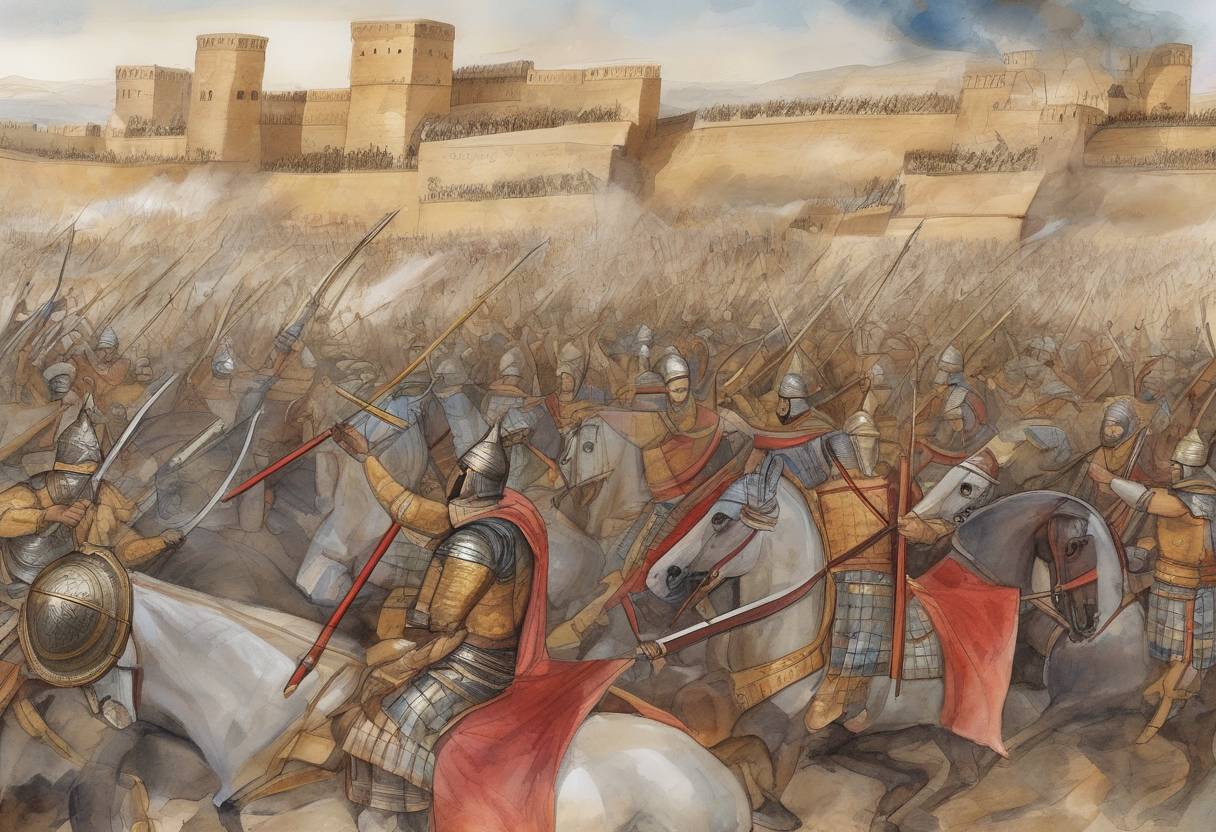
The Battle of Nineveh, fought on December 12, 627, was a crucial engagement in the Byzantine-Sassanian War of 602–628. This battle marked a decisive victory for the Byzantine Empire, led by Emperor Heraclius, against the Sassanian Empire, commanded by General Rhahzadh.
The Byzantine-Sassanian War of 602–628 was a protracted and devastating conflict between two of the most powerful empires of the time: the Byzantine Empire and the Sassanian Empire. The war began when the Sassanian King Khosrow II sought to exploit internal Byzantine turmoil following the overthrow of Emperor Maurice. Over the years, the Sassanians achieved significant territorial gains, capturing key Byzantine territories, including Jerusalem and Egypt.
By the mid-620s, the tide began to turn as Emperor Heraclius launched a series of bold and strategic campaigns to reclaim lost territories and weaken the Sassanian hold. Heraclius’s military acumen and strategic alliances, including with the Khazars, were instrumental in shifting the momentum in favor of the Byzantines.
The Battle of Nineveh took place near the ancient city of Nineveh, in what is now modern-day Iraq. Heraclius, leading a well-prepared and motivated Byzantine army, engaged the Sassanian forces under General Rhahzadh. The battle was characterized by intense and direct combat, with Heraclius reportedly engaging in personal combat with Rhahzadh, ultimately leading to the latter’s death.
The Byzantine forces employed effective tactics, including feigned retreats and surprise maneuvers, which disrupted the Sassanian formations. The death of Rhahzadh and the subsequent disarray among the Sassanian troops contributed significantly to the Byzantine victory.
The victory at Nineveh was pivotal for several reasons:
Strategic Advantage: It allowed the Byzantines to regain control over much of the territory lost earlier in the war, significantly weakening the Sassanian military position.
Political Consequences: The defeat exacerbated internal strife within the Sassanian Empire, leading to political instability and the eventual overthrow of Khosrow II by his son, Kavadh II.
End of the War: The battle set the stage for the eventual peace treaty in 628, which restored the pre-war boundaries and allowed both empires to focus on internal recovery.
Historical Impact: The Byzantine victory at Nineveh and the subsequent peace treaty marked the end of the last great war of antiquity between the two empires. However, both empires were left weakened, paving the way for the rapid expansion of the Islamic Caliphate in the following decades.
The Battle of Nineveh stands as a testament to Heraclius’s leadership and the resilience of the Byzantine Empire, reshaping the geopolitical landscape of the Near East in the early 7th century.
Source: en.wikipedia.org