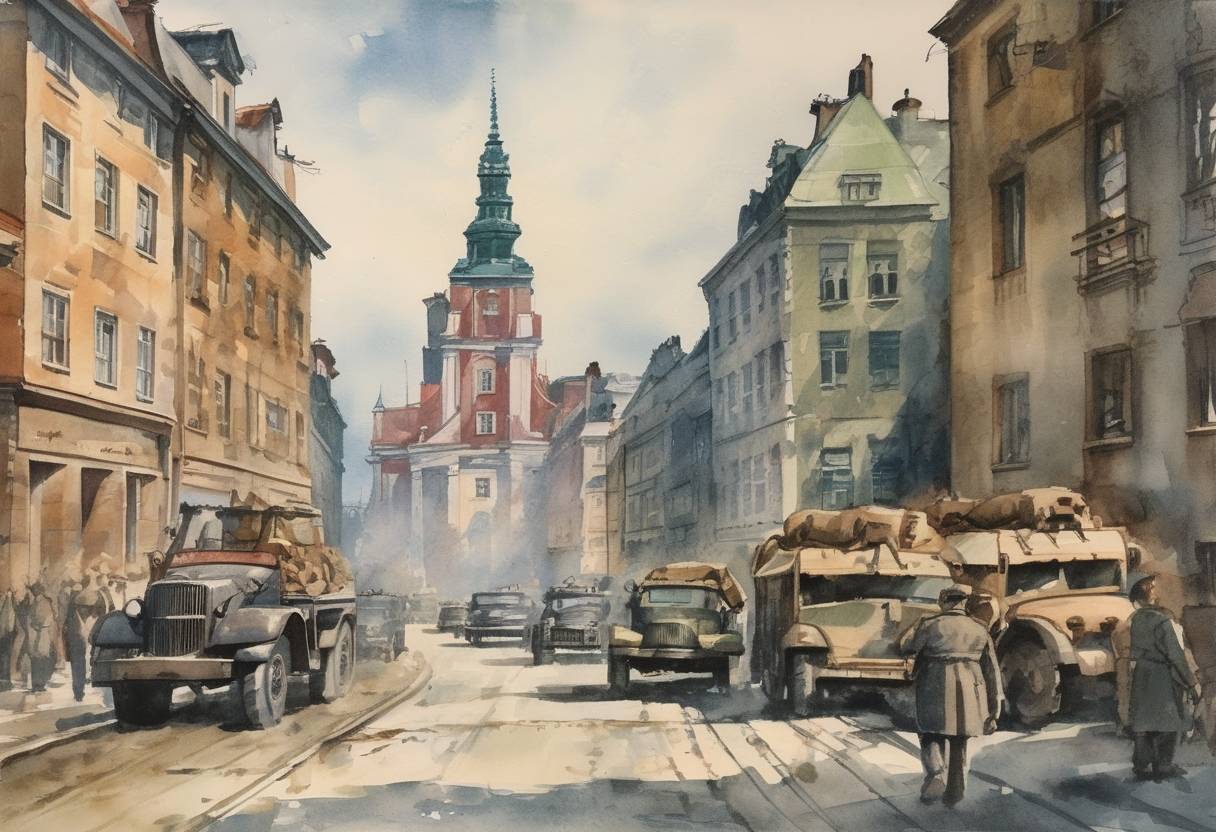
Germany Annexes Western Poland - October 8, 1939
On October 8, 1939, following the successful invasion of Poland, Nazi Germany formally annexed large portions of western Poland, incorporating them into the Third Reich. This event marked a significant escalation in the territorial ambitions of Adolf Hitler and set the stage for further expansionist policies that would characterize the early years of World War II.
Context and Prelude
- Invasion of Poland: The invasion of Poland began on September 1, 1939, when Germany launched a surprise attack, employing the blitzkrieg strategy. This rapid and overwhelming assault led to the swift defeat of Polish forces.
- Soviet Involvement: On September 17, 1939, the Soviet Union invaded Poland from the east, pursuant to the secret protocols of the Molotov-Ribbentrop Pact, a non-aggression treaty between Nazi Germany and the Soviet Union signed in August 1939.
- Division of Poland: By the end of September, Poland was effectively divided between Germany and the Soviet Union, with the two powers occupying different regions as agreed upon in their pact.
The Annexation
- Territorial Changes: On October 8, 1939, Germany officially annexed the western parts of Poland, including regions such as the Free City of Danzig, West Prussia, and Upper Silesia. These areas were incorporated directly into the German Reich.
- Administrative Reorganization: The annexed territories were reorganized into new administrative units, such as the Reichsgau Wartheland and Reichsgau Danzig-West Prussia, reflecting their integration into Germany.
- Impact on Polish Population: The annexation led to severe repercussions for the Polish population. Many Poles were subjected to forced displacement, and the German authorities implemented policies of Germanization, aiming to assimilate or remove non-German elements.
Aftermath and Consequences
- Occupation Policies: The annexation was accompanied by harsh occupation policies, including the suppression of Polish culture, the persecution of Jews, and the establishment of concentration camps.
- Resistance and Repression: The annexation and subsequent occupation fueled Polish resistance movements, which faced brutal repression by German forces.
- International Reaction: The annexation of Polish territories was condemned by the international community, contributing to the broader conflict that had already erupted into World War II.
Historical Significance
The annexation of western Poland by Nazi Germany was a critical moment in the early stages of World War II. It demonstrated the aggressive expansionist policies of the Nazi regime and highlighted the devastating impact of the war on the Polish nation. This event also set a precedent for further territorial ambitions by Germany, leading to widespread conflict across Europe.
The annexation underscored the brutal realities of occupation and the ideological goals of the Nazi regime, which sought to reshape the demographic and political landscape of Europe according to its vision.