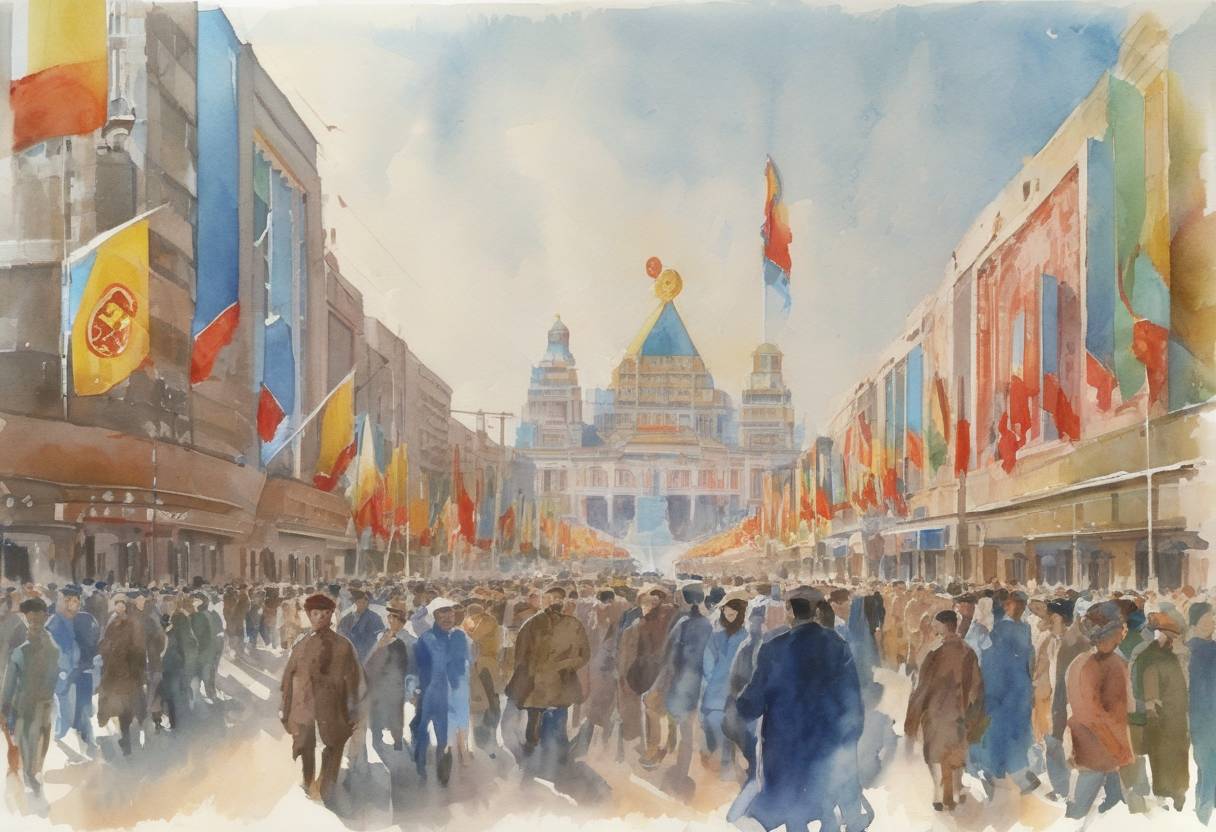
Kazakhstan Declares Independence from the Soviet Union
On December 16, 1991, Kazakhstan declared its independence from the Soviet Union, marking a significant moment in the dissolution of the USSR and the emergence of a new nation on the global stage. This event was part of a broader wave of independence movements across the Soviet republics during the late 1980s and early 1990s, as the Soviet Union faced increasing internal pressures and a weakening central government.
Context Leading Up to Independence
Perestroika and Glasnost: Initiated by Mikhail Gorbachev in the mid-1980s, these policies aimed to reform the Soviet political and economic system. However, they inadvertently accelerated demands for greater autonomy and independence among the Soviet republics.
National Movements: Throughout the late 1980s, Kazakhstan, like many other Soviet republics, experienced a rise in national consciousness and movements advocating for greater cultural and political rights.
Economic Challenges: The Soviet Union was grappling with severe economic difficulties, which undermined the central government’s authority and capacity to maintain control over its republics.
Key Events on December 16, 1991
Declaration of Independence: The Supreme Soviet of the Kazakh SSR adopted the Declaration of Independence, officially establishing Kazakhstan as a sovereign state. This made Kazakhstan the last of the Soviet republics to declare independence.
Nursultan Nazarbayev: At the time of independence, Nursultan Nazarbayev was the leader of Kazakhstan. He played a crucial role in navigating the transition from a Soviet republic to an independent nation and later became the country’s first President.
Aftermath and Significance
Dissolution of the Soviet Union: Kazakhstan’s declaration of independence was one of the final steps in the dissolution of the Soviet Union, which formally ceased to exist on December 26, 1991.
International Recognition: Following its declaration, Kazakhstan quickly gained recognition from the international community and joined various international organizations, including the United Nations in 1992.
Economic and Political Transition: Kazakhstan embarked on a challenging transition from a centrally planned economy to a market-oriented one. The country also faced the task of building its political institutions and establishing a national identity.
Strategic Importance: As the largest landlocked country in the world and rich in natural resources, particularly oil and gas, Kazakhstan has since played a significant role in regional and global geopolitics.
Kazakhstan’s independence marked the beginning of a new chapter in its history, characterized by efforts to balance economic development, political stability, and national identity in the post-Soviet era.