218 · Rome, Roman Empire
The Roman emperor Elagabalus was born.
September 23, 0063
The Roman Emperor Augustus was born as Gaius Octavius Thurinus in Rome. He later became the first emperor of the Roman Empire, ruling from 27 BC until his death in AD 14.
Rome, Roman Empire | Roman Empire
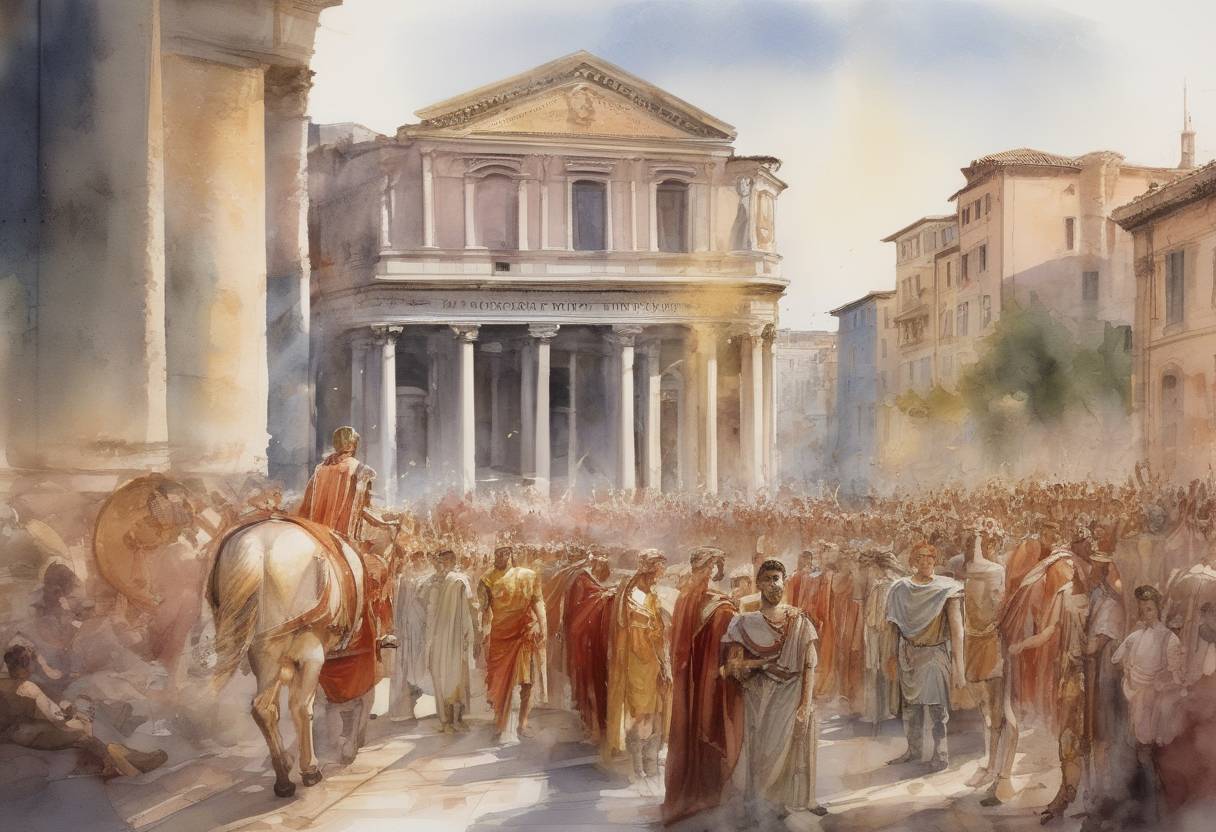
On September 23, 63 BC, Gaius Octavius Thurinus, who would later be known as Augustus, was born in Rome. Augustus was destined to become the first emperor of the Roman Empire, a pivotal figure in Roman history who transformed the Roman Republic into the Roman Empire and laid the foundations for a period of relative peace known as the Pax Romana.
Family Background: Augustus was born into the wealthy plebeian Octavii family. His father, also named Gaius Octavius, was a senator and governor, while his mother, Atia, was the niece of Julius Caesar, which would later prove crucial in his rise to power.
Adoption by Julius Caesar: In 44 BC, Julius Caesar was assassinated, and in his will, he adopted Gaius Octavius as his son and heir. This adoption granted Octavius the name Gaius Julius Caesar Octavianus (Octavian) and positioned him as a key player in Roman politics.
Second Triumvirate: Octavian formed the Second Triumvirate in 43 BC with Mark Antony and Marcus Aemilius Lepidus, a political alliance that allowed them to defeat the assassins of Julius Caesar and control Rome.
Defeat of Mark Antony: The alliance with Mark Antony eventually deteriorated, leading to a civil war. Octavian defeated Antony and Cleopatra at the Battle of Actium in 31 BC, consolidating his power.
Becoming Augustus: In 27 BC, the Roman Senate granted Octavian the title “Augustus,” marking the end of the Roman Republic and the beginning of the Roman Empire. Augustus held supreme power, though he maintained the facade of republican governance.
Pax Romana: Augustus’s reign initiated the Pax Romana, a period of relative peace and stability across the empire that lasted for over two centuries. He implemented reforms in taxation, developed networks of roads, established a standing army, and rebuilt much of Rome.
Cultural Flourishing: Augustus’s rule also saw a flourishing of Roman culture, with significant contributions to literature, architecture, and the arts. Figures like Virgil, Horace, and Ovid thrived during his reign.
Death and Succession: Augustus died on August 19, AD 14, at the age of 75. He was succeeded by his adopted son, Tiberius, ensuring the continuation of the Julio-Claudian dynasty.
Augustus’s transformation of Rome from a republic to an empire had profound and lasting impacts on the Roman world and Western civilization. His leadership style and political reforms set the stage for the emperors who followed, and his legacy as a stabilizing force in Roman history endures to this day.
Source: en.wikipedia.org