Millard Fillmore Sworn in as the 13th President of the United States
1850 · Washington, D.C., United States
Millard Fillmore is sworn in as the 13th President of the United States following the death of President Zachary Taylor.
June 15, 1846
The Oregon Treaty was signed between the United States and Britain, establishing the 49th parallel as the boundary between U.S. and British territories in the Pacific Northwest.
Washington, D.C., United States | United States government
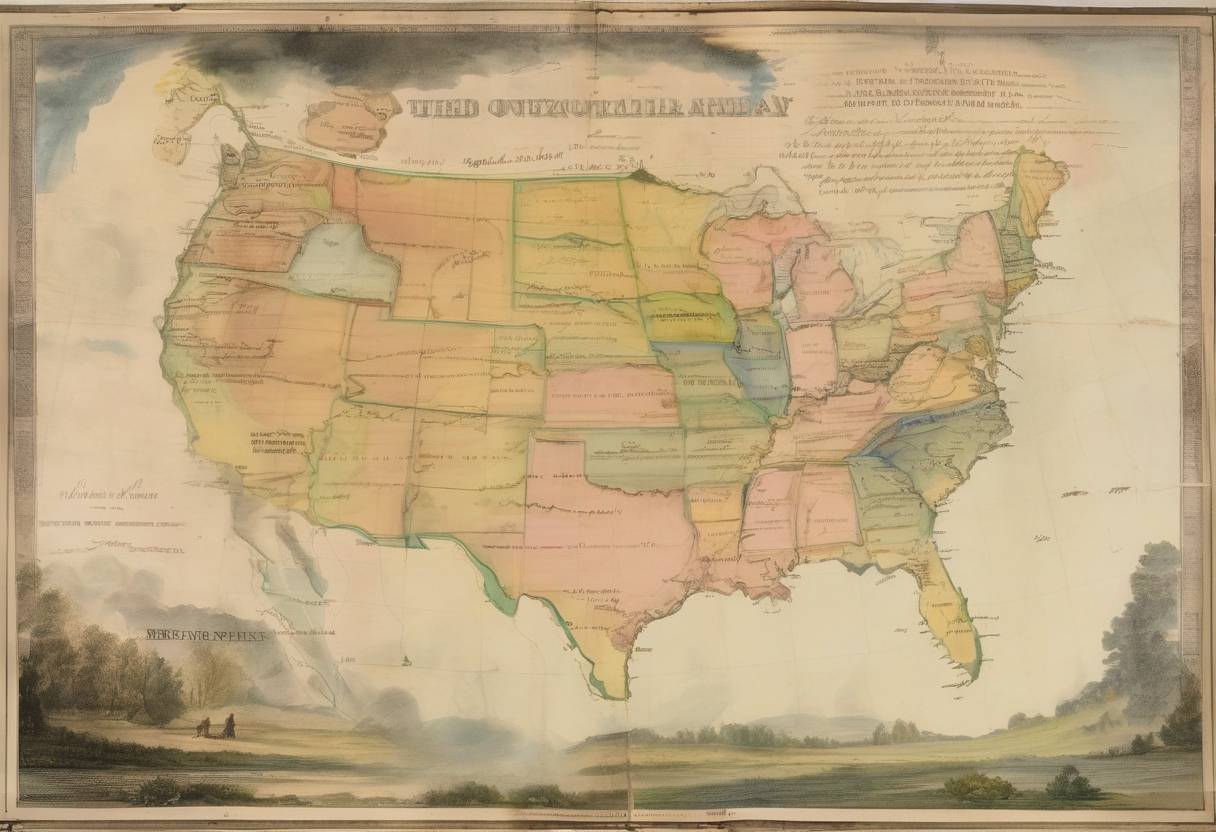
On June 15, 1846, the Oregon Treaty was signed between the United States and Great Britain, marking a significant moment in the history of North American territorial expansion. This treaty effectively resolved a long-standing boundary dispute in the Pacific Northwest, establishing the 49th parallel as the dividing line between U.S. and British territories.
The Oregon Country, a vast region stretching from the Rocky Mountains to the Pacific Ocean and from the 42nd parallel north to 54°40′ north, was jointly occupied by the United States and Britain following the Anglo-American Convention of 1818. This agreement allowed citizens of both nations to settle in the area, but it did not establish a clear boundary, leading to tensions as settlers moved westward.
By the 1840s, the influx of American settlers, spurred by the concept of Manifest Destiny, increased pressure to establish a definitive boundary. The slogan “Fifty-Four Forty or Fight!” became popular among expansionists in the U.S., reflecting the desire to claim the entire Oregon Country up to latitude 54°40′. However, diplomatic negotiations were preferred over conflict.
The Oregon Treaty was a compromise that averted potential military confrontation. Key provisions of the treaty included:
The treaty was negotiated by U.S. Secretary of State James Buchanan and British envoy Richard Pakenham. The agreement reflected both nations’ desire to avoid conflict and maintain peaceful relations, especially given other international concerns at the time.
The Oregon Treaty was ratified by the U.S. Senate on June 18, 1846, and by the British government shortly thereafter. Its signing had several significant consequences:
In summary, the Oregon Treaty of 1846 was a pivotal moment in U.S. history, reflecting the nation’s expansionist ambitions while underscoring the importance of diplomatic solutions in international relations.
Source: en.wikipedia.org