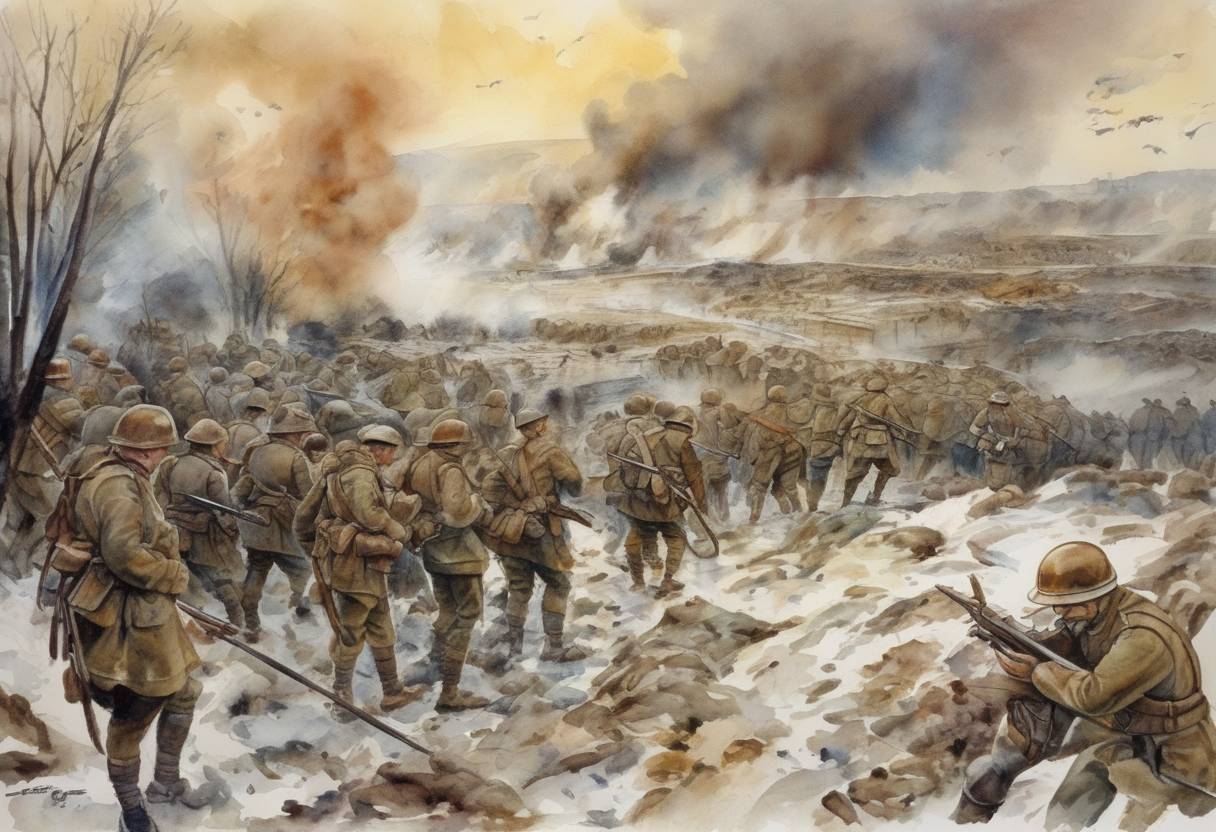
The Battle of Verdun: February 21, 1916
The Battle of Verdun, which commenced on February 21, 1916, stands as one of the longest and most grueling engagements of World War I. This battle, lasting until December 1916, epitomized the brutal and attritional nature of trench warfare that characterized much of the conflict on the Western Front.
Context and Prelude
- Strategic Importance: Verdun was chosen by the German High Command, led by Chief of the General Staff Erich von Falkenhayn, due to its symbolic and strategic significance to the French. The fortress city was a key defensive position and a symbol of French national pride.
- German Strategy: Falkenhayn aimed to “bleed France white” by forcing the French to commit massive resources to defend Verdun, thereby weakening their overall war effort. The plan was to inflict maximum casualties and drain French manpower.
Key Events Leading Up to the Battle
- Preparation: The Germans amassed a significant concentration of artillery and troops in the Verdun sector, achieving a degree of surprise. The initial bombardment involved over 1,200 artillery pieces, marking one of the most intense artillery barrages of the war.
- French Defense: The French, under the command of General Philippe Pétain, were determined to hold Verdun at all costs. Pétain famously declared, “They shall not pass” (“Ils ne passeront pas”), which became a rallying cry for French forces.
The Battle
- Initial Assault: The battle began with a massive German artillery bombardment on February 21, 1916, followed by an infantry assault. The Germans initially made significant gains, capturing key forts and positions.
- French Resilience: Despite early setbacks, French forces managed to stabilize the front. Pétain organized a continuous supply line known as the “Voie Sacrée” (Sacred Way) to ensure the flow of troops and supplies to the front.
- Attritional Warfare: The battle devolved into a grueling war of attrition, with both sides suffering heavy casualties. The landscape around Verdun was devastated, with entire villages obliterated.
Aftermath and Consequences
- Casualties: The Battle of Verdun resulted in an estimated 700,000 casualties, with both French and German forces suffering heavily. The exact numbers remain debated, but the human cost was immense.
- Strategic Outcome: While the Germans failed to capture Verdun, the battle significantly weakened both armies. It became a symbol of French determination and resilience.
- Legacy: Verdun became a symbol of French national endurance and sacrifice. The battle’s legacy influenced French military and political strategy in the years following the war.
Broader Historical Significance
The Battle of Verdun exemplified the horrors of World War I and the futility of trench warfare. It highlighted the immense human cost of the war and the strategic stalemate that characterized much of the Western Front. Verdun remains a poignant reminder of the sacrifices made during the Great War and continues to be commemorated in France and beyond.