Launch of the Sony CDP-101 - January 2, 1983
1983 · Tokyo, Japan
Akio Morita announces the launch of the Sony CDP-101, the world’s first commercially released compact disc player.
March 8, 1979
The compact disc (CD) was publicly demonstrated for the first time by Philips and Sony.
Eindhoven, Netherlands | Philips and Sony
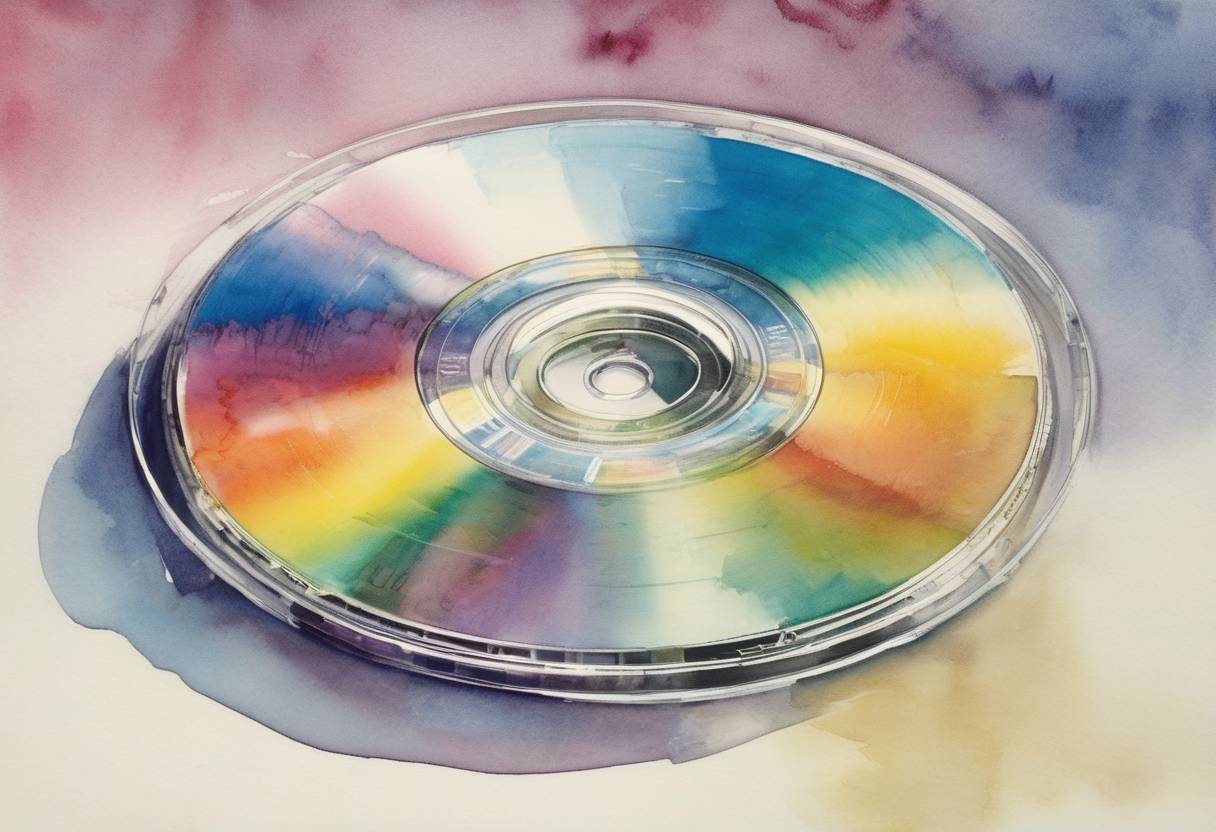
On March 8, 1979, Philips and Sony publicly demonstrated the compact disc (CD) for the first time, marking a significant milestone in the evolution of digital audio technology. This event took place during a press conference in Eindhoven, Netherlands, and showcased the potential of digital audio storage and playback, setting the stage for a revolution in the music industry.
The development of the compact disc was a collaborative effort between Philips, a Dutch multinational corporation, and Sony, a Japanese electronics giant. The partnership began in the mid-1970s, driven by a mutual interest in creating a new format for audio storage that would surpass the limitations of analog formats like vinyl records and cassette tapes.
During the demonstration, Philips and Sony presented the CD as a 12 cm disc capable of holding a substantial amount of digital audio data. The demonstration included playing a recording of classical music, which highlighted the clarity and quality of sound that the new technology could produce. This event was pivotal in convincing the public and industry stakeholders of the CD’s potential as a mainstream audio format.
Following the successful demonstration, Philips and Sony continued to refine the technology, leading to the commercial release of the first CD players and discs in 1982. The introduction of CDs to the market had a profound impact on the music industry:
The introduction of the compact disc is a key moment in the history of digital technology, representing a shift from analog to digital media. It not only transformed the music industry but also influenced the development of other digital storage technologies, such as DVDs and Blu-ray discs. The CD’s success demonstrated the viability and advantages of digital formats, setting a precedent for the digital age.
In summary, the first public demonstration of the compact disc by Philips and Sony on March 8, 1979, was a landmark event that heralded a new era in audio technology and had lasting implications for the music industry and digital media as a whole.
Source: en.wikipedia.org