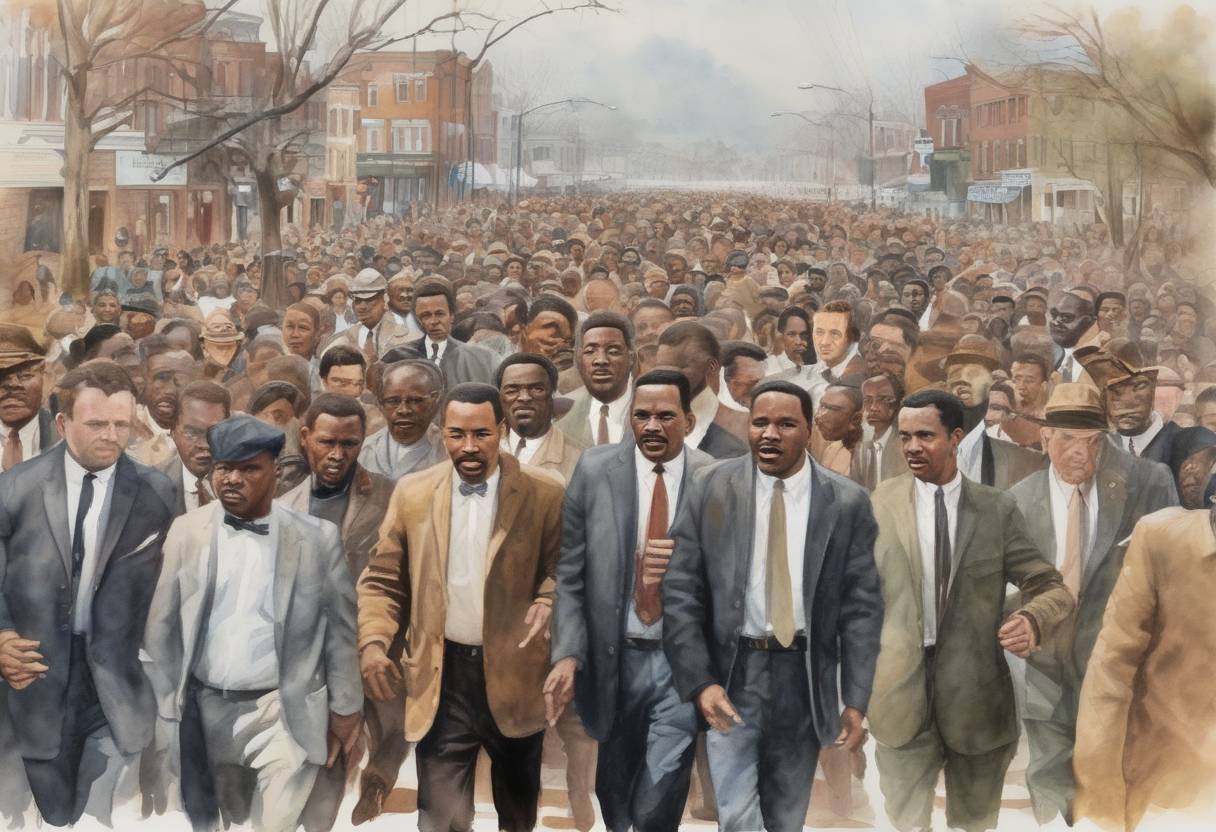
Selma to Montgomery Marches: A Pivotal Event in the Civil Rights Movement
On March 25, 1965, a significant chapter in the American civil rights movement concluded as civil rights activists, led by Dr. Martin Luther King Jr., completed the Selma to Montgomery marches in Alabama. This event was a critical moment in the struggle for voting rights for African Americans and highlighted the ongoing fight against racial discrimination in the United States.
Background
The Selma to Montgomery marches were organized in response to the systemic disenfranchisement of African American voters in the South. Despite the constitutional right to vote, discriminatory practices such as literacy tests and poll taxes effectively barred many African Americans from voting. The marches were also a reaction to the violent events of “Bloody Sunday” on March 7, 1965, when peaceful demonstrators were brutally attacked by law enforcement at the Edmund Pettus Bridge in Selma.
The Marches
First Attempt (March 7, 1965 - Bloody Sunday): Approximately 600 marchers, led by John Lewis and Hosea Williams, were violently confronted by state troopers and local law enforcement as they attempted to cross the Edmund Pettus Bridge. The televised images of the brutality shocked the nation and garnered widespread sympathy for the civil rights movement.
Second Attempt (March 9, 1965 - Turnaround Tuesday): Martin Luther King Jr. led a symbolic march to the bridge, where they prayed and then turned back, adhering to a court order that prohibited the march.
Third Attempt (March 21-25, 1965): With federal protection secured, approximately 3,200 marchers set out from Selma on March 21. Over the course of five days, the marchers covered the 54-mile route to Montgomery, growing in number to approximately 25,000 by the time they reached the Alabama State Capitol on March 25.
Significance and Aftermath
The successful completion of the Selma to Montgomery march was a pivotal moment in the civil rights movement. It demonstrated the power of nonviolent protest and the determination of activists to achieve equality. The marches significantly influenced public opinion and political leaders, leading to the passage of the Voting Rights Act of 1965. This landmark legislation prohibited racial discrimination in voting, effectively dismantling many of the barriers that had disenfranchised African American voters.
The Selma to Montgomery marches remain a symbol of the struggle for civil rights and the enduring fight for justice and equality in the United States. They underscore the importance of civic engagement and the impact of collective action in effecting social change.