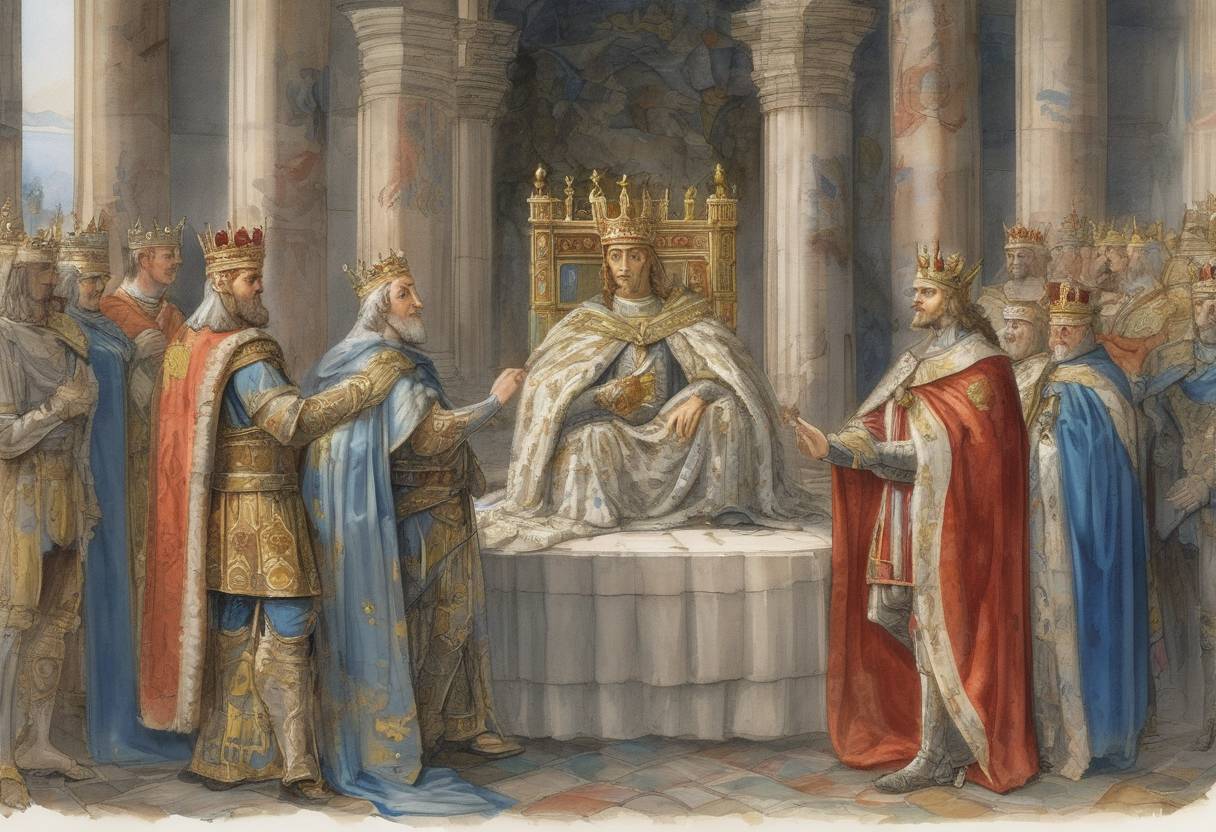
Otto I Crowned King of Germany - August 6, 936
On August 6, 936, Otto I, also known as Otto the Great, was crowned King of Germany at Aachen Cathedral. This event marked the beginning of the Ottonian dynasty, which played a crucial role in shaping the medieval history of Germany and the Holy Roman Empire.
Background
- Dynastic Context: Otto I was the son of Henry the Fowler, the Duke of Saxony, who had been elected King of East Francia (a precursor to the Holy Roman Empire) in 919. Henry’s reign laid the groundwork for a more unified German kingdom.
- Succession: Upon Henry’s death in 936, Otto was elected king by the German dukes, continuing his father’s efforts to consolidate the various duchies under a central authority.
The Coronation
- Location: The coronation took place at the Palatine Chapel in Aachen, a site of great symbolic importance as it was associated with Charlemagne, the first Holy Roman Emperor.
- Ceremony: The ceremony was conducted by Hildebert, Archbishop of Mainz, who anointed Otto, symbolizing divine approval of his rule. The event was attended by numerous nobles and church officials, underscoring Otto’s legitimacy and the support of the church.
Significance
- Ottonian Dynasty: Otto’s coronation marked the beginning of the Ottonian dynasty, which would rule Germany and the Holy Roman Empire for over a century. This dynasty is noted for its efforts to strengthen the monarchy and its close alliance with the Catholic Church.
- Centralization of Power: Otto’s reign was characterized by efforts to centralize power and reduce the autonomy of the regional dukes. He implemented a system where bishops and abbots were granted secular authority, thereby ensuring loyalty to the crown.
- Military Achievements: Otto was a formidable military leader. His victory at the Battle of Lechfeld in 955 against the Magyars secured his reputation and stabilized the eastern borders of his realm.
Aftermath and Legacy
- Holy Roman Emperor: Otto’s successful reign as King of Germany paved the way for his coronation as Holy Roman Emperor in 962, a title that linked the German kingship with the legacy of the Roman Empire.
- Cultural Impact: The Ottonian Renaissance, a period of cultural and artistic revival, flourished under his rule, with significant developments in architecture, art, and learning.
- Dynastic Continuity: Otto’s descendants continued to rule, maintaining the dynasty’s influence and shaping the political landscape of medieval Europe.
Otto I’s coronation was a pivotal moment in European history, setting the stage for the development of a more unified German state and the eventual establishment of the Holy Roman Empire as a dominant force in medieval Europe.