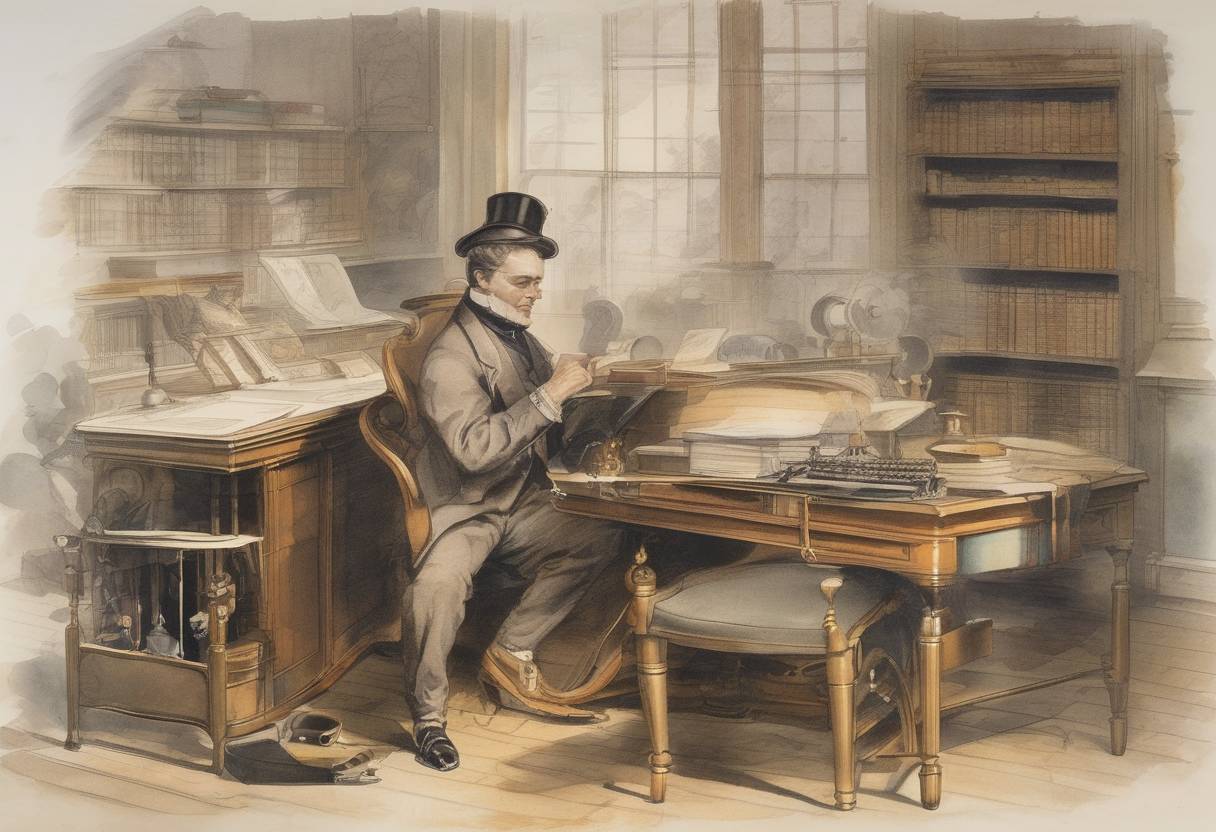
William Austin Burt and the Patent of the Typographer
On July 23, 1829, William Austin Burt, an American inventor, was granted a patent for the “Typographer,” a device that is recognized as a precursor to the modern typewriter. This invention marked a significant step in the development of writing technology, paving the way for the typewriters that would become essential tools in offices and homes worldwide.
Background
William Austin Burt was born on June 13, 1792, in Worcester, Massachusetts. He was a surveyor and inventor, known for his innovative spirit and contributions to various fields. Before inventing the Typographer, Burt had already patented a solar compass, which was crucial for surveying land in areas with magnetic anomalies.
The Typographer
The Typographer was designed to improve the efficiency and legibility of written communication. Burt’s invention was a mechanical device that allowed users to imprint letters onto paper using a lever-operated system. The machine was constructed primarily of wood and metal, featuring a rotating frame that held the typeface.
Key Features
- Lever Mechanism: The Typographer used a lever to press type against an inked ribbon and then onto paper, a fundamental concept that would be refined in later typewriters.
- Rotating Frame: The device had a frame that rotated to select different characters, a precursor to the type basket or type wheel found in later machines.
- Manual Operation: The Typographer required manual operation, with the user needing to select each character individually.
Challenges and Limitations
Despite its innovative design, the Typographer faced several challenges:
- Complexity: The machine was relatively complex and cumbersome compared to later typewriters, making it less practical for widespread use.
- Limited Commercial Success: Burt’s invention did not achieve significant commercial success during his lifetime, partly due to the limitations in manufacturing technology and the lack of immediate market demand.
Historical Significance
While the Typographer itself did not become a commercial success, it laid the groundwork for future developments in typewriting technology. Burt’s patent demonstrated the potential for mechanical writing devices, inspiring subsequent inventors to refine and improve upon his ideas.
Legacy
- Inspiration for Future Inventions: The Typographer influenced later inventors, such as Christopher Latham Sholes, who developed the first commercially successful typewriter in the 1860s.
- Recognition: Burt’s contribution to the evolution of writing technology is recognized as a foundational step in the history of typewriters.
Conclusion
William Austin Burt’s patent of the Typographer on July 23, 1829, represents an important milestone in the history of writing technology. Although it was not commercially successful, the Typographer’s design and concept were crucial in the development of the typewriters that would revolutionize communication in the 19th and 20th centuries.