The Third Battle of Ypres (Battle of Passchendaele)
1917 · Ypres, Belgium
The Third Battle of Ypres, also known as the Battle of Passchendaele, began during World War I, resulting in heavy casualties and a prolonged stalemate.
April 22, 1915
During World War I, the Second Battle of Ypres begins. It marks the first large-scale use of chemical weapons on the Western Front by Germany.
Ypres, Belgium | German Empire
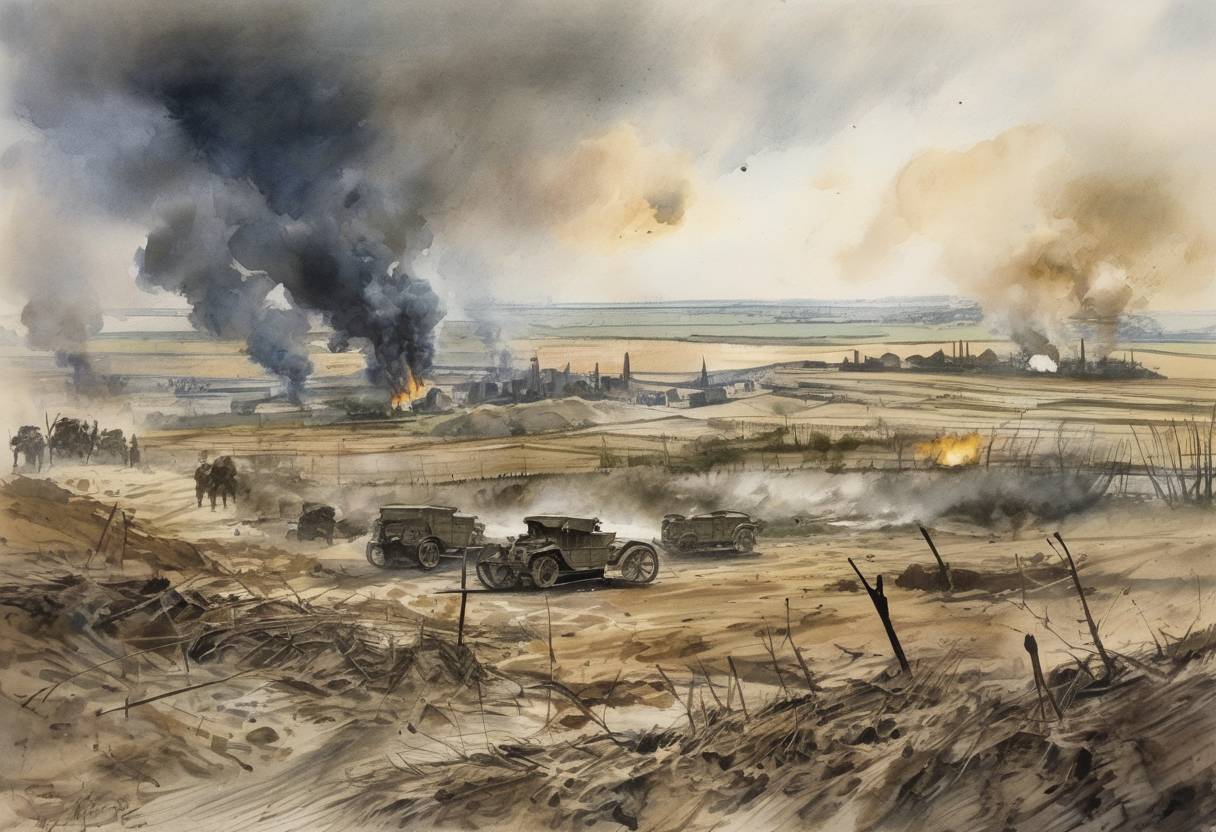
The Second Battle of Ypres, which commenced on April 22, 1915, stands as a significant and grim milestone in World War I history. It marked the first large-scale use of chemical weapons on the Western Front, fundamentally altering the nature of warfare.
Ypres, a strategic town in Belgium, had already been a focal point of intense military activity. The First Battle of Ypres, which occurred in late 1914, saw the Allies and the German forces locked in a deadly stalemate. By early 1915, both sides were entrenched along the Western Front, seeking any advantage to break the deadlock.
On April 22, 1915, the German Army launched a surprise attack against the Allied forces, primarily composed of French, British, and Canadian troops. The Germans released chlorine gas from over 5,700 cylinders along a four-mile front. This marked the first time chemical weapons were used on such a scale in warfare.
The Second Battle of Ypres continued until May 25, 1915, with both sides suffering heavy casualties. The use of chemical weapons had a profound impact on military tactics and international law:
The Second Battle of Ypres underscored the brutal and evolving nature of World War I. It highlighted the desperation of the warring nations to break the stalemate and foreshadowed the increasing technological and ethical complexities of modern warfare. The battle remains a somber reminder of the horrors of chemical warfare and its lasting impact on military strategy and international law.
Source: en.wikipedia.org